Last Updated on 3 months ago by Admin
Someone stole your content. Maybe it’s a photo, an article, a video, or something far more personal. Whatever it is, you have the legal right to demand it comes down. The Digital Millennium Copyright Act gives you that power, and this guide walks you through exactly how to use it.
A DMCA takedown notice is a formal request to remove content that infringes your copyright. When filed correctly, it requires platforms, web hosts, and search engines to act. Most respond within days. Some within hours.
This guide covers what a DMCA complaint is, when to use one, how to file it on Google, YouTube, Facebook, and X (Twitter), and what to do when the standard process isn’t moving fast enough. If your situation is urgent or complex, see our guide on removing content from Google Search for additional options.
Table of Contents
What Is a DMCA Complaint?
The Digital Millennium Copyright Act is a U.S. federal law passed in 1998. It gives copyright owners a legal mechanism to demand the removal of infringing content from online platforms and search engines.
A DMCA complaint, also called a DMCA takedown notice or DMCA demand, applies to any original content you created: articles, photos, videos, music, designs, code, and more. If someone is using that content online without your permission, the DMCA gives you a structured way to force its removal.
Here is why it works. The law gives platforms like YouTube, Facebook, and web hosts legal protection from copyright liability, but only if they respond to valid takedown requests. That protection is called “safe harbor.” Because of it, most platforms act quickly when they receive a properly filed DMCA notice. Ignoring a valid notice would expose them to legal liability they have no interest in taking on.
One thing to know upfront: removing a result from Google Search is separate from removing the content from the site hosting it. Removing content from Google Search only de-indexes the page. The content itself stays live until you also file with the hosting provider. In most cases, you need to do both.
When Should You File a DMCA Takedown?
File a DMCA when someone is using your original copyrighted work online without your permission and without any legal basis to do so.
Common situations where a DMCA applies:
- Your photos or videos are reposted without credit or permission
- Someone republished your written content on their website or social profiles
- A video you created appears on YouTube under someone else’s account
- Intimate images or videos of you have been shared without your consent
- Pirated versions of your paid content are being distributed for free
- Your business content, logos, or creative work is being used by a competitor
If intimate images have been shared without your consent, a DMCA is one of several tools available. Our guides on what to do if someone posts your nudes and OnlyFans piracy and leaked videos cover the full range of options for those situations.
The DMCA does not cover everything. It does not apply to content that uses your name or likeness without permission, defamatory statements, or general privacy violations. Those require different approaches. But for copyright infringement specifically, it is the most direct legal tool available.
Before You File: What to Gather
A strong DMCA notice is a specific one. Vague submissions get delayed or rejected. Before you file anywhere, collect the following:
- The URL of the infringing content. The exact page address where your stolen content appears. If it shows up in multiple places, document each one.
- Proof of your original ownership. The URL where your original work was first published, a file with its original creation date, or other documentation that establishes you as the copyright holder.
- Screenshots. Capture the infringing page with the URL visible. Use a tool like the Wayback Machine to create a timestamped archive that cannot be disputed later.
- Your contact information. Name, address, phone number, and email. This will be shared with the platform and, in some cases, the infringing party.
- A brief description of the work. What it is, when you created it, and how it is being misused.
The more specific your documentation, the faster the platform can process your request. Incomplete submissions are a common reason for delays.
Not Sure If Your Situation Qualifies for a DMCA?
NewReputation has helped thousands of people remove stolen content from the internet. We can review your situation and tell you exactly which approach will work fastest.
- Free consultation with a content removal specialist
- We handle the filing, follow-up, and escalation for you
- Transparent pricing and fast results
How to File a DMCA on Google
Google handles DMCA takedowns in two separate ways depending on what you need. You can request removal from Google Search results, from Google Images, from YouTube, from Google Drive, or from other Google products. Each has its own form.
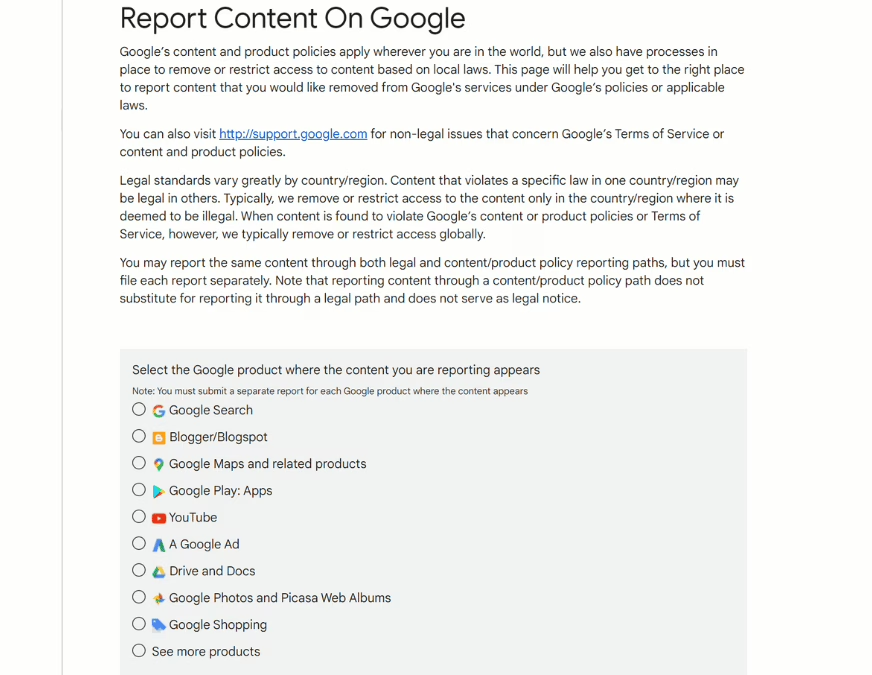
Here is how to file a Google Search or Images DMCA:
- Go to Google’s legal removal request form
- Select “Search” as the Google product
- Choose “Copyright” as the type of legal issue
- Specify whether you are the copyright owner or an authorized representative
- Describe the original work and provide the URL where it originally appeared
- Provide the exact URLs of the infringing pages in Google Search results
- Check the required legal statements and sign with your full name
- Submit the form
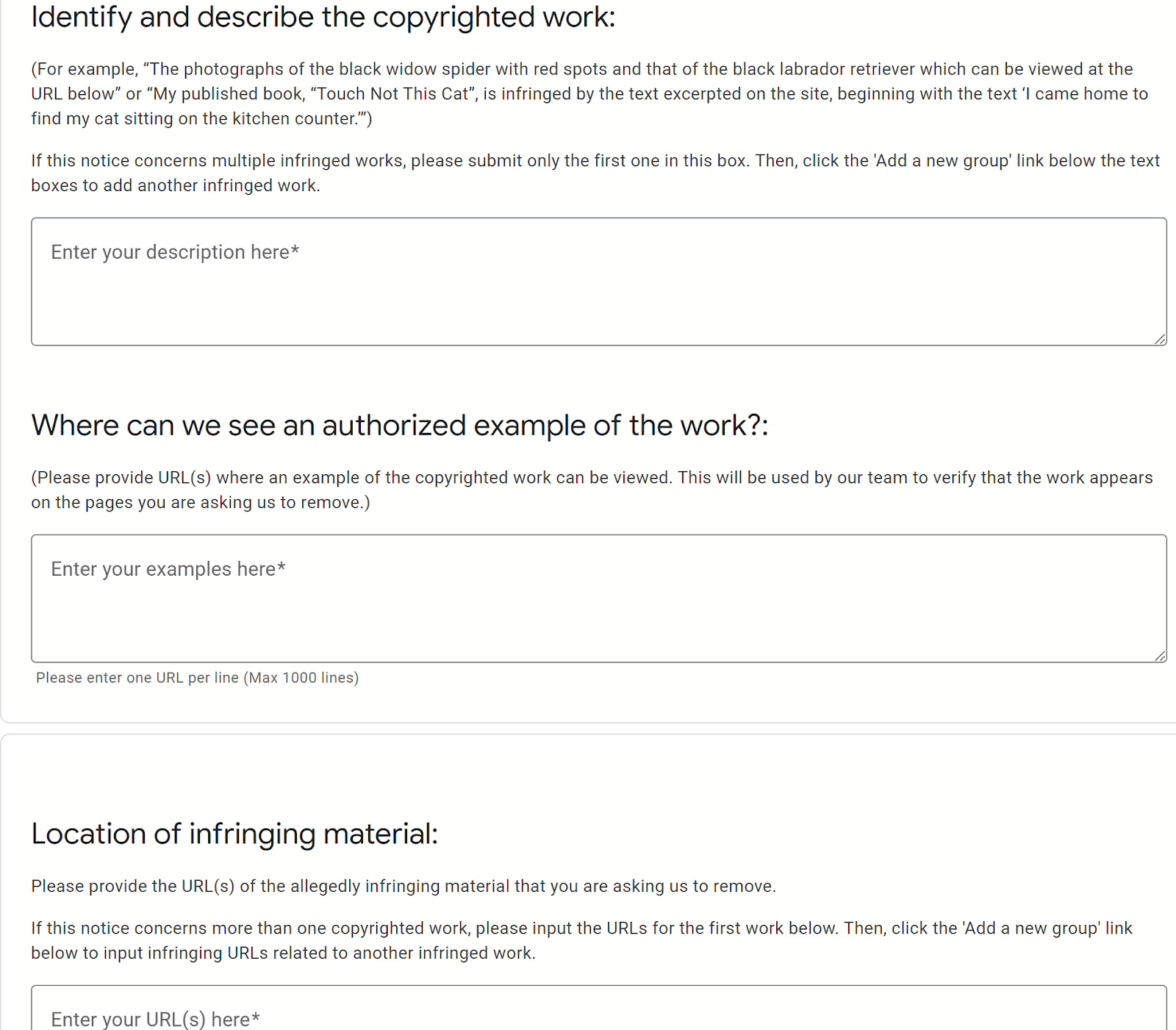
Google will review your submission and, if approved, remove the result from Search. They also report approved takedowns to Lumen, an independent research project that tracks online takedown requests. This means an approved removal becomes part of a public record in Lumen’s database, which some people find shows up in search results for the affected URL.

Remember: Google removing a search result does not remove the content from the web. File a separate DMCA with the site’s hosting provider to take down the page itself. Our guide on removing content from Google Search covers the full process including escalation steps when initial requests are denied.
How to File a DMCA on YouTube
YouTube takes copyright seriously, partly because the consequences for repeat violations are severe. Three copyright strikes within 90 days results in permanent account termination. That creates real incentive for people to comply.
Here is how to file:
- Go to YouTube’s Copyright Infringement Notification form
- Sign in with your Google account
- Identify the infringing video with its exact URL
- Describe your original work and where it was first published
- Select which portion of the video contains your copyrighted material
- Provide your contact information
- Check the required legal declarations and submit
YouTube also has a Copyright Match Tool inside YouTube Studio that automatically scans newly uploaded videos across the platform for content that matches yours. If you publish video content regularly, enabling this tool is worth doing. It flags matches before they gain traction.
False claims carry serious consequences on YouTube: criminal penalties of up to $250,000 in fines and five years imprisonment. Only file if you are the legitimate copyright owner and the infringement is genuine.
For situations involving videos that go beyond standard copyright issues, our full guide on how to get a video removed from YouTube covers additional removal grounds including privacy violations and defamatory content.
How to File a DMCA on Facebook and X (Twitter)
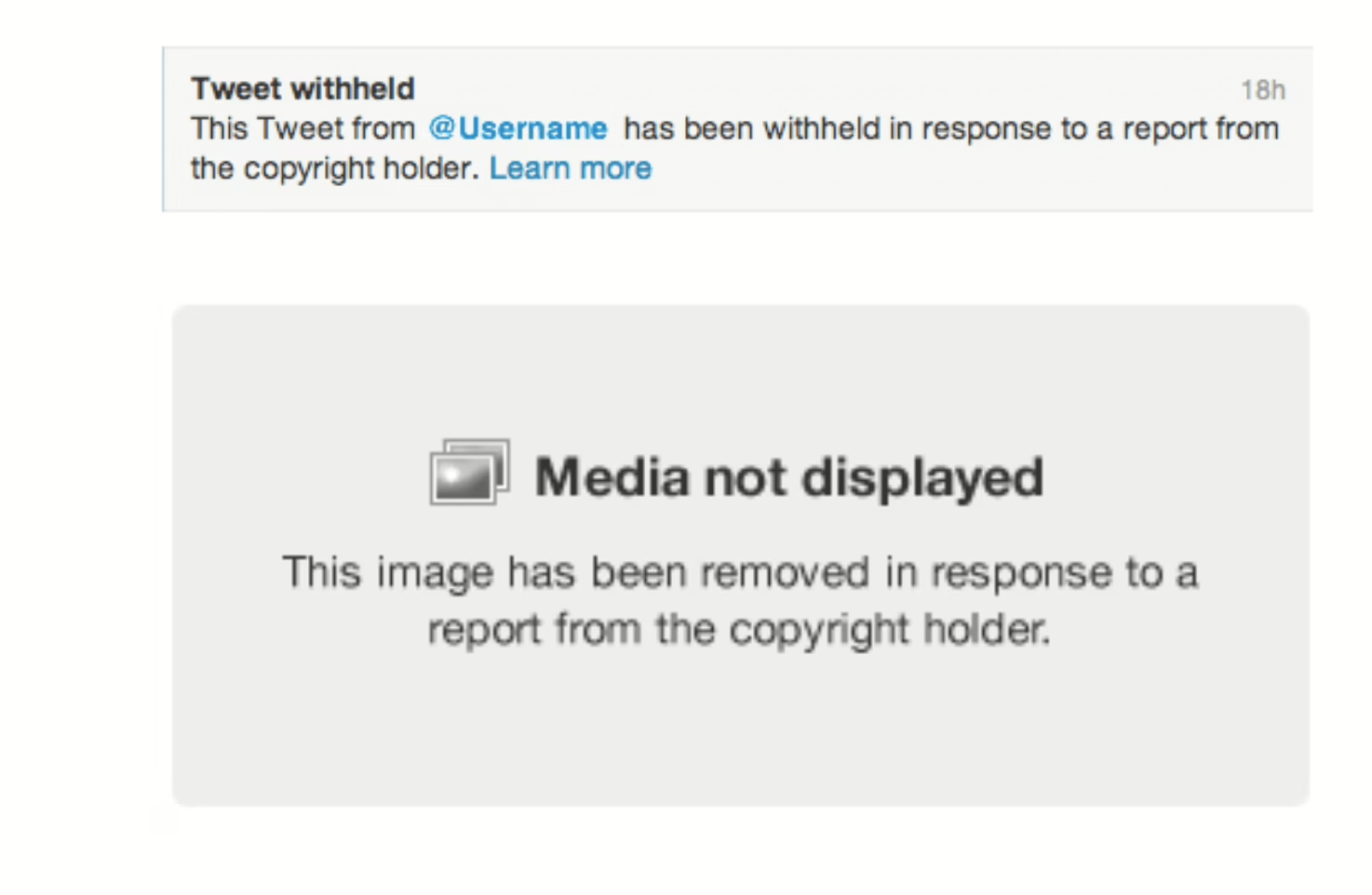
Facebook requires the copyright owner or their legal representative to submit all copyright complaints. You cannot file on someone else’s behalf without authorization.
- Go to Facebook’s copyright report form
- Select “Copyright” as the type of intellectual property issue
- Identify the infringing content with its exact URL
- Describe your original work and provide proof of ownership
- Complete the required legal statements
- Submit the form
Facebook reviews each submission and removes content that violates copyright if you provide sufficient evidence. The account holder can appeal the decision or file a counter-notice. If they do, Facebook may restore the content temporarily while the dispute is reviewed.
X (Twitter)
- Go to X’s DMCA takedown form
- Identify yourself as the copyright owner or authorized representative
- Provide the URL of your original work
- Provide the exact URL of the infringing post on X
- Describe the copyrighted material and how it is being used without permission
- Type your full name as an electronic signature and submit
X removes identified material upon receiving a valid DMCA notice. Accounts with repeat violations face suspension under X’s repeat infringer policy. You can address multiple infringing posts from one submission as long as each URL is documented separately.
Save screenshots of any infringing posts with timestamps before you file. X may ask for this supporting evidence during review, and the posts may be deleted or altered by the account holder once they are notified.
What Happens After You File?
Once you submit a DMCA notice, the platform reviews it and decides whether to act. Most major platforms respond within a few business days. Some act within hours.
If your request is approved, the infringing content is removed or de-indexed. The person who posted it is typically notified and given the option to file a counter-notice if they believe the takedown was a mistake.
If they file a counter-notice, the platform may restore the content after 10 to 14 business days unless you pursue legal action during that window. At that point, the dispute becomes a matter between you and the infringer, and an attorney may be needed.
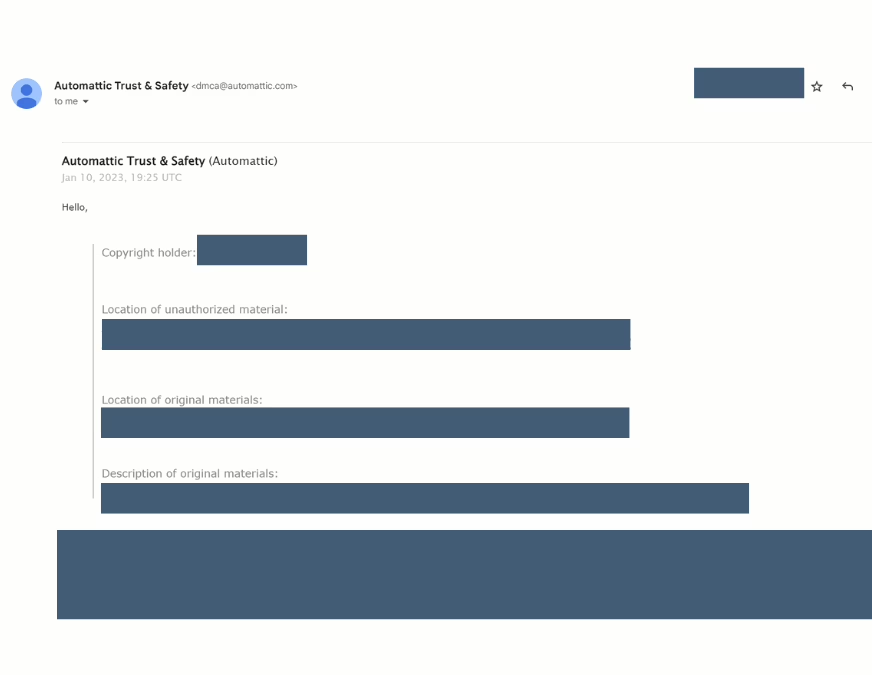
If your request is denied, you have options. You can refile with more specific evidence, contact the hosting provider directly, or escalate through legal channels. Our guide on reverse SEO covers how to suppress content that cannot be fully removed, pushing it down in search results so it loses visibility over time.
Keep a record of every submission: the platform, the date filed, the URLs submitted, and any responses received. That paper trail matters if the situation escalates.
When a DMCA Isn’t Enough
The DMCA is a powerful tool, but it has limits. Here are situations where you may need to go further.
The hosting provider is unresponsive or based overseas. Some sites ignore DMCA notices, especially those hosted outside the U.S. In these cases, filing with search engines to de-index the content is often more effective than pursuing the hosting provider directly. If the content still ranks, reverse SEO can reduce its visibility.
The content is non-consensual intimate imagery. Beyond the DMCA, platforms have specific policies for non-consensual intimate content that often result in faster removal than a copyright claim. The StopNCII tool helps prevent images from being reshared across participating platforms. Our guides on what to do if someone posts your nudes and OnlyFans piracy cover the full set of tools available.
The infringement is widespread across many sites. Filing individual notices platform by platform becomes unmanageable when content has spread broadly. A professional removal service handles volume filing, follows up on denials, and monitors for new instances after removal.
You receive a counter-notice. If an infringer disputes your claim, you have 10 to 14 business days to respond legally or the content may be restored. This is the point where consulting an attorney who handles intellectual property or digital media becomes important.
Dealing With Content That Won’t Come Down?
When platforms are slow, unresponsive, or when content keeps resurfacing, NewReputation handles the full removal process. We know which approaches work on which platforms and how to escalate when standard filings aren’t enough.
- DMCA filing and follow-up across all major platforms
- Hosting provider outreach and escalation support
- Search result suppression when removal isn’t possible
Frequently Asked Questions
How long does a DMCA takedown take?
Most major platforms, including Google, YouTube, Facebook, and X, respond within two to ten business days. Some act faster. Smaller or foreign-hosted sites can take longer or may not respond at all. If a site ignores your notice, filing with the hosting provider or a search engine de-indexing request is the next step.
Can I file a DMCA takedown myself or do I need a lawyer?
You can file one yourself. The process on major platforms is straightforward and free. A lawyer becomes valuable if you receive a counter-notice, if the infringement is part of a larger legal dispute, or if you need to pursue civil litigation. For most standard cases, self-filing or using a professional removal service is sufficient.
What is a counter-notice and what should I do if I receive one?
A counter-notice is a formal response from the person whose content you reported. They are stating that they believe the takedown was a mistake or that they have the right to use the material. Once a counter-notice is filed, the platform typically restores the content after 10 to 14 business days unless you take legal action during that window. If you receive a counter-notice on a legitimate claim, consult an intellectual property attorney promptly.
Does a DMCA remove content from the internet entirely?
Not automatically. A DMCA filed with Google removes the result from Google Search but leaves the content live on its hosting site. A DMCA filed with a hosting provider removes the page from that host but may leave cached versions elsewhere. For full removal, you often need to file separately with the search engine, the hosting provider, and any social platforms where the content appears. For content that cannot be fully removed, search result suppression through reverse SEO reduces its visibility significantly. See our reverse SEO guide for more on that approach.
Can I file a DMCA if someone posts my content on a private account?
Yes. Whether an account is public or private, using your copyrighted content without permission is infringement. The DMCA process is the same. Gather the evidence you can access, including screenshots, and file through the platform’s standard form.
What happens if I file a false DMCA claim?
Filing a false DMCA claim exposes you to legal liability under the DMCA itself. Section 512(f) allows the person you filed against to sue you for damages, attorney’s fees, and court costs if they can show you knowingly misrepresented that the content was infringing. On YouTube specifically, false claims can result in criminal penalties. Only file when you are the legitimate copyright owner and the infringement is genuine.
My content is being shared on many different sites. Where do I start?
Start with the sites and search results where the content is most visible or causing the most harm. File with Google Search first to reduce discoverability, then work through the hosting providers and social platforms where it appears. If the volume is large, a professional service handles bulk filing and monitors for new instances. NewReputation has helped thousands of people manage exactly this situation. Contact us to discuss your options.
Does the DMCA work for non-consensual intimate images?
It can, but there are often faster options. Most major platforms have dedicated non-consensual intimate image policies that result in removal more quickly than a copyright claim. The StopNCII tool helps prevent images from being reshared across participating platforms. See our guides on what to do if someone posts your nudes and OnlyFans piracy and leaked content for the full process.
Ready to Get Your Content Taken Down?
NewReputation has helped thousands of people remove stolen, leaked, and infringing content from the internet. We handle the filing, follow-up, and escalation so you don’t have to fight it alone.
- Free consultation, no obligation
- Transparent pricing and fast turnaround
- We keep working until the content is gone