Last Updated on 4 months ago by Admin
Search has changed more in the last two years than it did in the previous decade.
Google still processes over 8.5 billion searches a day. But now, a large chunk of those searches end without a single click to any website. AI answers the question right there on the page. And a growing number of people skip Google altogether and ask ChatGPT, Perplexity, or Gemini directly.
That shift has introduced two new strategies worth understanding: AEO and GEO. They sit alongside SEO, not in place of it. But ignoring them means missing a fast-growing share of how people find information and make decisions. Understanding how all three connect is now part of SEO for AI and a core piece of any modern visibility strategy.
Table of Contents
What We Mean by SEO, AEO, and GEO
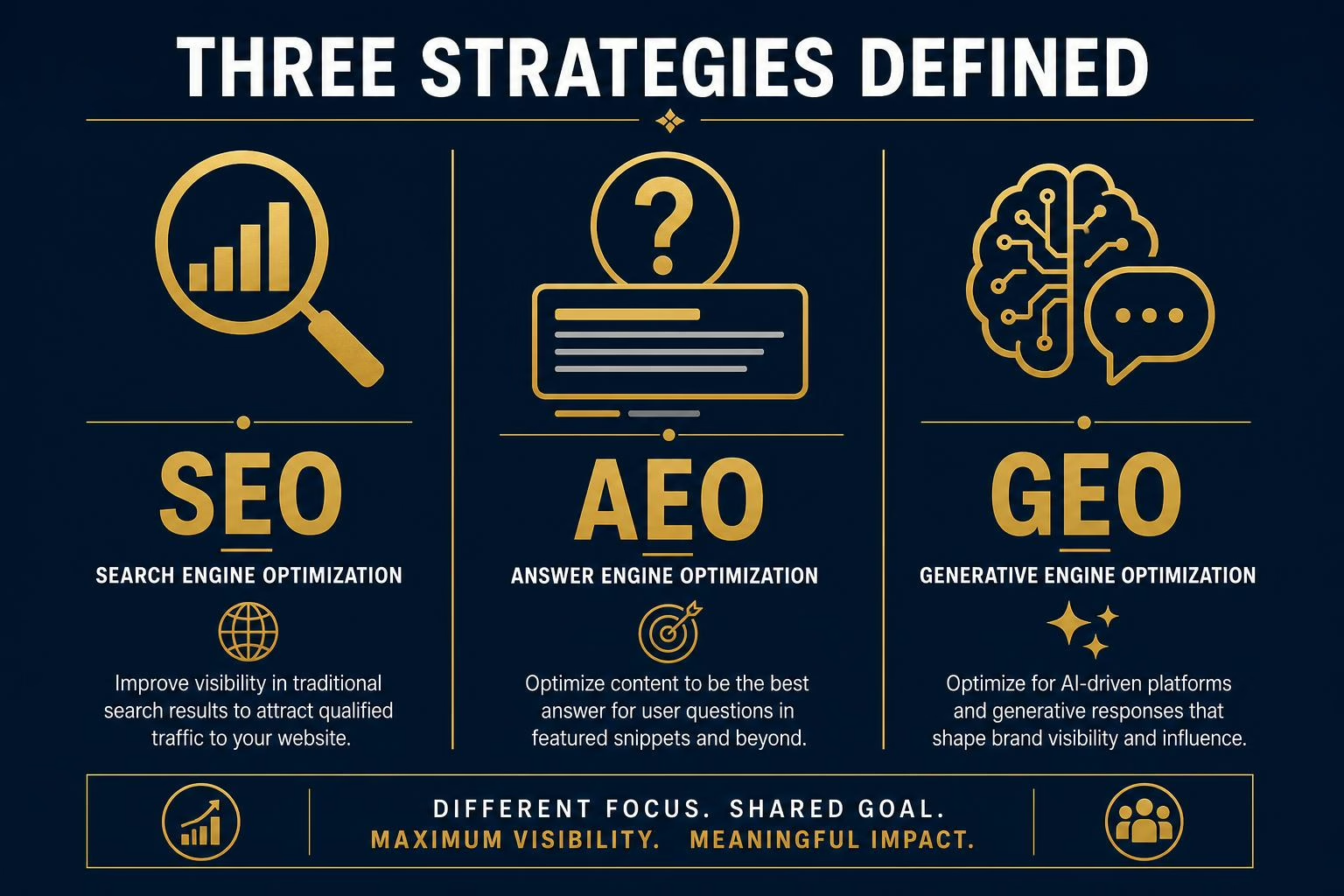
Before getting into what works, it helps to be clear on the terms. The industry loves acronyms, and these three overlap more than most people realize.
SEO: What Most People Already Know
Search Engine Optimization is the practice of getting your content to rank in Google’s organic results. You research keywords, build links, structure your site, and produce content that earns a spot on page one.
It still works. Organic search drives 53% of all trackable website traffic, which is more than paid ads, social media, and email combined. For B2B companies specifically, organic search generates 44.6% of all revenue. The SEO industry hit nearly $107 billion in market size in 2025, according to WordStream.
The challenge is that ranking number one does not mean what it used to. AI Overviews reduce organic click-through rates for position one by up to 58%, according to Ahrefs. A top ranking still matters, but it now earns fewer clicks than it did before AI summaries took over the top of the page.
AEO: Optimizing for Direct Answers
Answer Engine Optimization is about structuring your content so that search engines and AI tools can pull your information and deliver it as a direct answer to a user’s question.
AEO relies on structured content, schema markup, and Q&A formatting. The goal is to format answers so machines can easily extract clear, concise responses. Think featured snippets, Google’s People Also Ask boxes, and knowledge panels. When someone asks a question and Google answers it directly on the results page, the content powering that answer was optimized for AEO.
AEO has been around longer than most people realize. It predates the current AI era. The goal has always been the same: become the source of the answer, not just a link in the list.
GEO: Getting Cited by AI Engines
Generative Engine Optimization is the newer practice. It focuses on getting your content cited by AI-powered tools like ChatGPT, Perplexity, Google AI Overviews, and Gemini when they synthesize responses to user questions.
GEO shapes how AI models talk about your brand, product, or expertise inside generative responses. Instead of competing for blue links on a search results page, you influence what language models generate. This might be summaries, comparisons, recommendations, or narratives they deliver when a user asks a question.
The key difference from AEO is that GEO is about being woven into a larger synthesized response rather than being the one extracted answer. Where AEO is about formatting answers, GEO is about earning them. AI engines do not just pull from your site. They assemble narratives from third-party mentions, reviews, forums, publishers, and other sources. Your visibility is not just about what you say, but where and how others validate it.
Are AEO and GEO the Same Thing?
Mostly, yes. No consensus definition distinguishing these terms had been established in the academic literature as of early 2026, and practitioners frequently use them interchangeably, according to Wikipedia’s entry on GEO.
The practical distinction: AEO typically refers to structured answer optimization for traditional search features like snippets and knowledge panels. GEO refers to visibility within AI-generated responses on platforms like ChatGPT and Perplexity. In day-to-day strategy, the tactics overlap heavily. For this guide, we use AEO/GEO together, since most teams should be thinking about both as one effort.
See How Your Brand Shows Up in AI Search
NewReputation’s free First Impression Report shows what Google and AI engines say about your brand today, where you appear, and what needs attention.
- See how your brand appears in Google and AI-generated results
- Identify gaps in your third-party presence and citation signals
- Get a clear starting point to improve visibility across all three channels
The Numbers That Tell the Real Story
Understanding what is actually changing, and what is not, requires looking at the data honestly. There is a lot of noise right now.
Zero-Click Is Real and Growing
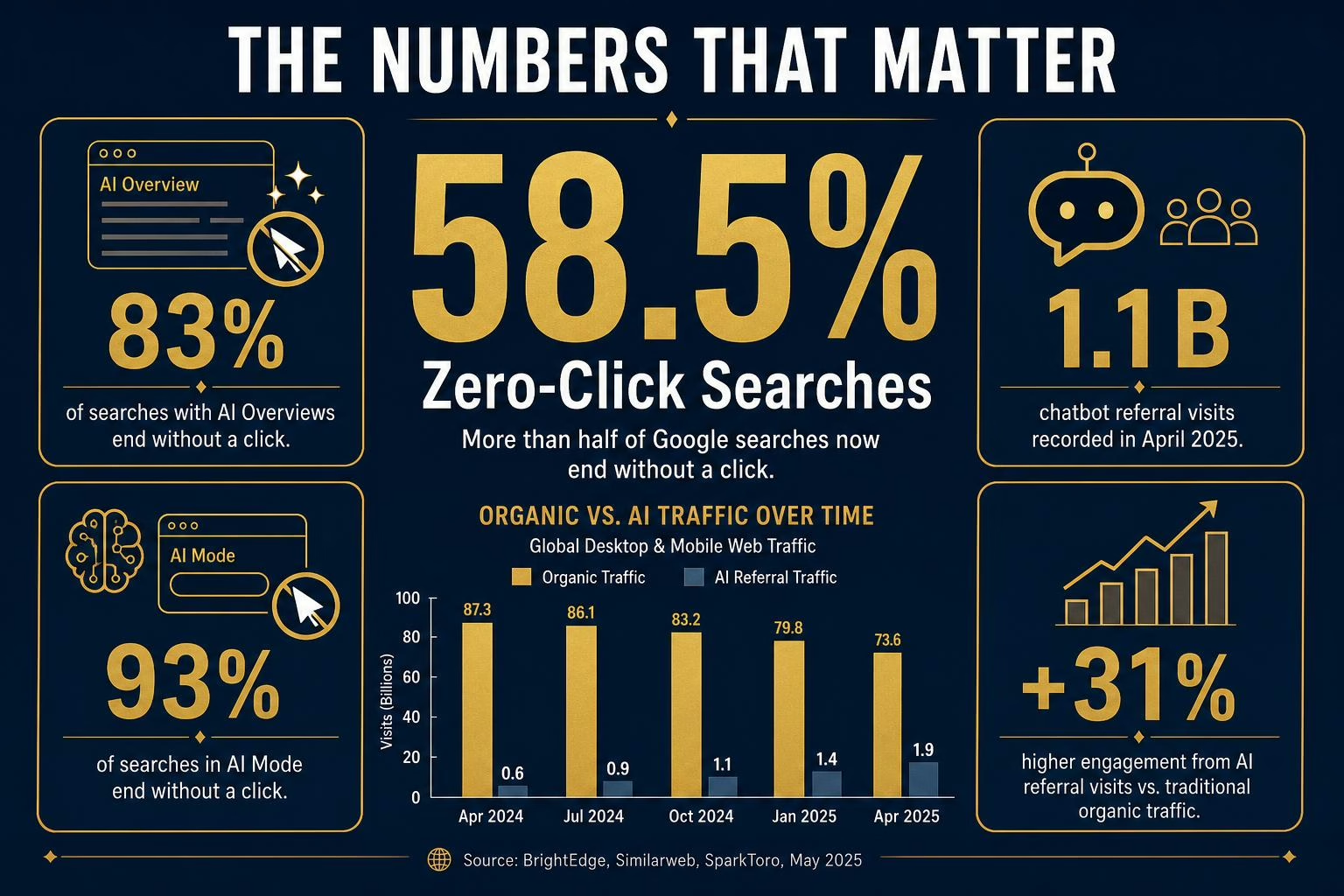
According to SparkToro’s 2024 zero-click search study, 58.5% of US Google searches end without a click. Among searches that specifically trigger AI Overviews, Similarweb reports that 83% end without a click. For searches in Google’s AI Mode, Semrush puts the zero-click rate at 93%.
That last number is striking. When someone uses Google’s AI Mode, 93 out of 100 searches never send traffic to any external website.
Pew Research Center found that click-through rates drop to just 8% when AI Overviews appear, compared to 15% for results without them. That is a 47% reduction in clicks for the same ranking position.
AI Referral Traffic Is Growing Fast, But from a Small Base
AI chatbot referral traffic reached 1.1 billion visits in June 2025 and grew 357% year over year, according to Similarweb’s 2025 Generative AI report. That growth rate is remarkable.
But here is the context that matters: despite that trend, AI referrals still account for just 1.08% of total web traffic, and organic traffic declined only 2.5%. AI discovery is fast-growing, but it does not replace SEO. Think of it as an additive layer on top of traditional search.
Google processes 417 billion searches per month. ChatGPT processes 72 billion messages per month, according to Search Engine Land. The volume gap is large. SEO still covers far more ground.
The Traffic That Does Come from AI Is High Quality
Early performance data shows 31% higher engagement metrics from answer engine traffic versus traditional search visitors, and 27% higher conversion rates when users do click through from answer engines, per 2025 SEO benchmarks.
The Washington Post found that visitors from AI platforms converted to subscriptions at four to five times the rate of traditional search visitors, as reported by EMARKETER. You may get fewer clicks from AI sources, but the people who do click tend to be more ready to act.
SEO Is Not Dead, But It Is Under Pressure
Organic search traffic is down about 2.5% between February 2024 and November 2025, according to Graphite. Not 25% or 50% like some predictions claim.
The sky is not falling. But the direction is clear. The zero-click rate for news searches grew from 56% to 69% in a single year. Categories that rely on informational content are feeling this the most. Brands that built their entire strategy around high-volume informational traffic, like HubSpot, have seen significant declines. Those building authority and brand recognition are weathering it better.
How Each Strategy Works in Practice
Knowing what these terms mean is one thing. Understanding how to actually apply them is another.
What Good SEO Still Looks Like
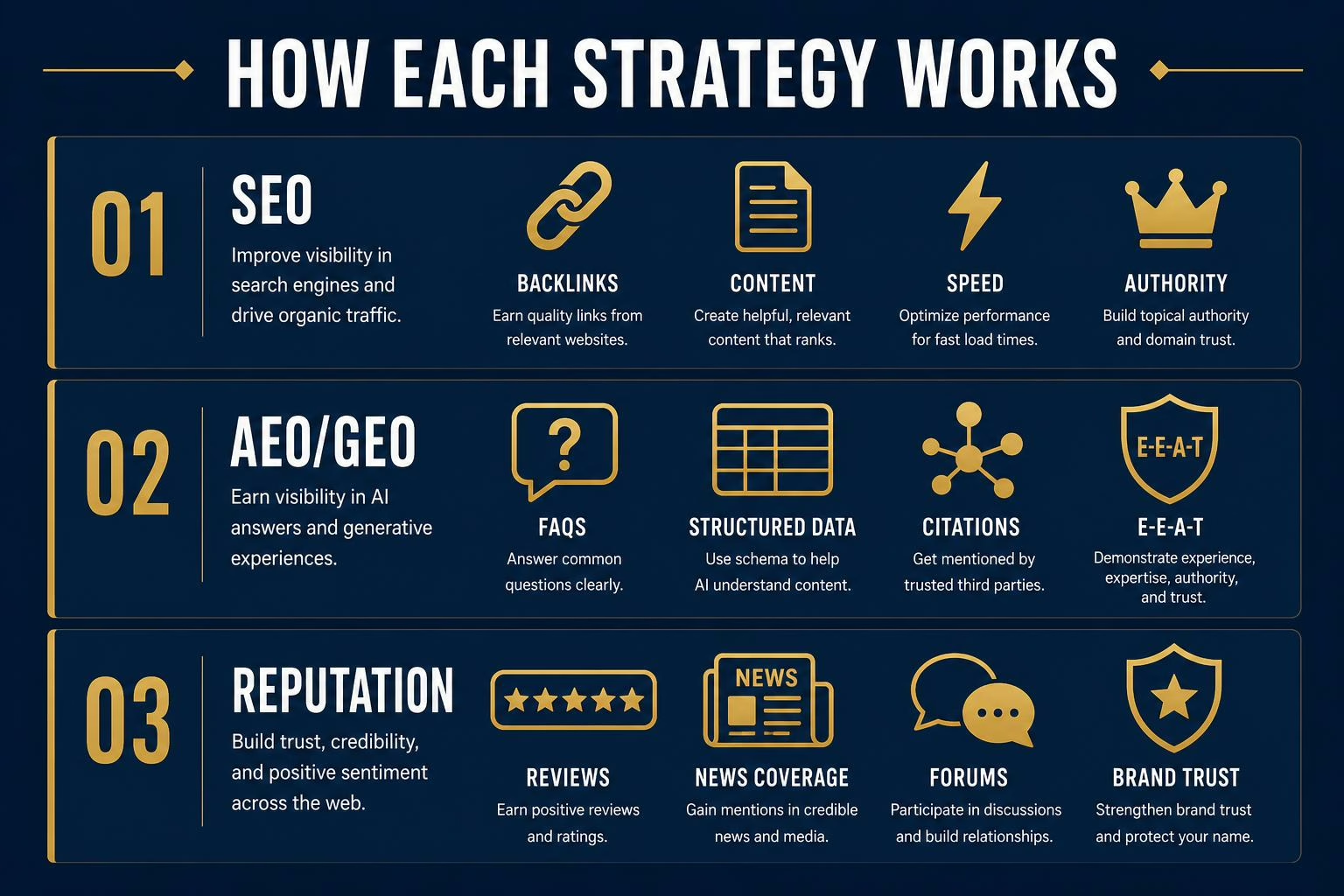
Strong SEO in 2025 is not fundamentally different from what it looked like three years ago. The core principles hold:
- Earn backlinks from credible, relevant sites
- Produce original content that covers topics in real depth
- Match search intent precisely
- Build a technically clean, fast-loading site
- Develop topical authority in your area
What has changed is the bar. Approximately 60% of web pages that rank on the first page of Google are three or more years old. Google rewards proven authority. Publishing thin content at scale no longer works. The winners are sites that build genuine expertise over time.
Local SEO deserves a mention here. It remains highly effective and relatively immune to the AI disruption affecting informational content. There are 97 billion local searches on Google per month. People are 70% more likely to visit local businesses with complete Google Business Profiles. If you serve a local market, your profile and local citations matter as much as ever. Our guide on how to use SEO for reputation management covers how search visibility and brand trust connect at the local level.
What AEO/GEO Requires
Earning visibility in AI-generated answers requires a different mindset than chasing keyword rankings. Here is what actually moves the needle.
Answer questions directly and early. AI engines favor content that gets to the point fast. State the answer in the first sentence or two, then provide the supporting detail. This structure is sometimes called BLUF writing, short for “bottom line up front.”
Use structured formatting. Content must directly address common user questions and use clear, scannable formatting like lists, tables, and FAQs, especially for YMYL topics. Heading hierarchy, bullet points, and FAQ sections all help AI systems parse and extract your content.
Build citations beyond your own site. Brands are 6.5 times more likely to be cited by AI through third-party sources than through their own domains. Being mentioned in credible publications, reviews, forums, and industry directories matters. Your presence across the web is the signal, not just what your own website says.
Focus on E-E-A-T signals. Experience, Expertise, Authoritativeness, and Trustworthiness is a growing trust filter for AI systems. Author credentials, original research, cited sources, and consistent factual accuracy all contribute to whether an AI system treats your content as reliable enough to reference.
Cover entities, not just keywords. AI systems understand topics, brands, and concepts, not just individual search terms. Writing that clearly defines what your brand does, who it serves, and how it relates to established concepts helps AI engines understand where to include you in relevant conversations.
Where Reputation Fits In
This is something most SEO guides miss entirely.
What AI systems say about your brand is heavily influenced by your overall online reputation. Reviews, third-party coverage, forum mentions, and news results all feed into how AI engines understand and describe who you are. A brand with a strong, consistent positive presence across many sources is far more likely to be cited accurately and positively than one with mixed signals or little coverage.
This is exactly why reputation management and GEO strategy overlap so much. Controlling your narrative across the web, not just on your own site, is now a direct factor in how AI describes you to potential customers. Understanding what reputation means in business is the starting point. From there, managing your company’s reputation and monitoring reviews and comments become practical GEO tasks, not just PR ones.
A useful way to think about it: your SEO determines whether you rank. Your reputation determines whether AI trusts you enough to cite you.
Is Your Reputation Working For or Against Your AI Visibility?
What AI engines say about your brand depends heavily on what the rest of the web says. NewReputation audits your third-party presence and helps you build the signals that earn AI citations.
- Audit your brand’s presence across reviews, publications, and directories
- Identify gaps between what you say and what others say about you
- Build the consistent, credible presence AI engines reward with citations
What to Prioritize Right Now
Given all of the above, here is a practical breakdown of where to focus.
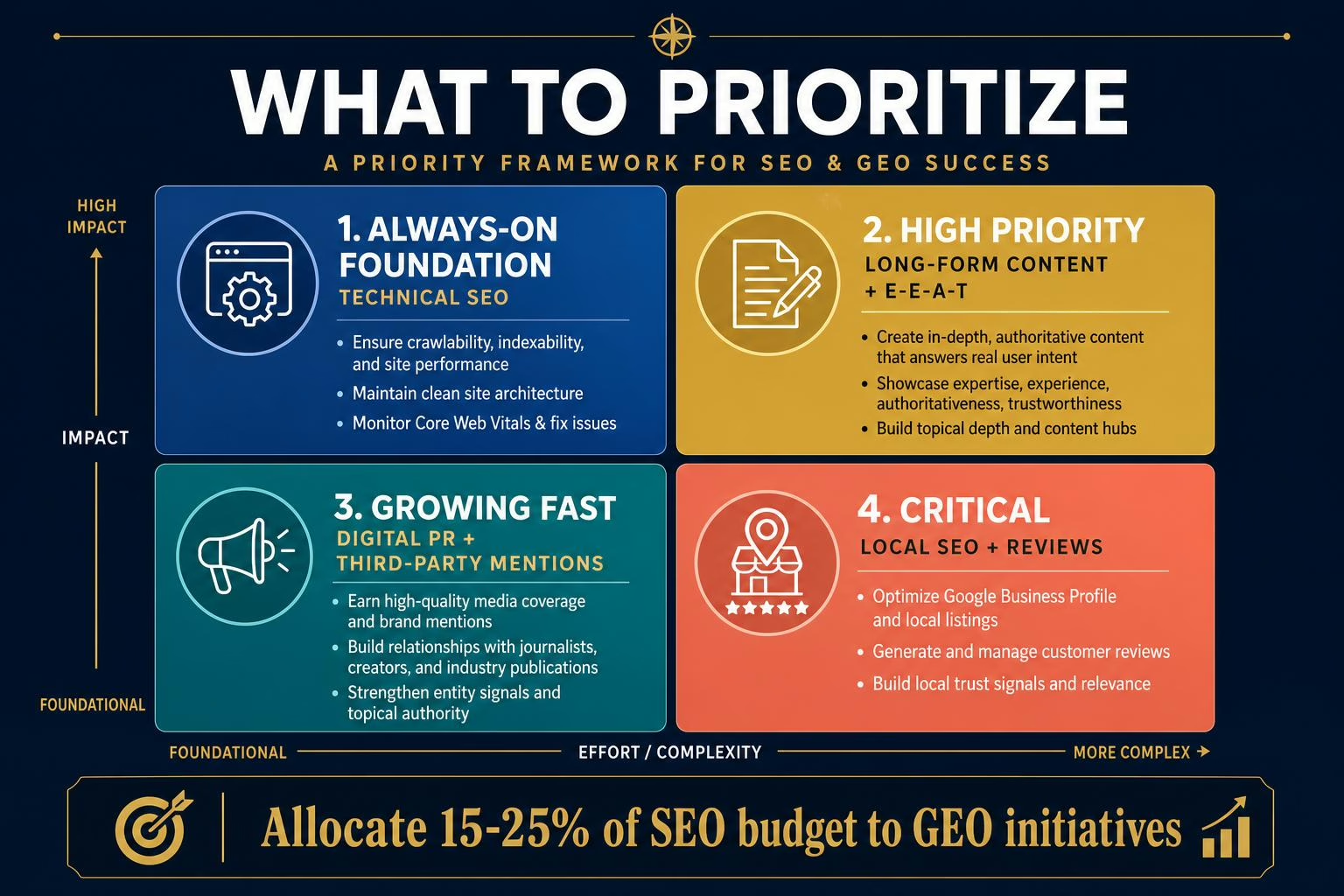
| Strategy | What It Affects | Priority Level |
|---|---|---|
| Technical SEO and site health | Google rankings, crawlability | Always-on foundation |
| Long-form, expert content | Rankings and AI citation | High |
| E-E-A-T signals | Google trust, AI inclusion | High |
| FAQ and structured markup | Featured snippets, AEO | High |
| Digital PR and third-party mentions | GEO citation signals | Growing fast |
| Google Business Profile | Local SEO | Critical for local |
| Review management | Local SEO and GEO trust | Critical |
Most experts recommend allocating 15 to 25% of your current SEO budget to GEO initiatives. The disciplines share significant overlap. Structured content, authority building, and E-E-A-T signals benefit both. Do not abandon SEO to chase GEO. Build on your existing foundation and extend it.
How to Measure Whether Any of This Is Working
Traditional SEO metrics like keyword rankings and organic traffic still matter. But they no longer tell the full story.
Track branded search volume. If your brand is being mentioned in AI responses, more people will search your name directly. Rising branded search is one of the clearest signals of growing AI visibility.
Monitor AI citation directly. Tools like Otterly.ai, Promptmonitor, and Peec AI track how often and where your brand appears in AI-generated responses across platforms. This is early-stage measurement, but it is becoming standard practice.
Watch engagement metrics. “The industry needs better visibility metrics, not just traffic metrics,” according to EMARKETER’s Kelsey Voss. That includes tracking citation presence in AI outputs, impression-level exposure, and shifts in branded and long-tail search demand.
Look at conversion quality. Since AI referral traffic converts at higher rates, even a small volume of it can be disproportionately valuable. Track where your conversions are actually coming from, not just your total traffic numbers.
Frequently Asked Questions
Is SEO dead because of AI?
No. Organic search still drives 53% of all trackable website traffic, and Google processes over 8.5 billion searches per day. Organic traffic declined about 2.5% between early 2024 and late 2025. That is a real shift, not a collapse. SEO remains the highest-volume and most cost-effective channel for most businesses.
What is the difference between AEO and GEO?
AEO focuses on formatting content so traditional search engines and AI features like featured snippets pull your content as a direct answer. GEO focuses on earning citations within synthesized AI responses from tools like ChatGPT and Perplexity. In practice, the tactics overlap heavily, and most practitioners use the terms interchangeably.
Does Google still matter for GEO?
Yes. Google AI Overviews appear in a growing share of searches, and earning a citation there is a form of GEO. Google is not separate from the AI search conversation. It is one of the biggest platforms you need to optimize for.
How do I get my brand cited by ChatGPT or Perplexity?
Build a broad, consistent presence across credible third-party sources. AI engines rely heavily on external mentions, reviews, and publications rather than just your own website. Earn coverage in credible publications, maintain strong review profiles, and structure your own content with clear, direct answers. Brands are 6.5 times more likely to be cited through third-party sources than through their own domains.
How long does GEO take to show results?
Similar to SEO, building authority for AI citation takes time. You are building signals across the web, not flipping a switch. Most practitioners who track it report seeing measurable changes in AI citation within three to six months of consistent effort.
Does my online reputation affect my GEO visibility?
Directly, yes. AI systems synthesize information from across the web. If reviews, news coverage, and third-party mentions paint a consistent, credible picture of your brand, that improves your chances of being cited accurately and positively. A fragmented or negative online presence is a GEO liability. Our guide on company reputation management covers how to build that foundation.
What role do reviews play in AEO and GEO?
A significant one. Reviews are third-party validation signals that AI systems weigh when deciding whether your brand is a reliable source. Consistent positive reviews across Google, industry directories, and relevant platforms all contribute to your citation authority. Monitoring your reviews and comments is not just a customer service task. It is part of your AI visibility strategy.
The Bottom Line
SEO is not being replaced. It is being joined.
The search landscape now has three layers that matter: traditional Google rankings, structured AI answers, and synthesized AI responses from tools like ChatGPT and Perplexity. Brands that show up across all three have a real advantage over those still focused on one.
The good news is that the fundamentals carry over. Original, well-structured, authoritative content performs well across all three. E-E-A-T signals matter everywhere. A credible presence built over time serves you in Google and in AI.
The new requirement is breadth. Being known and cited beyond your own website is now part of how search works. That means thinking about your entire online presence, not just your rankings. Our full guide on SEO for AI goes deeper on the tactical side, and our overview of using SEO for reputation management connects both disciplines into one strategy.
If you are unsure how your brand appears in AI-generated search results, or whether your online reputation is working for or against your visibility, contact the NewReputation team to find out where you stand.
Build Visibility Across SEO, AEO, and GEO
NewReputation helps brands build the credibility, presence, and content signals that earn visibility across Google, AI Overviews, and generative search tools.
- Audit your current visibility across Google and AI search platforms
- Identify the reputation and content gaps holding your brand back
- Build the authority signals that earn AI citations and organic rankings