
Last Updated on 2 months ago by Admin
If your photo turns up in an “Are We Dating the Same Guy?” post, here is the honest short version: stay calm, save everything, report only what actually breaks the group’s rules, and do not argue in the comments. Getting a post removed is harder than most people expect, because US courts have repeatedly ruled that opinions shared in these groups are protected speech. What you can control is the evidence you keep, how you respond, and what shows up when someone searches your name.
It is late, and you are scrolling through Facebook when something catches your eye. “Anyone else dating this guy?” with a Tinder screenshot, posted in a group called “Are We Dating the Same Guy?” The comments pour in from people you have never met. If the photo is of you, it can feel like the whole internet is staring.
These groups are everywhere now. They started as a way for women to compare notes and avoid getting played, and many members describe them as a safety tool. But they have taken on a life of their own, and a place meant for dating support can quickly feel like a courtroom with no judge. This guide explains how the groups work, what your options really are, and how to protect your reputation beyond Facebook.

Table of Contents
How These Groups Work
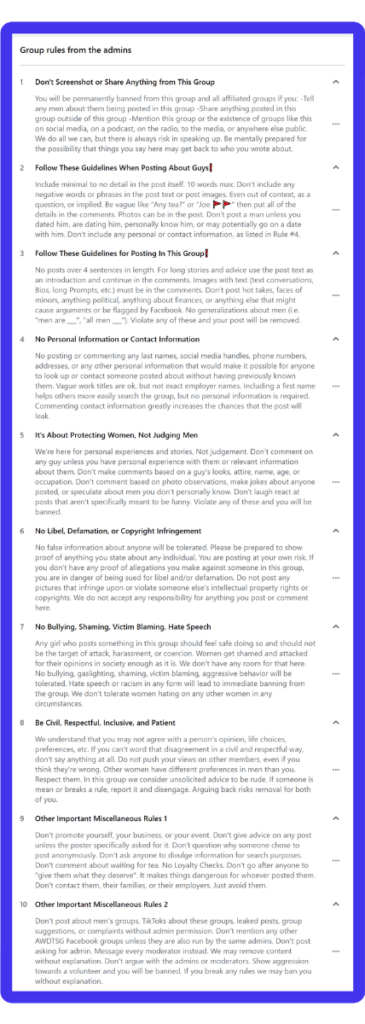
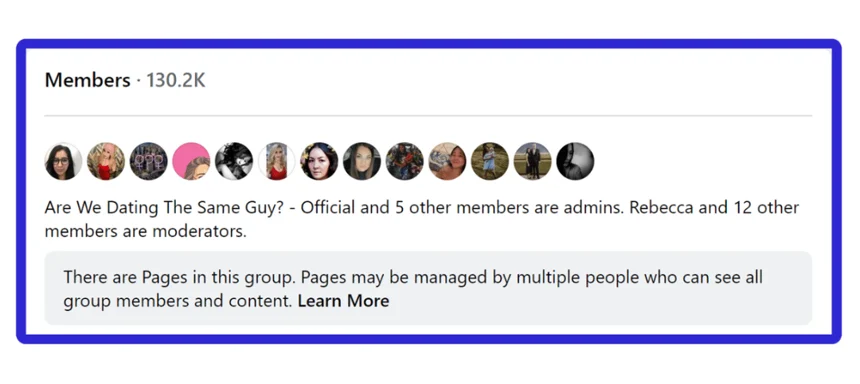
The groups run on rules, at least in theory. No last names. No personal information like addresses or workplaces. First names only, and a brief “has anyone else seen this guy?” style of post. Moderators approve posts before they go live, but approval is not fact-checking. Nobody verifies whether what is said is true.
Once a post is up, it can spread fast. Comments arrive, stories get added, and things sometimes spiral. Maybe someone is venting. Maybe they are mistaken. Maybe they are angry. Whatever the reason, your reputation is suddenly up for debate among strangers.
Even when nothing said is true, the damage can be quick. Your name gets linked to accusations, screenshots leave the group, and people outside it start talking. That reach is exactly what makes these posts stressful, even though, as the next section explains, most of what appears in them is legally difficult to force offline.
The Legal Reality You Should Know
This is the part that is easy to get wrong, and it matters for setting your expectations before you spend energy trying to force a post down.
Several men have sued over posts in these groups, and the results have been consistent. Courts have largely treated the posts as protected opinion rather than defamation. In a closely watched Illinois federal case, a judge dismissed a lawsuit against group members and moderators, ruling that statements like calling someone a “psycho” or saying he “ghosted” were opinion, not provably false statements of fact. In California, judges have thrown out similar suits under anti-SLAPP laws, which exist to stop lawsuits that try to silence protected speech, and in some cases the person who sued was ordered to pay the defendants’ legal fees.
Two legal principles drive this:
- Opinion is protected; false facts are not. “He was rude to me” or “he ghosted me” reads as personal opinion and is very hard to challenge. A specific, provably false claim stated as fact, such as “he was convicted of assault” when he was not, is different, and can cross into defamation.
- Platforms are shielded. Under Section 230, Facebook and its moderators generally are not liable for what users post. That is why suing Meta over these posts has not worked.
Understanding that most of these posts are legally protected saves you from pouring energy into a fight that rarely succeeds, and points you toward the things that do work: documenting genuine rule violations, reporting those specifically, correcting provably false factual claims, and shaping what people find when they search your name.
What to Do If You Are Posted
If your name or photo lands in one of these posts, the instinct is to panic. Do not. Work the steps instead.
Save everything first. Screenshot the post, the comments, and the reactions, and copy the URL. It is fine to break the “don’t screenshot” group norm here, because you need proof of what was said in case it is removed later or you decide to act on a specific false claim.
Do not respond in the comments. You will want to defend yourself or set the record straight. Resist it. Arguing publicly feeds the drama, keeps the post active, and often makes things worse. Silence is the stronger move.
Report what genuinely breaks the rules. Reporting works best when a post violates a concrete policy rather than simply upsetting you. More on exactly what qualifies in the next section.
Address provably false factual claims separately. If a post states a specific, false thing as fact, not just an unflattering opinion, that is the narrow situation where a defamation claim or a lawyer’s letter may have teeth. Save that specific post and consider legal advice.
Find Out If It Has Spread Beyond the Group
These posts often leak into search results and screenshots. NewReputation’s free scan shows what actually comes up when someone searches your name.
- See whether the post appears in your search results
- Find out what employers and dates find first
- Free scan, confidential, no obligation
What Reporting Can and Cannot Do
Reporting is worth doing, but it helps to know when it tends to work and when it does not, so you aim your effort where it counts.
| Reporting tends to work when… | Reporting rarely works when… |
|---|---|
| The post shares your last name, address, workplace, or other private information (against group and platform rules) | The post is an unflattering opinion about a date |
| Your photo is used in a way that breaks the platform’s rules, or you can claim it under your own copyright | You simply disagree with what was said |
| The post includes harassment, threats, or targeted abuse | The content is embarrassing but not rule-breaking |
| The post contains a specific, provably false factual claim | Strangers are piling on in the comments |
When you report, point Facebook to the specific rule broken rather than saying you dislike the post. Reference the exposed private information, the harassment, or the false factual claim directly. A precise report has a far better chance than a general complaint. Facebook does act on genuine privacy and harassment violations, though not always quickly.
It Is Not Just About Facebook
The real risk is often not the post itself but where it travels. These posts can end up in Google search results, get passed around in screenshots, or land in group chats. Sometimes you only find out when a friend mentions it.
That is why it helps to know what is out there. Monitoring what is said about you online means you catch things early, when they are easier to address. It is also a good moment to tighten your own footprint: set your social profiles to private, lock down old posts, and check what currently shows up when you search your own name.
If a post has reached Google, that is a separate problem from the Facebook post, and it has its own solutions. Our guide on removing content from Google search covers what qualifies for removal, and you can read more about social media privacy risks and how to protect your information.
Where the content is a provably false statement of fact rather than opinion, or where it involves harassment or your private information, the situation shifts in your favor. Our guides on online defamation and what to do if your ex is trying to ruin your reputation go deeper on those cases.
Frequently Asked Questions
Can I get a post removed from an “Are We Dating the Same Guy?” group?
Sometimes, but it is harder than most people expect. Reporting works best when a post breaks a concrete rule, such as sharing your last name, address, or workplace, using your photo against platform rules, or including harassment or a provably false factual claim. If the post is simply an unflattering opinion about a date, courts have generally treated that as protected speech, and platforms rarely remove it. Aim your report at the specific rule violation.
Is it illegal for people to post about me in these groups?
Usually not. US courts have repeatedly ruled that opinions shared in these groups, like saying someone “ghosted” or was “rude,” are protected speech rather than defamation, and lawsuits over them have been dismissed, sometimes with the plaintiff ordered to pay legal fees. The exception is a specific, provably false statement presented as fact, such as falsely claiming someone was convicted of a crime, which can cross into defamation.
Should I comment to defend myself?
No. Arguing in the comments almost always makes things worse. It keeps the post active, feeds the drama the thread runs on, and can draw more attention and screenshots. Instead, save evidence quietly, report any genuine rule violations, and focus your energy on what you can control, including correcting provably false claims through the right channels and managing what appears when someone searches your name.
Can I sue someone for posting about me?
Only in narrow circumstances. Defamation requires a provably false statement of fact, not an opinion, and courts have dismissed most suits over these posts as protected speech. Anti-SLAPP laws in many states can even make the person who sues pay the other side’s legal fees. If a post makes a specific, false factual claim that has caused real harm, talk to an attorney about your options. For general opinions, legal action is rarely worthwhile.
What if the post shows up in my Google results?
That is a separate issue from the Facebook post and is often more addressable. Google has removal request forms for certain categories, such as pages that expose personal contact information or non-consensual intimate images. If a post or screenshot has been indexed, you can request removal where it qualifies, and work on publishing positive content that ranks above it. A reputation professional can help identify the most realistic path for your specific case.
You Do Not Have to Sort This Out Alone
NewReputation works with people in this exact situation every day, from tracking where a post has spread to cleaning up search results and rebuilding a positive online presence.
- Track where the content has traveled online
- Search result cleanup where removal is possible
- Positive content building and ongoing monitoring
This article provides general information and is not legal advice. Laws vary by state, and every situation is different. For advice specific to your circumstances, consult an attorney.