Last Updated on 8 months ago by Admin
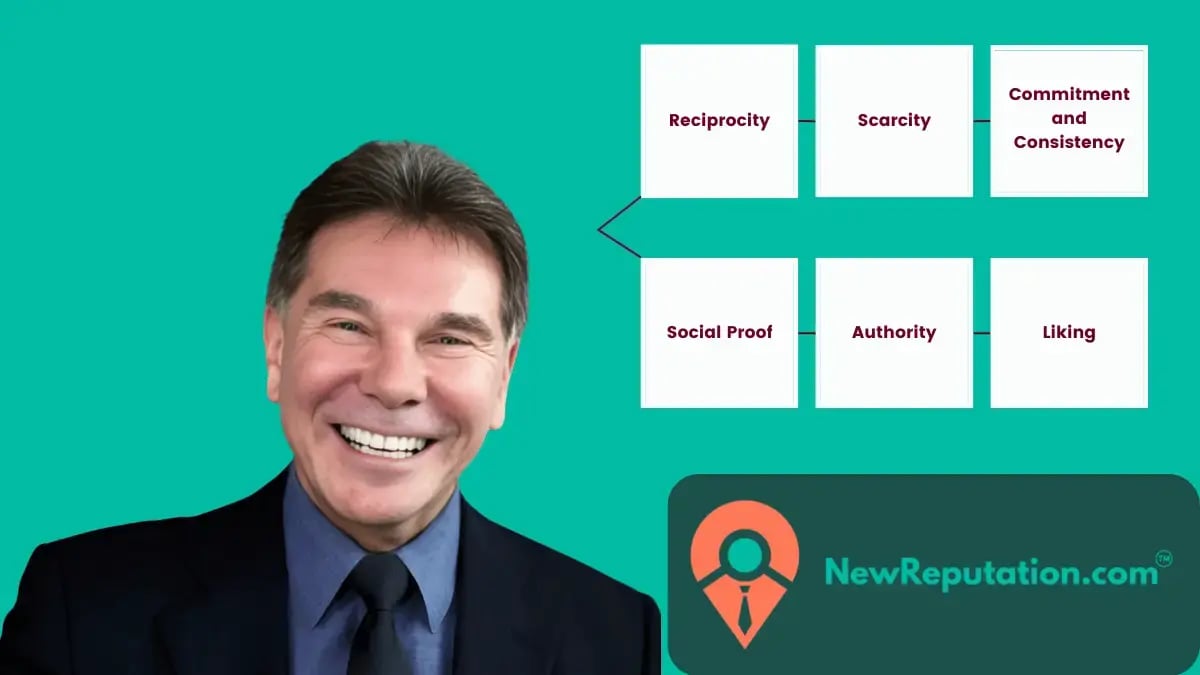
Picture reaching your goals more quickly by using a few straightforward tools. Robert Cialdini’s Six Principles of Persuasion offer a helpful way to understand why people agree to certain requests. Learning these principles can make you a more effective communicator.
1. Reciprocity
Definition:
Reciprocity is based upon the belief that when we do something for another person, they will do something in return for us. A study found that the addition of a second mint at restaurants increased tips by up to 42%, illustrating the power of this principle. Reciprocity is a fundamental part of our social nature and is one of the reasons why people say “yes”.
How It Works:
For instance, when a restaurant gives a customer a mint after their meal, it creates a feeling of obligation. As a result, customers may leave a larger tip than they normally would.
How to Use It:
To get people to agree to your request, try doing something nice for them first. This can be a small gift or act that will encourage them to reciprocate.
2. Scarcity
Definition:
Scarcity is the concept that people perceive value to exist in scarcity, therefore people tend to place greater value in items that are rare or difficult to obtain. Imagine a shopper who has been eyeing a specific pair of sneakers for weeks. When they learn that only a single pair remains in stock, the allure of these sneakers multiplies. The shopper, motivated by the fear of missing out, may rush to purchase them without hesitation, valuing them even more due to their scarcity.
How It Works:
For example, when a store limits how many of a product are available, customers see it as rare and are more likely to buy it quickly. Even if there’s plenty in stock elsewhere, we still want what seems scarce. This shows how our feelings can outweigh logic, making us value rare things more.
To increase the likelihood of people agreeing to your request, create a sense of urgency. Paint a picture with your words: “The offer is only available until the sun dips below the horizon tonight.” This transforms urgency into a vivid, time-stamped prompt, nudging the customer towards immediate action.
To encourage people to agree to your request, let them know there are only a few items left. For example, you can tell them there are just five products remaining.
3. Commitment and Consistency
Definition:
Commitment and consistency refer to the fact that once people commit to an initial request, they are more likely to agree to additional requests in the future.
How It Works:
For example, if you ask a colleague to sign a petition for a cause, that small act shows commitment. Later, if you ask them to donate to the same cause, they are more likely to agree because they already showed support.
How to Use It:
Start with an easy to accept request. Once a person has agreed to the request, ask for a subsequent, potentially larger request. For example, you might begin with a micro-ask like, ‘Could you spare two minutes to talk about this?’ This concrete wording helps lay the foundation for making a larger request later. Your colleague may be more likely to agree to the second request due to the prior commitment.
4. Social Proof
Social proof refers to the fact that people tend to emulate the behavior of others. If they see others performing an activity or supporting a cause, they are more likely to do so themselves.
For example, For example, if a review says ‘7 in 10 people recommend this product,’ it shows social proof. This makes others more likely to buy, since it feels like a safer choice.f refers to the fact that people tend to emulate the behavior of others. If they see others performing an activity or supporting a cause, they are more likely to do so themselves.
How It Works:
A good example of social proof is a restaurant with a long line outside. People often assume the food is good and are more likely to go in themselves.
How to Use It:
Showcase testimonials, reviews, and examples of people who have performed similar actions to those you are requesting. Arrange these testimonials in a mini-story format, starting with a brief mention of initial doubt or challenge, followed by the action taken, and ending with the positive outcome achieved. For example, you might present a brief narrative: ‘Initially skeptical, John decided to try our product. Within weeks, he saw a remarkable improvement in productivity.’ This storytelling approach makes proof emotionally resonant and helps create a perception in the mind of the individual that the requested action is acceptable.
5. Authority
Definition:
Authority means people are influenced by experts or those in charge. We usually respect and trust authority figures.
How It Works:
As an example, medical professionals are generally considered authority figures in medicine. When medical professionals recommend a course of treatment, most patients are likely to follow their recommendations.
How to Use It:
Show your qualifications and experience. For example, when I led a team through a tough 24-hour project, it proved my skills and built trust. If you’re seen as an expert in your field, people are more likely to listen to you.
Share your experience and qualifications. Being recognized as an expert makes it easier to persuade others.
6. Liking
Definition:
Liking is the degree to which an individual likes the person making the request. The more people like the person making the request, the more likely they are to agree to the request.
How It Works:
For example, if a friend recommends a product, you’re more likely to buy it than if a stranger suggests it. People usually agree more easily to requests from friends or people they know.
How to Use It:
Build a relationship with the individual you are attempting to persuade. Be friendly, approachable, and express genuine interest in the individual.
7. Unity
Definition:
Unity is about how much two people feel they have in common. When you find common ground, people are more likely to agree to your requests.
How It Works:
Unity creates a sense of belonging. When people feel part of a group, they are more likely to agree to requests from other group members.
How to Use It:
Find things you have in common with the person you want to persuade. Pointing out these similarities builds a stronger connection and makes it more likely they’ll agree to your request.
Conclusion
Cialdini’s six (now seven) principles of persuasion offer simple but powerful ways to influence others. Whether you’re trying to sell a product, gain support for a cause, or simply win someone over, these principles can be your guide.
- Reciprocity: Give first to receive.
- Scarcity: Make it limited to make it valuable.
- Commitment and Consistency: Start small, then go bigger.
- Social Proof: Show others are doing it.
- Authority: Be the expert.
- Liking: Build a connection.
- Unity: Highlight shared identities.
Understanding and using these principles can improve your ability to persuade in both personal and professional settings. Simple, practical, and effective—these strategies can lead to better outcomes when you need someone to say “yes.”