
Last Updated on 3 months ago by Admin
An SEO project plan is the roadmap that brings structure and direction to work that often feels scattered. Instead of fixing whatever issue surfaces first or publishing content and hoping it helps, a plan organizes every task into a clear sequence that supports measurable growth. It tells you what to focus on, when to do it, and how to know if it is working.
Search engines reward consistency, technical accuracy, helpful content, and authority. Those pieces only work together when a clear strategy connects them. This guide walks through how to build a complete SEO project plan from the ground up, covering goals, content, keyword research, audits, link building, on-page and technical work, and ongoing reporting. Each step connects to the next, so your project becomes a system rather than a pile of disconnected tasks.
Table of Contents
- The phases of an SEO project plan
- 1. Set goals and objectives
- 2. Build a content strategy
- 3. Keyword research and mapping
- 4. Website and competitor analysis
- 5. Off-page SEO and link building
- 6. On-page optimization
- 7. Technical SEO
- 8. Project management and execution
- 9. Tracking, reporting, and improvement
- Frequently asked questions
The Phases of an SEO Project Plan
A good plan moves through clear phases, each building on the last. Here is the whole project at a glance before we dig into each step.
| Phase | What it covers | Main output |
|---|---|---|
| Goals | Business outcomes and KPIs SEO should drive | Clear objectives and benchmarks |
| Content strategy | What to create, update, and publish | Content plan and calendar |
| Keyword research | The terms your audience searches | Keyword map tied to pages |
| Audit and analysis | Your current state and competitors | Baseline and opportunity list |
| Off-page and on-page | Authority building and page optimization | Link plan and optimized pages |
| Technical SEO | Crawlability, speed, structure | Fixed technical issues |
| Tracking | Measuring results and adjusting | Reporting and ongoing improvement |
1. Set Goals and Objectives
Start by setting objectives that drive real business outcomes. They need to be specific, measurable, and tied to the key performance indicators your organization already uses. Many teams set rankings as their main goal, but rankings alone do not prove value. Value shows up in conversions, organic traffic growth, engagement, and visibility in search features. Our guide on what drives organic visibility covers some of these signals.
Good objectives answer a few questions:
- What business outcomes should SEO support?
- Which KPIs will measure progress toward those outcomes?
- What benchmarks set your starting position?
- How much impact do you expect from each strategy?
- How much effort will that impact take?
Benchmarks matter most for setting expectations. They show how visible your content is now, which pages perform well or poorly, and how you rank for both short and long-tail terms. They also reveal your strengths and weaknesses, which shapes your timeline. Keep in mind that the vast majority of clicks happen on the first page of results, so visibility on page two rarely produces meaningful business outcomes. When your SEO objectives line up with your overall business goals, every task in the plan drives a measurable result.
2. Build a Content Strategy
Next, create a content strategy that supports those goals. Content planning matters because search engines reward sites that deliver consistent, helpful, well-organized information. A strong strategy covers creating new content, updating older pages, filling topic gaps, and publishing on a predictable schedule.
Start with a content gap analysis. This finds missing topics, outdated articles, thin pages, and areas where competitors go deeper. Those gaps become your content plan.
Topic clusters and pillar pages are the best way to structure that plan. A pillar page gives an overview of a broad topic, and cluster pages cover specific subtopics and link back to it. This structure signals your expertise to search engines, strengthens internal linking, and helps you rank for many related terms. Content calendars keep the whole thing consistent, which is one of the strongest indicators of SEO success. They help your team plan assignments, manage publishing, and coordinate outreach. Formatting matters too, since readers skim and search engines read headings, spacing, and lists to understand your content.
3. Keyword Research and Mapping
Keyword research guides the rest of the plan. It shows how people search, what problems they want solved, and which terms hold the most potential for traffic and conversions. More than half of searches now use four or more words, which is why long-tail keywords that reflect specific intent matter so much.
The process means reviewing search volume, keyword difficulty, related and semantically similar terms, and search intent. Analyzing the results pages for each term is just as important, because it shows what kind of content already ranks. Some terms reward how-to guides, others reward comparisons, tools, or product pages. Matching that intent is what gets you ranked.
Once research is done, map each keyword to a specific page. This prevents two pages competing for the same term and keeps your clusters organized. Keyword mapping also makes sure your pillar pages stay the central authority, with supporting content linked to them. One useful insight: the page in the top spot for a term typically ranks for hundreds of related keywords too, because well-structured content naturally attracts semantic variations. Strong research plus strong structure multiplies your visibility.
4. Website and Competitor Analysis
Before making improvements, you need an accurate picture of where your site stands. A complete SEO audit examines technical performance, on-page elements, site architecture, content depth, internal linking, and indexation. It shows where you are strong, where you struggle, and where the opportunities are.
The audit should review authority signals, current rankings, inbound links, and indexation patterns. It should also flag thin or duplicate content, outdated pages, slow load times, mobile usability issues, and inconsistent titles or meta tags. A site audit tool helps surface broken links, crawl errors, and pages that are accidentally blocked.
Competitor analysis adds valuable context. It shows how other sites structure content, which keywords they rank for, and which topics they emphasize. Looking at their backlinks reveals patterns and highlights link opportunities for you. Studying their strengths and gaps lets you sharpen your own approach. This phase gives you a baseline so every later decision rests on data instead of guesswork.
See Where Your Site Stands Today
NewReputation’s free scan gives you a baseline of your current online visibility and search presence, so your plan starts from real data.
- A snapshot of your current search visibility
- Where you stand against competitors
- Free scan, no obligation
5. Off-Page SEO and Link Building
Off-page SEO builds the authority and trust search engines rely on for rankings. Backlinks are one of the strongest credibility signals, and pages in top positions tend to have far more quality links than the pages below them.
Your link building should focus on links that are relevant, trustworthy, and earned in context. That includes press releases, guest posts, broken link building, link-worthy content, and outreach that earns mentions on other sites. Unlinked brand mentions are worth chasing too, since you can often request a link. The work pairs with your content strategy: strong content creates natural linking opportunities, and steady outreach turns them into links. Treat link building as ongoing, because authority grows gradually, not in bursts.
Off-page work also supports online reputation management. Mentions, reviews, and brand discussions shape trust signals that go beyond backlinks, and a complete plan recognizes the link between authority and reputation.
6. On-Page Optimization
On-page optimization makes each page easy for search engines to understand and easy for people to use. It covers your titles, meta tags, headers, URL structure, content quality, and internal linking. It also includes optimizing images, using varied anchor text, staying mobile-friendly, improving page speed, and adding schema markup where it fits.
Internal linking deserves special attention. It helps search engines see how your content connects, highlights your priority pages, and strengthens your overall structure. It also helps people navigate, which keeps them engaged longer.
Content quality is central. Search engines weigh clarity, depth, accuracy, and usefulness, favoring content that solves problems. Improving structure and readability helps both search engines and readers. On-page work should be ongoing, with a regular schedule for updating content, refining structure and meta tags, and keeping everything consistent.
7. Technical SEO
Technical SEO lets search engines crawl your site, interpret it, and index it. A technical audit looks for crawling problems, weak site architecture, mobile usability issues, slow load speeds, duplicate pages, redirect chains, robots.txt errors, structured data mistakes, and mobile-first indexing issues.
This matters because a site that loads slowly or blocks crawlers will never rank well, no matter how good the content is. Tools like Screaming Frog and PageSpeed Insights help you find and fix these issues. Clear structure helps too: logical navigation, consistent internal links, and clean menu labels make it easier for search engines to index and understand your content, which can earn you rich results.
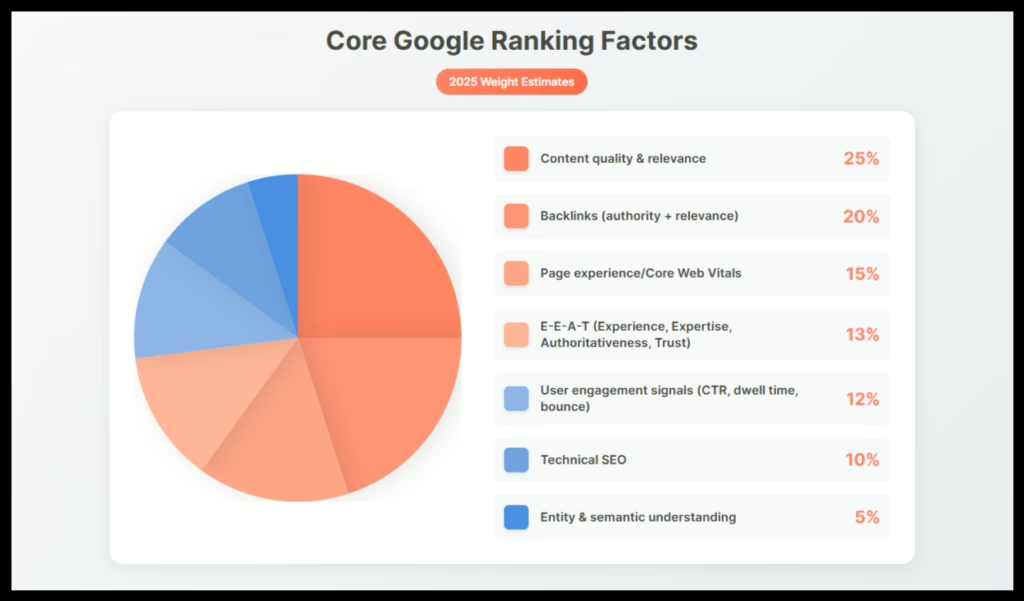
Technical SEO also prepares your site for trends like voice search, where clear structure, semantic organization, and long-tail phrasing matter most. The same clarity increasingly helps you show up in AI-generated answers, which pull from well-structured, trustworthy pages.
8. Project Management and Execution
Even a great plan fails if you do not follow it consistently. Project management keeps SEO accountable, organized, and on a predictable timeline. Your plan should spell out who is responsible for what, when, how, and which tools track progress.
Tools like Trello, Jira, Google Sheets, or a simple spreadsheet help your team follow a clear workflow so everyone knows their role at each step. A statement of work defines expectations for each team member, and a tracking document lists completed tasks, next steps, and any changes to the plan.
One execution detail is easy to overlook: if you are migrating or reorganizing your site, build a clear redirect strategy and a 301 redirect map first, so you do not lose rankings in the move. Good execution depends on collaboration across writing, editing, development, design, outreach, and analytics. A well-structured plan prevents bottlenecks, reduces miscommunication, and keeps everyone focused on the goals you set at the start.
9. Tracking, Reporting, and Improvement
SEO never really ends, because search engines, user behavior, and competitors keep changing. So you cannot treat it as a one-time project with a finish line. You need a plan that tracks performance, measures success, and adjusts based on data.
Google Search Console is essential for seeing how your site performs in search. Your baseline metrics show where you start, and regular monitoring of rankings, organic traffic, click-through rates, and individual page performance reveals trends and areas to improve. Analytics and reporting tell you what is working and what is not, so you can make informed decisions. Position tracking tools monitor ranking changes, and periodic audits catch new technical problems.
Regular performance reviews keep your project aligned with your business goals. Over time, this turns SEO from a short-term tactic into a long-term growth strategy. Because algorithms keep evolving, today’s tactics may not work tomorrow, so your plan needs the flexibility to adapt.
Frequently Asked Questions
What is an SEO project plan?
An SEO project plan is a structured roadmap that organizes all your SEO work into a clear sequence tied to measurable goals. Instead of reacting to issues one at a time, it connects goal setting, content strategy, keyword research, audits, link building, on-page and technical work, and reporting into a single system. The result is a plan that tells you what to do, when, and how to measure whether it is working.
What should an SEO project plan include?
A complete plan includes clear goals tied to business KPIs, a content strategy with a calendar, keyword research mapped to specific pages, a website and competitor audit, an off-page link building plan, on-page optimization, technical SEO fixes, a project management system with assigned roles, and a tracking and reporting process. Each part connects to the others so the whole effort works as a system.
How long does an SEO project plan take to show results?
Some technical and on-page fixes can affect performance within weeks, but most SEO results build over three to six months and continue compounding from there. Content, links, and authority grow gradually rather than in sudden jumps. This is why a plan emphasizes consistency and ongoing tracking rather than treating SEO as a one-time project with a fixed end date.
Why do you need a plan instead of just doing SEO?
Without a plan, SEO becomes scattered: teams fix random issues and publish content without knowing if it supports a larger goal. A plan connects every task to a measurable outcome, sets priorities, assigns responsibilities, and creates a timeline. It prevents wasted effort, keeps everyone aligned, and makes it possible to tell what is actually working so you can improve over time.
Who should be involved in an SEO project plan?
Effective SEO execution involves everyone who touches the website: writers, editors, developers, designers, outreach specialists, and analysts. A clear plan defines each person’s role at each step using a statement of work and a tracking document. This collaboration prevents bottlenecks and miscommunication and keeps the whole team focused on the goals set at the start of the project.
Need Help Building or Executing Your SEO Plan?
NewReputation builds and runs complete SEO project plans: strategy, content, technical work, link acquisition, and tracking, all driven by a clear, data-informed roadmap.
- Strategy and content planning tied to your business goals
- Technical optimization, link building, and on-page work
- Tracking and reporting so you see steady progress