Ubersuggest vs Moz vs Ahrefs: Which SEO Tool Is Best in 2026?
A clear, honest comparison based on how these tools actually work—not marketing claims.
SEO tools are supposed to make your life easier. Most of the time, they don't.
Most comparison articles try to prove one tool is better than the others. They list features, quote database sizes, and call it a day. That misses the point.
The real question isn't which SEO tool is "best."
It's which SEO tool fits how you actually work.
In 2026, three tools still show up in almost every SEO conversation: Ubersuggest, Moz Pro, and Ahrefs. They all help with keyword research, rankings, and site analysis. But they solve different problems for different people.
This guide breaks them down clearly. No hype. No jargon. Just how these tools work in practice.
Before Comparing Tools: One Reality Check
Here's the thing
SEO tools don't create rankings. They don't write content that's guaranteed to rank. They don't fix broken sites. They don't build links. What they do is show you signals.
Some tools show simple signals that are easy to act on. Others show deep signals that take experience to understand. The right tool depends on whether those signals match your skill level and goals.
- → If a tool overwhelms you, it slows you down.
- → If a tool hides too much, it limits your growth.
That balance matters more than any feature list.
Ubersuggest: Built for Accessibility
Ubersuggest is built to remove friction. Neil Patel made it for people who want SEO help without becoming SEO experts. You can see that thinking throughout the product.
Who Ubersuggest Is Really For
Ubersuggest works best for:
- •Beginners learning SEO
- •Bloggers and solo creators
- •Small business owners running their own sites
- •People who want quick answers
If SEO is one part of your job—not your whole job—Ubersuggest feels easy to use.
SEO Opportunities in Ubersuggest
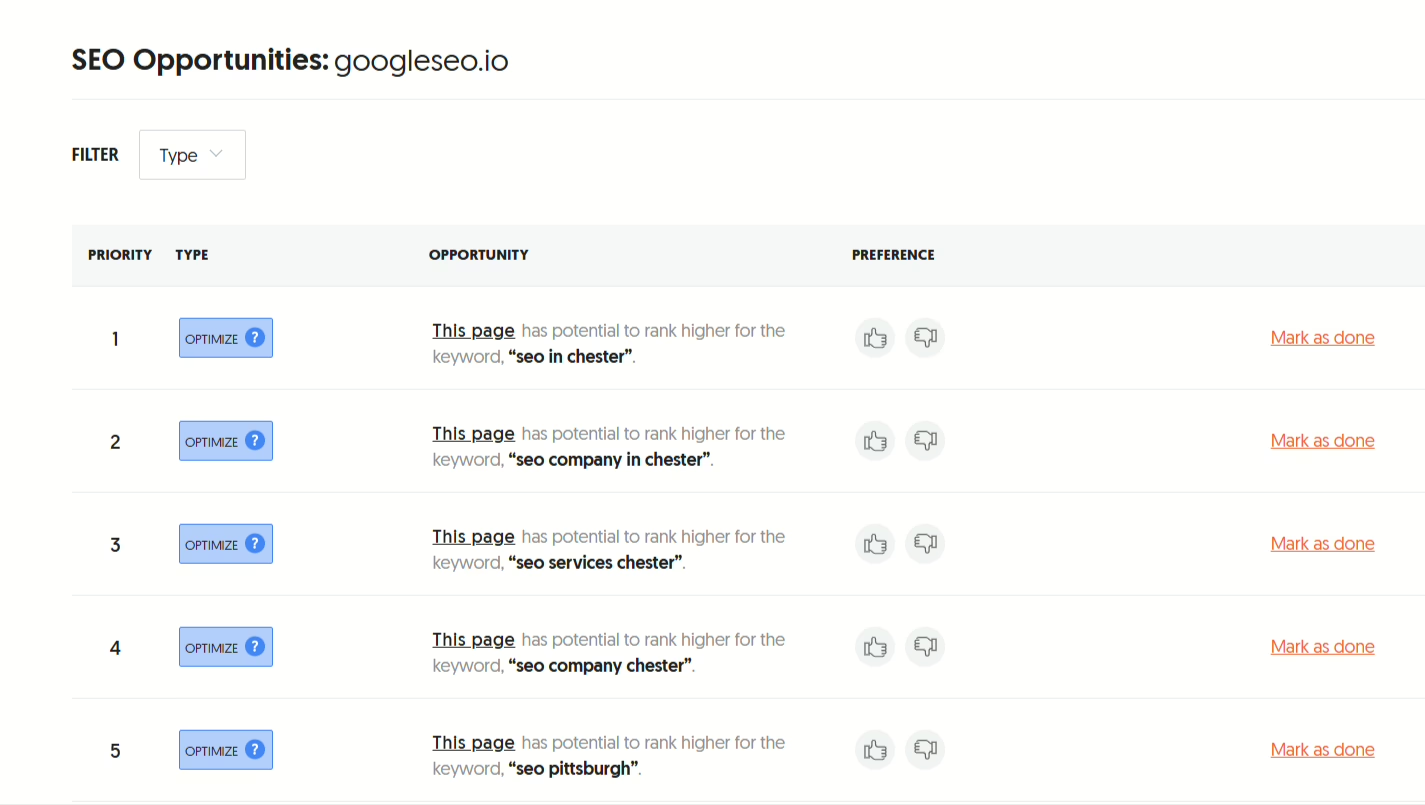
Ubersuggest has an SEO Opportunities view that ranks your tasks by priority. It shows you which pages could rank higher for specific keywords.
Keyword research is where most people start. Ubersuggest makes it simple. Type in a keyword and you get:
- • Estimated search volume
- • How hard it is to rank
- • Seasonal trends
- • Related keyword ideas by topic
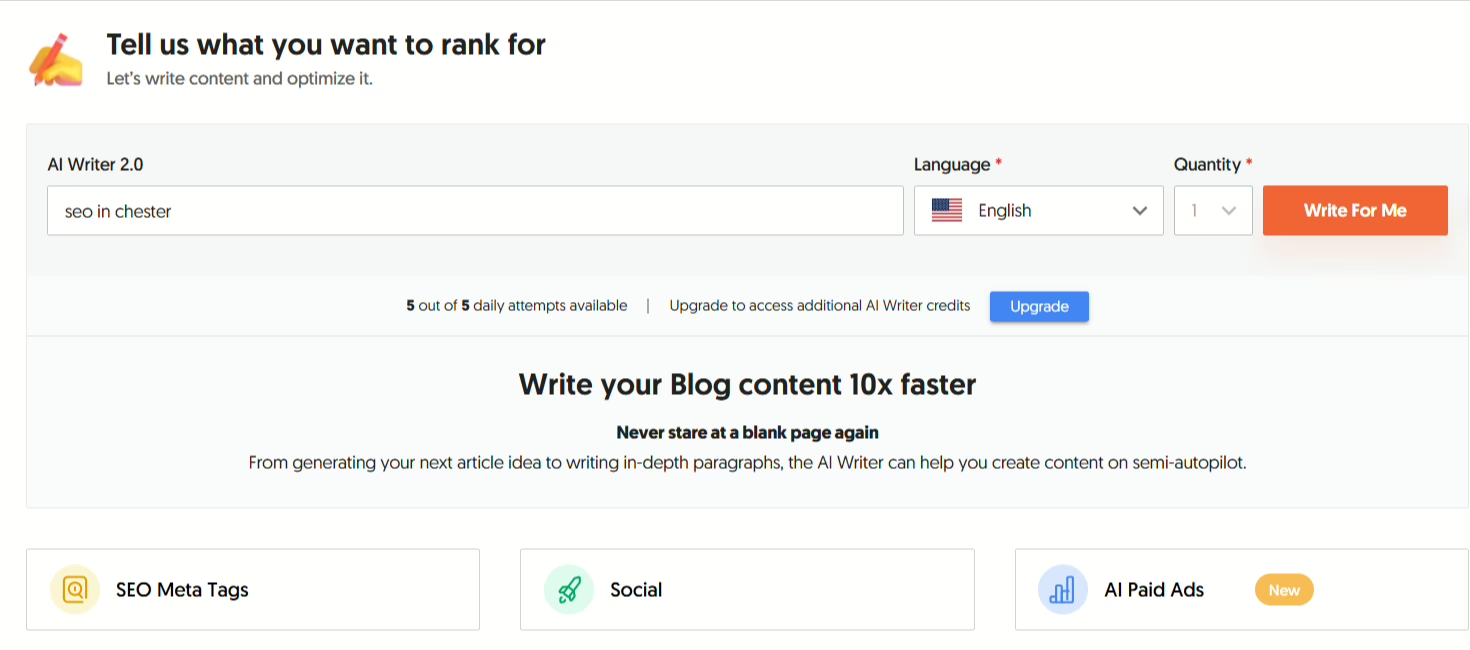
The tool groups ideas by topic and intent. That helps beginners understand why people search, not just what they search.
The Tradeoff
Volumes feel rounded. Competition scores feel simplified. For beginners, that's usually fine. You need direction, not perfect numbers.
Backlink Data and Site Audits
Ubersuggest has backlink tracking, but it stays basic. You can see total backlinks, referring domains, and top linked pages. Good for quick checks. Not enough for serious link building.
The site audit catches common problems: broken pages, slow load times, missing tags. Works for small sites. Falls short for bigger ones.
Pricing: Where Ubersuggest Stands Out
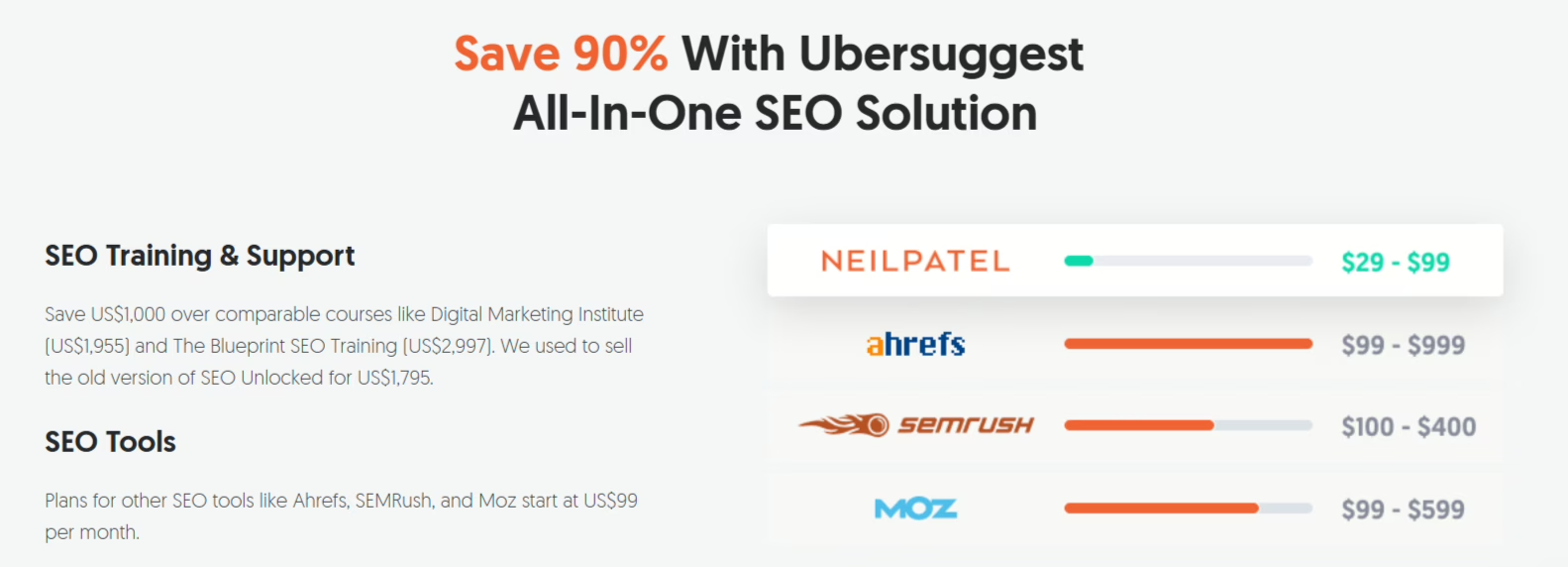
In 2026, monthly plans start around $29. Lifetime plans still exist. At this price, users accept the tradeoffs because the cost is low.
- ✓ Most affordable option (lifetime plans available)
- ✓ Beginner-friendly interface
- ✓ Built-in AI content writer
- ✓ Good for quick keyword ideas
- ✓ Integrates with AnswerThePublic
- ✗ Smaller keyword database
- ✗ Limited backlink data
- ✗ Basic rank tracking
- ✗ Data accuracy questions
- ✗ Limited for competitive analysis
Neil Patel, NP Digital, and AnswerThePublic
Ubersuggest isn't a standalone tool. Neil Patel runs NP Digital, which owns several marketing tools. One worth knowing is AnswerThePublic.
Understanding how these tools work together matters because a lot of users stack them.
What AnswerThePublic Actually Does
AnswerThePublic does one thing: it shows you what people ask.
It pulls search data from different sources and organizes it into questions, comparisons, and phrases. Instead of a keyword list, it shows how people actually phrase their questions.
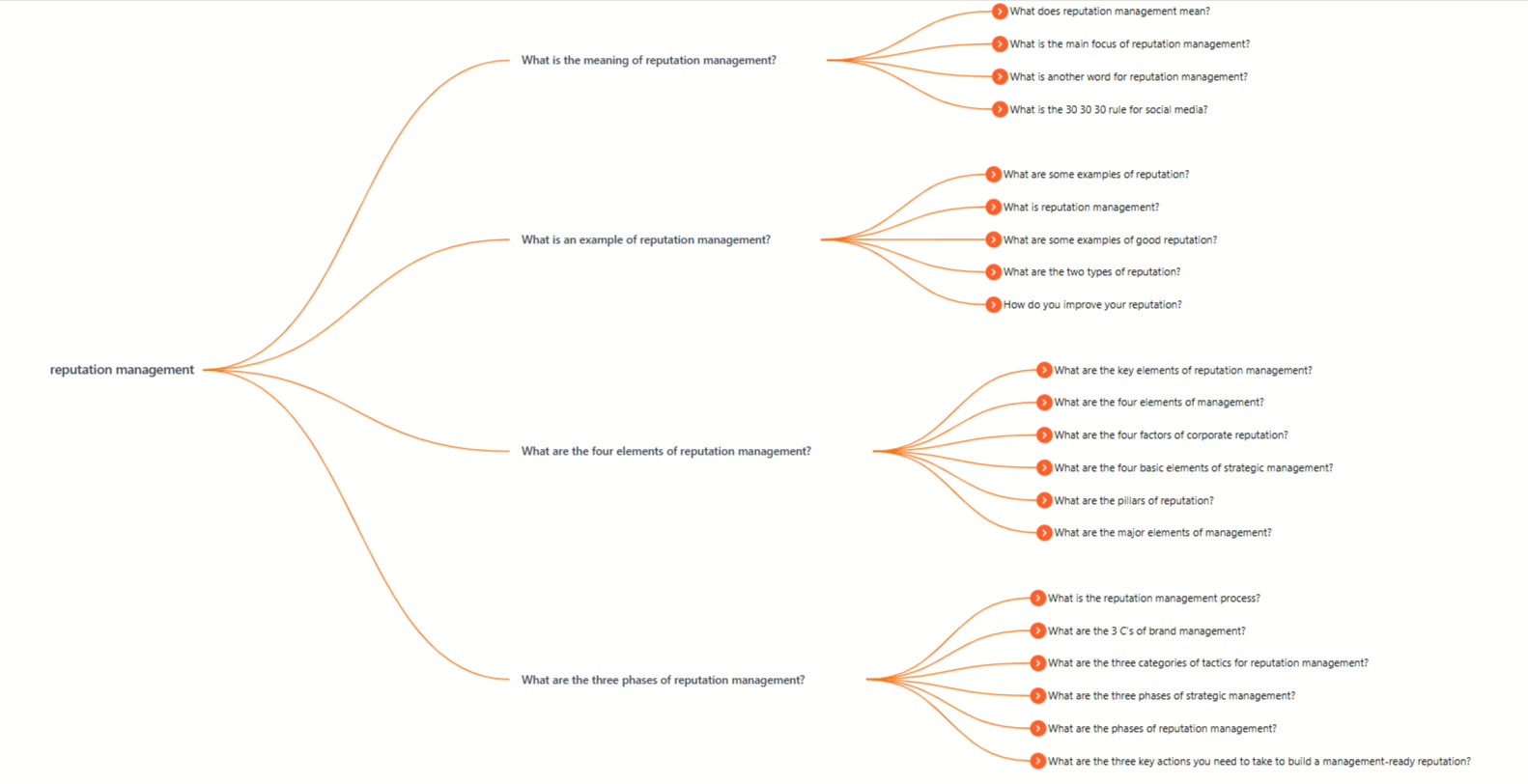
In 2026, AnswerThePublic pulls data from search engines, social platforms, shopping sites, and AI prompts. People don't search the same way they did five years ago. This tool helps you keep up.
How the Tools Work Together
Workflow Tip
Ubersuggest tells you what people search. AnswerThePublic tells you how they think. Together, they give you a fuller picture.
A common workflow looks like this:
- Use AnswerThePublic to find real questions and phrasing
- Use Ubersuggest to check volume and competition
- Use both to shape your content
Stacking Tools for Cost Savings
Neil Patel often offers bundle deals across his tools. Users can combine Ubersuggest and AnswerThePublic for less than buying separate SEO platforms.
Moz Pro in 2026: Structure and Guidance
Moz sits in the middle. It's not trying to be the cheapest. It's not trying to be the deepest. It aims to be clear and reliable.
Who Moz Pro Is Built For
- •Users who know SEO basics
- •Local businesses
- •In-house marketing teams
- •People who want guidance, not just data
Moz feels like a tool that teaches while it measures.
Domain Authority: Why It Still Matters
Moz created Domain Authority, and it still matters.
It's not a Google metric. But teams use it to compare site strength. Clients understand it. Stakeholders recognize it.
That shared understanding keeps Moz in the game.
Keyword Research in Moz Pro
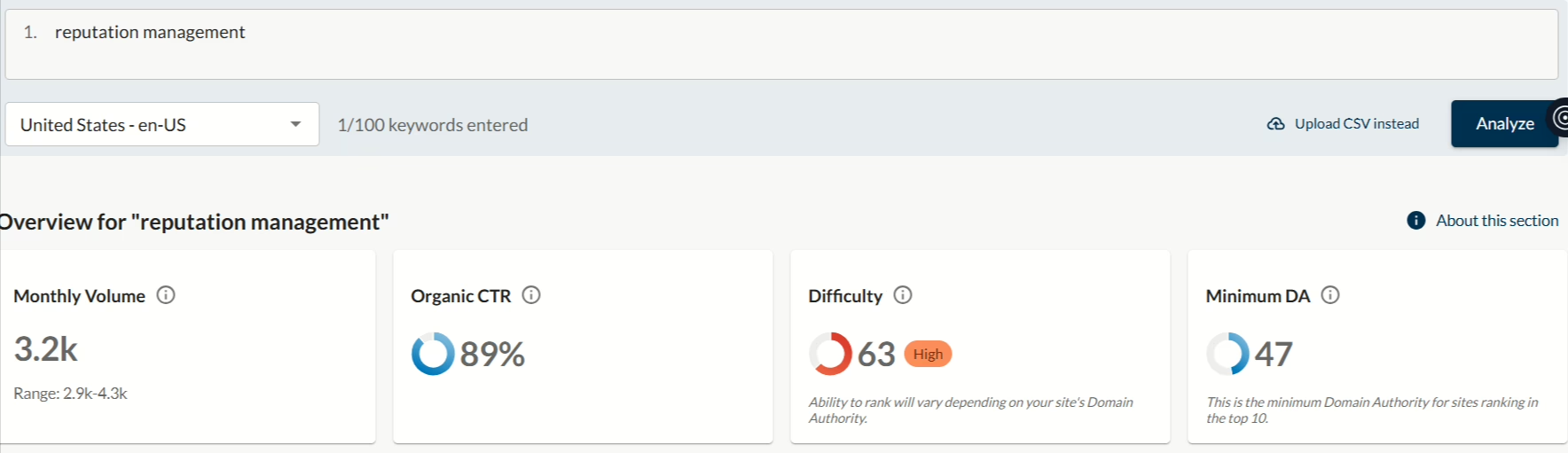
Moz takes a decision-first approach to keyword research. Instead of flooding you with numbers, it tells you whether your site can actually rank.
- ✓ Domain Authority industry standard
- ✓ Excellent learning resources
- ✓ Clear explanations of issues
- ✓ Strong local SEO features
- ✓ Good balance of depth and usability
- ✗ Smaller index than Ahrefs
- ✗ Can feel slower
- ✗ Limited content research
- ✗ Some features feel dated
- ✗ Higher cost than Ubersuggest
Ahrefs in 2026: Built for Precision and Scale
Ahrefs assumes you know what you're doing. It doesn't hold your hand. It gives you data and expects you to figure it out.
Who Ahrefs Is For
- •Full-time SEO pros
- •Agencies with multiple clients
- •Content teams working at scale
- •Link builders who need accurate data
Keyword Research in Ahrefs
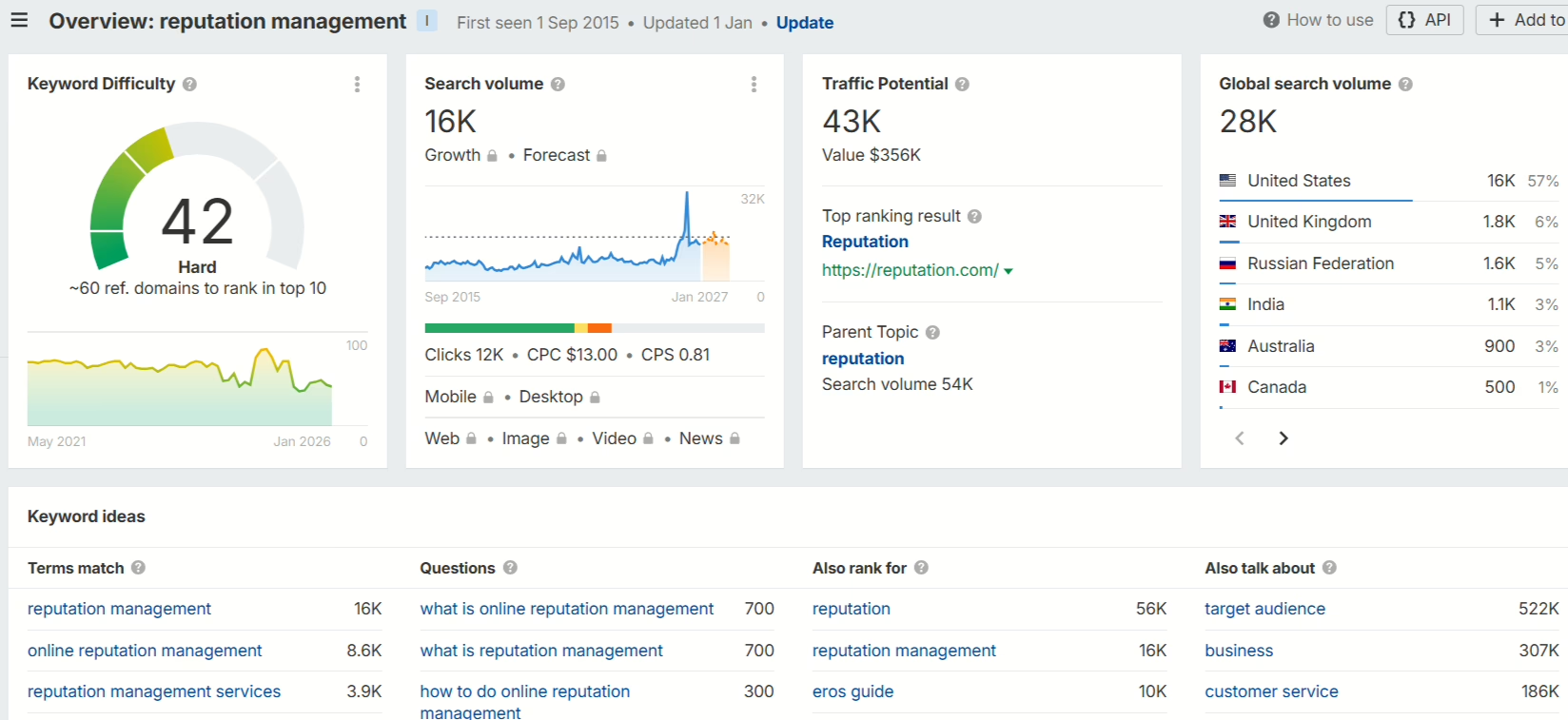
Ahrefs has the deepest keyword coverage. You can dig into search volume, click behavior, ranking difficulty, and how topics connect.
Data Depth vs. Complexity
Ahrefs shows you everything—including how many referring domains you need to crack the top 10. That detail helps with big content plans, but it takes experience to use well.
Backlink Analysis: Where Ahrefs Leads
Backlinks are where Ahrefs shines. You can see new and lost links, how competitors build links, anchor text patterns, and link velocity over time.
This makes Ahrefs the go-to for anyone serious about link building. If you want to know why a competitor outranks you because of links, Ahrefs will show you.
- ✓ Largest backlink database
- ✓ Most accurate data
- ✓ Excellent competitor analysis
- ✓ Deep content research tools
- ✓ Industry-leading crawl frequency
- ✗ Highest price point
- ✗ Steep learning curve
- ✗ No free trial (paid trial only)
- ✗ Can overwhelm beginners
- ✗ Credit-based on some features
Feature-by-Feature Comparison
Here's how each tool stacks up across core SEO features. Scores are based on depth, accuracy, and how easy they are to use.
| Feature | Ubersuggest | Moz Pro | Ahrefs |
|---|---|---|---|
| Starting Price (Monthly) | $29 | $49 | $129 |
| Lifetime Option | ✓ | ✗ | ✗ |
| Free Trial | 7 days | 30 days | $7 for 7 days |
| Keyword Database Size | Medium | Medium | Largest |
| Backlink Index Size | Small | Medium | Largest |
| Daily Rank Updates | ✗ | ✓ | ✓ |
| Site Audit Depth | Basic | Good | Advanced |
| AI Content Tools | ✓ | ✗ | ✗ |
| Learning Curve | Easy | Moderate | Steep |
| Best For | Beginners | Mid-level | Experts |
Database Sizes: Do They Really Matter?
Comparison articles love to brag about size. But as everyone learns eventually, bigger doesn’t automatically mean better. 😉
A larger database helps when you're:
- • Researching long-tail keywords in niche industries
- • Looking at competitors in international markets
- • Building link strategies that need complete data
But for most small business SEO and content planning, a medium-sized database with accurate data beats a massive one with too many options.
The Real Question
Ask yourself: "Do I need to find every keyword, or do I need to find the right keywords?" Your answer tells you whether database size matters.
How to Stack Tools for Better Results
A lot of SEO pros don't rely on just one tool. They mix tools based on what they need.
Common Stacking Strategies
Content-First Teams
Use Ubersuggest + AnswerThePublic for ideas, then check your image SEO and on-page details.
Technical + Content Balance
Use Moz for site audits and DA tracking, then add Ahrefs for competitive backlink research.
Full-Service Agencies
Ahrefs as the main tool, Moz for client reports (Domain Authority is easier to explain to clients).
The key is knowing what each tool does best—and using them for that—instead of expecting one tool to do everything.
Choosing the Right Tool for Your Situation
+ AnswerThePublic
Best mid-range option
Industry standard for pros
Quick Recommendations
Choose Ubersuggest if:
You want cheap and simple. Best for beginners, bloggers, and small businesses where SEO is part of the job—not the whole job.
Choose Moz Pro if:
You want guidance and structure. Best for in-house teams, local SEO, and anyone who wants clear explanations over raw data.
Choose Ahrefs if:
You need accuracy and depth. Best for agencies, full-time SEO pros, and anyone building real link strategies or managing competitive content.
Final Thoughts
The best SEO tool is the one that fits how you work.
More data doesn't always mean better decisions. Simpler tools often lead to more action. In 2026, Ubersuggest, Moz, and Ahrefs all have their place.
The mistake is picking based on what's popular instead of what fits you.
Bottom Line
When the tool matches your workflow, SEO stops feeling overwhelming. Focus on finding that fit—not on finding the "best" tool according to someone else.
Related Guides
Working on your online presence? These might help:
Need Help With Your SEO Strategy?
Whether you're choosing tools, building content, or managing your online reputation, NewReputation helps individuals and businesses take control of their digital presence.