
Last Updated on 7 months ago by Admin
A vanity URL is a short, custom web link that matches your brand. You use it so people can remember it, trust it, and type it fast.
Instead of sharing a long, messy link, you share a clean one.
Here’s the basic idea:
- Long link: newreputation.com/blog/how-to-fix-google-results?utm_source=facebook&utm_campaign=winter2026
- Vanity URL: newreputation.com/fix
With a vanity URL, visitors feel instant clarity and trust, which can enhance their interaction with your brand. Both links can lead to the same page, but the vanity URL just looks better and feels easier.
Why “Vanity” Matters
The word vanity sounds a little vain. But in marketing, it simply means “made to look good.”
A vanity URL does two jobs at once:
- It tells people what they will get.
- It makes your brand look more polished.

Because of this, vanity URLs often work better in real life. People trust what they can read. In fact, reports have shown that brands experience up to a 34% higher click-through rate with the use of vanity URLs. This increased trust and readability can significantly enhance their effectiveness.
What Makes a URL a Vanity URL?
A vanity URL has three main traits.
It is short
Short links feel less risky. They also fit better on social posts, flyers, and business cards.
It is easy to read
People should understand it in one quick glance.
It uses your brand
Your brand name builds familiarity. Familiarity builds trust. And trust drives clicks.
What Vanity URLs Are Used For
You will see vanity URLs almost everywhere, because they work both online and offline.
Social media and profiles
Brands often use a clean link in their bio so it looks professional.
Example:
- newreputation.com/free-audit
Ads and marketing campaigns
Campaign links need to look simple, because people decide fast.
Example:
- newreputation.com/review-help
Print materials and real world sharing
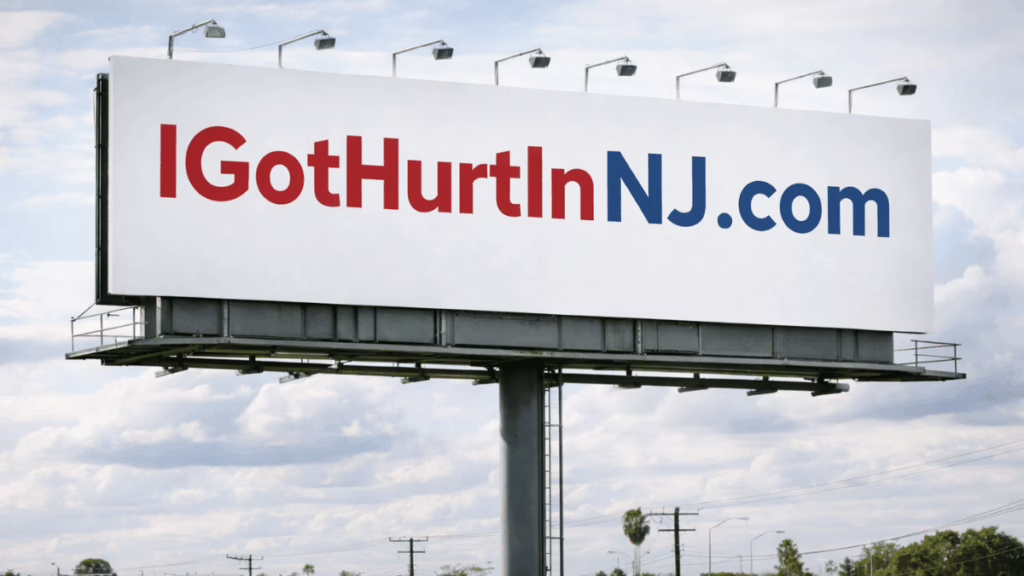
A long link looks awful on a billboard. A short one gets remembered.
Example:
- newreputation.com/checkup
How Vanity URLs Work Behind the Scenes
A vanity URL usually redirects to a longer link.
Think of it like a sign at a store.
The sign might say “Customer Service.” But once you walk in, you end up at the right desk inside the building.
In the same way, a vanity URL acts like a front door. It sends visitors to the correct page, even if the real page address looks long and complex.
Technical Aspects and Implementation
A vanity URL looks simple on the outside. However, you still need to set it up the right way on the inside. This section covers the basic technical steps, plus a few platform notes you may run into.
Start with your default url
Most pages already have a default url. That default link often includes extra folders, numbers, or tracking codes. It works, but it rarely looks clean.
Many sites follow standard url formats, such as:
- yourdomain.com/blog/how-to-protect-your-name-online
- yourdomain.com/services/reputation-management
These are normal links. They also show how standard url formats use folders to match your site structure.
Create a sample vanity url
Next, you choose a short path that matches the goal of the page. Keep it clear and easy to type.
Here are a few sample vanity url options:
- yourdomain.com/audit
- yourdomain.com/check
- yourdomain.com/start
Each one can point to a longer page, even when that page uses more complex standard url formats.
Decide how the redirect will work
Most vanity URLs work as redirects. That means your vanity link sends people to the real page behind it.
You can set this up in a few common places:
- Your website CMS (like WordPress or Webflow)
- Your hosting dashboard
- A link management tool
After you set it up, test it. Make sure the vanity URL loads fast, works on mobile, and does not break when you update the page later.
Protect the user login experience
Some vanity URLs lead to pages that require sign-in. That is where the user login experience matters.
If someone clicks a vanity link and hits a confusing login wall, they may leave. Because of this, plan the flow:
- If the page needs a login, send users to a clear login screen first
- After login, return them to the page they wanted
- Use clear page titles so users feel confident they are in the right place
A clean vanity URL should not turn into a frustrating path once the person arrives.
Utilize Oracle Analytics Cloud
Some tools create long system links by default. For example, Oracle Analytics Cloud can generate long share links for dashboards and reports.
When that happens, teams often do one of two things:
- Use the platform’s sharing settings to control the link format when possible
- Wrap the long link with a branded vanity URL on your own domain
This keeps the link readable while still pointing to the right report.
Final checks before you publish
Before you put a vanity URL on an ad, email, or flyer, run a quick checklist:
- It works on desktop and mobile
- It points to the correct page every time
- It does not create a broken user login experience
- It matches your brand voice and looks professional
When you handle these details early, your vanity URL stays simple for the reader while remaining stable behind the scenes.
Why Vanity URLs Can Improve Results
Vanity URLs help because they reduce friction. In fact, one of our reputation management campaigns showed that switching to vanity URLs significantly reduced drop-offs. Less friction means more people click.
Here are the biggest benefits.
People remember them
If someone hears your link once, they can still recall it later.
That matters when someone sees your ad, thinks about it, then searches again the next day.
They raise click through rates.
People click links they understand. Meanwhile, long links filled with random letters and symbols can look suspicious. Some people avoid them for safety. Because of this, a simple vanity URL can earn more clicks without changing your message.
Consider running a quick test: Set up an A/B experiment to see how much your own click-through rate might improve after just 48 hours of using vanity URLs. Active challenges like this often convert readers into doers and spur experimentation.
They build trust
Trust matters even more when your topic feels sensitive.
Reputation, help, privacy, and identity issues all fall into high-trust territory. People want to feel safe before they click.
A clean link supports that feeling.
They keep your branding consistent
When your link matches your brand voice, everything feels tighter.
That consistency helps your marketing look real. It also helps people feel like they landed in the right place.
Vanity URL vs Short Link
People often mix these up, but they are not the same.
A short link often uses a third party domain, like:
- bit.ly/3Kx91Q
A vanity URL uses your own brand, like:
- newreputation.com/start
Short links can work. However, your own branded vanity URL usually looks more trustworthy, because people can see where the link goes.
Do People Distrust Link Shorteners?
Yes, a lot of people distrust link shorteners.
They do not always think “scam,” but many people pause before clicking. The main reason is simple: a short link hides where it goes.
Why people hesitate
You cannot see the real website.
A link like bit.ly/abc123 could go to a safe page. It could also go to a fake login page. People cannot tell by looking.
Scammers use them.
Bad actors often use short links in spam texts, fake shipping emails, and sketchy DMs. Because of this, short links can trigger a gut reaction.
Some workplaces block them.
Many companies flag shortened links in email filters or security tools. Even when the link is safe, it may still look risky to the system.
They feel less “official.”
When people see a branded link like newreputation.com/audit, they know who they are dealing with. When they see a random short domain, they do not.
You can find public forums discussing how link shortners can get flagged as spam by customers, email senders, and damage your reputation.
A Quick Example You Can Copy
We try to use as many short and direct URLs as possible. Also making sure the slug clearly explains where the link directs the customer toward.
- newreputation.com/audit for a free reputation check
- newreputation.com/remove for a removal help page
- newreputation.com/monitor for monitoring services
- newreputation.com/reviews for review support
Each one stays readable. Each one says what it does. And each one fits on anything, from a social post to a postcard.
The Bottom Line
A vanity URL is a clean, branded link that people can remember and trust.
It does not change what your page does. It changes how your link feels.
And in marketing, that feeling matters. When people feel safe and clear, they click.
We can help if your links seem messy, unclear, or untrustworthy.
NewReputation will look over your current URLs, make clean vanity URLs, and check that every link matches your brand and goes to the right place.
Would you like us to look? Get in touch with NewReputation, and we’ll tell you what to do first.

West Virginia alumni with a background in marketing and sales for both established companies and startups.