Last Updated on 5 months ago by Admin
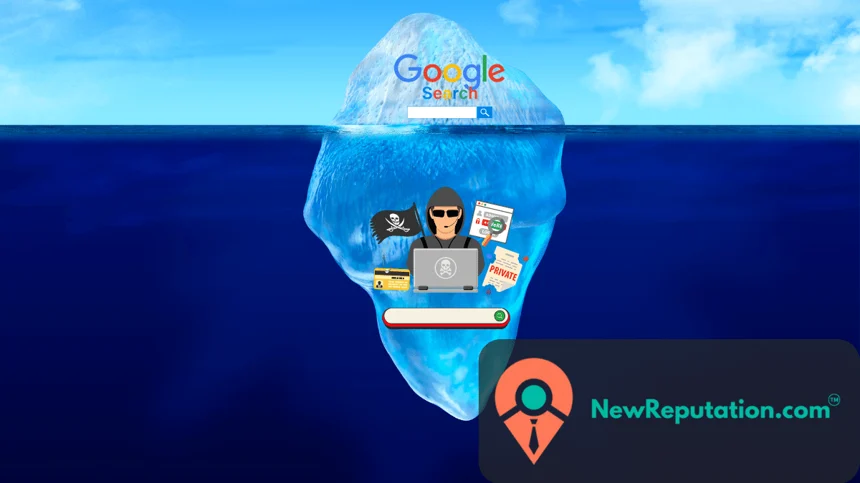
Most people check their name on Google and assume that covers what the internet knows about them. It does not. Google only indexes a fraction of what is actually online. The rest sits in a layer called the deep web, and a meaningful portion of it contains your personal information.
About 90% of American adults appear on data broker sites, according to research on people-search platforms. That information includes home addresses, phone numbers, relatives’ names, employment history, and in many cases prior legal records. None of it typically shows up in a standard Google search of your name. But it is findable by anyone who knows where to look, including employers, landlords, journalists, scammers, and identity thieves.
This guide explains what the deep web actually is, what kinds of information about you it contains, how to search it yourself, and what to do when you find something you want removed.
Table of Contents
What the Deep Web Actually Is
The deep web is the part of the internet that standard search engines do not index. Google, Bing, and other search engines work by crawling publicly accessible pages and adding them to their index. Any page that requires a login, sits behind a paywall, or is otherwise not crawlable by a search engine bot does not get indexed. That content exists on the deep web.
This is a much larger slice of the internet than most people realize. Your email inbox is on the deep web. So is your online banking dashboard, your medical records portal, and any social media content behind privacy settings. None of those are accessible through a Google search. None of them are sinister.
The deep web also includes:
- Academic databases and research archives behind institutional logins
- Government and legal databases that require credentials or direct URL access
- Court records and public records that are technically accessible but not indexed by Google
- Data broker and people-search databases that require a direct visit to the site
- Dynamic content generated in real time, like flight schedules or product listings
- Private company intranets and internal tools
The vast majority of deep web content is entirely legitimate. The reputation problem is that data brokers have built substantial businesses on the deep web by collecting your personal information from public records and making it searchable in ways that bypass your awareness entirely.
Deep Web vs. Dark Web: The Important Difference
These two terms are frequently confused and they are not the same thing.
The deep web is simply the unindexed portion of the internet. It includes everything described above: legitimate private content, databases, and the personal information held by data brokers. You do not need special software to access most of it.
The dark web is a specific, intentionally hidden portion of the internet that requires the Tor browser to access. It is a small subset of the deep web, not a synonym for it. The dark web is where criminal marketplaces, leaked credentials, and genuinely dangerous content are hosted. It is also where your information can end up after a data breach.
According to the Identity Theft Resource Center, there were over 1.35 billion victims of data breaches in 2024 alone. Once information is on the dark web, removal is essentially impossible. The practical response is to change passwords, monitor your accounts, and freeze your credit. Our guide on protecting your personal information covers the full response process.
For most people doing a deep search on themselves, the goal is not to navigate the dark web. It is to find and address the personal information that data brokers and public records databases have made accessible to anyone who looks.
What Information About You Exists on the Deep Web
The practical question is not whether information about you exists on the deep web. It almost certainly does. The question is what kind and where.
Data broker profiles. Companies like Spokeo, Whitepages, BeenVerified, Intelius, Radaris, and hundreds of others compile profiles from public records, social media, and other sources. These profiles typically include your current and previous addresses, phone numbers, relatives’ names, estimated age, employment history, and in some cases financial and legal records. The data broker market is expected to reach over $433 billion in 2025, according to industry research. This is a large, established industry built on selling your information.
Public records. Court records, property records, voter registration data, business filings, marriage and divorce records, and bankruptcy filings are all public records. They are technically accessible to anyone, but they are not indexed by Google. A motivated person can find them through state and county government portals or through data broker aggregators.
Old profiles and accounts. Social media accounts you created years ago, old forum usernames, community website profiles, and directory listings from previous employers may all exist in states you have not reviewed recently. Some are indexed by Google. Many are not.
Breach data. If your email address or other credentials have been compromised in a data breach, that information may exist in breach databases. Tools like Have I Been Pwned let you check whether your email appears in known breaches. Most email addresses appear in three to five or more breaches by 2025.
How to Do a Deep Web Search on Yourself
A thorough search of your own information requires going beyond Google. Here is a practical sequence that covers the main sources.
Start with a clean Google search
Open an incognito browser window and search your full name. Then search your name combined with your city, your phone number, and your email address. Note every result on pages one and two. This is your baseline for what the surface web currently shows.
Also search your name combined with terms like “address,” “phone,” and “records.” This surfaces data broker listings that Google has indexed, which represent only a fraction of what those sites hold.
Search people-finder sites directly
Visit the major data broker and people-search platforms directly and search your name. Do not wait for them to appear in Google results. The most significant sites to check include:
Search your full name, any previous names you have used, and variations of your name. Search from each city you have lived in, since records are often organized geographically. Document what you find at each site before you take any action, so you have a complete picture of your exposure.
Check public records databases
State and county government sites hold property records, court filings, voter registration, and business license data. Search your state’s court records portal and your county assessor’s database. Most of these have free public search tools.
If you have been involved in any legal proceedings, even ones that were dismissed or resolved, those records may be publicly accessible. Our guide on how to remove court records from the internet covers your options for those specifically.
Check breach databases
Go to Have I Been Pwned and search every email address you use, including old ones. This free tool searches over 15 billion compromised accounts from documented data breaches. If your email appears in a breach, change the associated password immediately and enable two-factor authentication on that account.
Review your social media profiles from the outside
Log out of each platform and search your profile name directly. What can someone see who is not connected to you? Old photos, tagged posts, comments on public groups, and profile information from years ago can all be visible to anyone. Adjust your privacy settings on each platform after reviewing what is currently exposed.
Search background check services
Services like CyberBackgroundChecks and similar platforms compile records from multiple sources and present them in a single profile. Run a search of your own name to see what a background check currently returns. Many employers and landlords use exactly these services when evaluating applicants.
Want to See the Full Picture of What Is Out There About You?
NewReputation’s free First Impression Report shows what appears across Google Search, data broker sites, and review platforms when someone researches your name.
- See your personal data exposure across the major people-search platforms
- Identify what shows up in background check results
- Get a clear starting point before you take action
How to Check Data Broker Sites Directly
Visiting data broker sites to search yourself is useful. But be aware that the search itself can be used by the site to confirm that your data is active and of interest, which is why some privacy guides recommend doing this kind of search through a VPN.
When you find your listing on a data broker site, note exactly what information is displayed. Common fields include:
- Current and previous addresses
- Phone numbers, including cell numbers
- Names of relatives and household members
- Age and date of birth
- Employment history
- Social media profiles
- Court and legal records
- Financial indicators
Once you have documented what is there, you can begin the removal process. Each data broker has its own opt-out procedure. Some are straightforward. Others require email verification, documentation, or persistent follow-up requests. Our comprehensive data broker opt-out guides walk through the process for each major platform.
Note that removal is not permanent. Data brokers re-aggregate information from public records on an ongoing basis, so listings often reappear weeks or months after you have opted out. Ongoing monitoring is necessary to keep your information suppressed over time.
What to Do When You Find Something Concerning
The response depends on what you found and where.
Personal information on data broker sites
Submit opt-out requests to each site individually. This takes time but is effective when done systematically. Start with the highest-traffic platforms first: Spokeo, Whitepages, BeenVerified, and Radaris. Our guide on removing your records from Radaris is a good example of what a thorough opt-out process looks like. For a complete approach across dozens of sites, our digital footprint removal guide covers the full scope.
Personal information appearing in Google Search results
Google’s Results About You tool lets you submit removal requests for search results containing your home address, phone number, email, and as of 2026, government ID numbers. Our guide on removing content from Google Search covers the full process, including what qualifies for removal and how to escalate when initial requests are denied.
Old or outdated content on other websites
Contact the site owner directly with a clear, factual removal request. For content that violates copyright or platform policies, a formal removal request or DMCA notice may be appropriate. Our guide on filing a DMCA complaint covers that process. For content that cannot be removed, building stronger, more authoritative content that ranks above it is the alternative approach. Our guide on burying negative search results explains how that works.
Court records or public legal documents
These are the most difficult to address because they are genuinely public. Some states allow expungement or sealing of certain records, which can lead to their removal from both government databases and downstream data broker profiles. Our guide on removing court records from the internet covers what is and is not possible.
Your information in breach databases
You cannot remove your information from breach databases directly, because those databases document what was exposed, not what is currently in active circulation. The practical response is changing compromised passwords, enabling two-factor authentication, and freezing your credit with all three bureaus to prevent fraudulent accounts from being opened in your name.
Monitoring going forward
A one-time search and cleanup is a starting point, not a complete solution. Set up Google Alerts for your full name and common variations. Check your name on data broker sites quarterly. Review your review and comment profiles regularly. Our full guide on protecting your personal information covers the ongoing maintenance practices worth building into your routine.
Found Something You Want Removed?
NewReputation handles data broker opt-outs, Google removal requests, and ongoing monitoring so your personal information stops showing up where it should not.
- Opt-out requests submitted to 100+ data broker and people-search sites
- Google Search result removal for personal contact information
- Ongoing monitoring and re-removal as listings reappear
Frequently Asked Questions
Is the deep web the same as the dark web?
No. The deep web is simply the part of the internet that search engines do not index, which includes your email, banking portals, private databases, and data broker profiles. The dark web is a specific subset of the deep web that requires the Tor browser to access and where illegal activity is concentrated. Most people have no reason to access the dark web and do not need to in order to search for their own personal information.
What kind of information about me is on the deep web?
The most common sources are data broker profiles, which typically include your current and past addresses, phone numbers, relatives’ names, age, employment history, and sometimes legal and financial records. Public court records, property records, and voter registration data are also accessible through direct searches of government databases. Your information from past data breaches may also exist in breach databases.
Is it safe to search for myself on data broker sites?
Generally yes, though some privacy guides recommend using a VPN during the process to prevent the site from logging your IP address. The main practical risk is confirming to the site that your listing is active, which is a minor concern relative to the benefit of knowing what is out there. Once you have documented what exists, you can proceed with opt-out requests.
How long do data broker opt-outs take to process?
Most major platforms process removal requests within one to three weeks. Some take longer and require follow-up. Many sites will re-aggregate your information from public records over time, so listings often reappear. Effective data broker management is an ongoing process rather than a one-time task. Our data broker opt-out guides include current timelines for each major platform.
What if I find a court record about myself that I want removed?
Court records are public documents, which limits your options. Some states allow expungement or sealing for certain offense types, which can lead to removal from both state systems and data broker profiles that source from those systems. Our guide on removing court records from the internet covers what is possible depending on your state and the nature of the record.
Can I remove my information from the dark web?
Not directly. Dark web content exists on servers that are intentionally hidden and outside the reach of takedown requests. If your information appears in a breach database that has been posted on the dark web, the practical response is changing passwords on affected accounts, enabling two-factor authentication, and monitoring your credit for fraudulent activity. Google now offers a Dark Web Report feature that monitors for your information across known breach sites for users with a Google account.
How often should I search my own information?
Running a thorough search once a year is a good baseline. If you have recently moved, changed jobs, been involved in legal proceedings, or experienced a data breach, do a fresh search immediately. Set up Google Alerts for your name so you are notified when new content mentioning you gets indexed. For your digital footprint more broadly, periodic audits help you catch problems before they become established.
Take Control of What the Internet Knows About You
NewReputation helps people find, remove, and monitor their personal information across data broker sites, Google, and the broader web.
- Free scan showing your current exposure across major data broker platforms
- Removal requests handled across 100+ sites on your behalf
- Ongoing monitoring so new listings get caught before they spread