
Last Updated on 3 months ago by Admin
Digital PR is one of the most effective ways to build authority online. Not just for rankings, but for the kind of credibility that shapes what people believe about your brand before they ever visit your site.
The stats back it up. According to a survey of 518 SEO professionals by Editorial.link, 48.6% consider digital PR the single most effective link-building tactic, more than three times the vote share of the next option. The average Domain Rating of a backlink earned through digital PR is 61, compared to the single digits common in directory or forum link building. And brand mentions from digital PR correlate three times more strongly with AI search visibility than traditional backlinks, according to an Ahrefs study of 75,000 brands.
This guide explains how digital PR works, why it delivers results that other link-building tactics cannot match, how to run a campaign from start to finish, and how it connects directly to online reputation management.
Table of Contents
- What digital PR is and how it differs from traditional PR
- Four reasons digital PR outperforms other link-building tactics
- How a digital PR campaign actually works
- What makes a pitch journalists actually respond to
- Digital PR vs. traditional link building: a clear comparison
- How digital PR connects to reputation management
- The campaign workflow from idea to coverage
- How to measure results
- Frequently asked questions
What Digital PR Is and How It Differs from Traditional PR
Traditional PR focuses on getting coverage in newspapers, magazines, and broadcast media. Success was measured in impressions and column inches. A good placement built awareness. It did not necessarily do anything for your search visibility.
Digital PR pursues the same coverage, but the goal shifts. A link from a high-authority publication is not just a visibility win. It is a ranking signal. It tells Google that credible sources vouch for your content. The editorial backlink that comes with a feature in a major publication carries more SEO weight than hundreds of lower-authority links built through directories or link exchanges.
The distinction from press release distribution is equally important. Syndicating a press release to hundreds of news wire sites creates low-quality backlinks with minimal SEO value. A well-crafted SEO press release used as part of a targeted outreach campaign is different. The goal is not mass distribution. It is earned, editorial coverage from publications that chose to feature your story because it had genuine news value.
Digital PR also now feeds a second kind of visibility that traditional PR never touched. AI-powered search tools like Google AI Overviews, ChatGPT, and Perplexity synthesize answers from trusted sources across the web. The brands they cite are the ones with consistent, credible third-party coverage. This is sometimes called GEO (Generative Engine Optimization), and digital PR is one of the primary ways to build the signals that earn those citations.
Four Reasons Digital PR Outperforms Other Link-Building Tactics
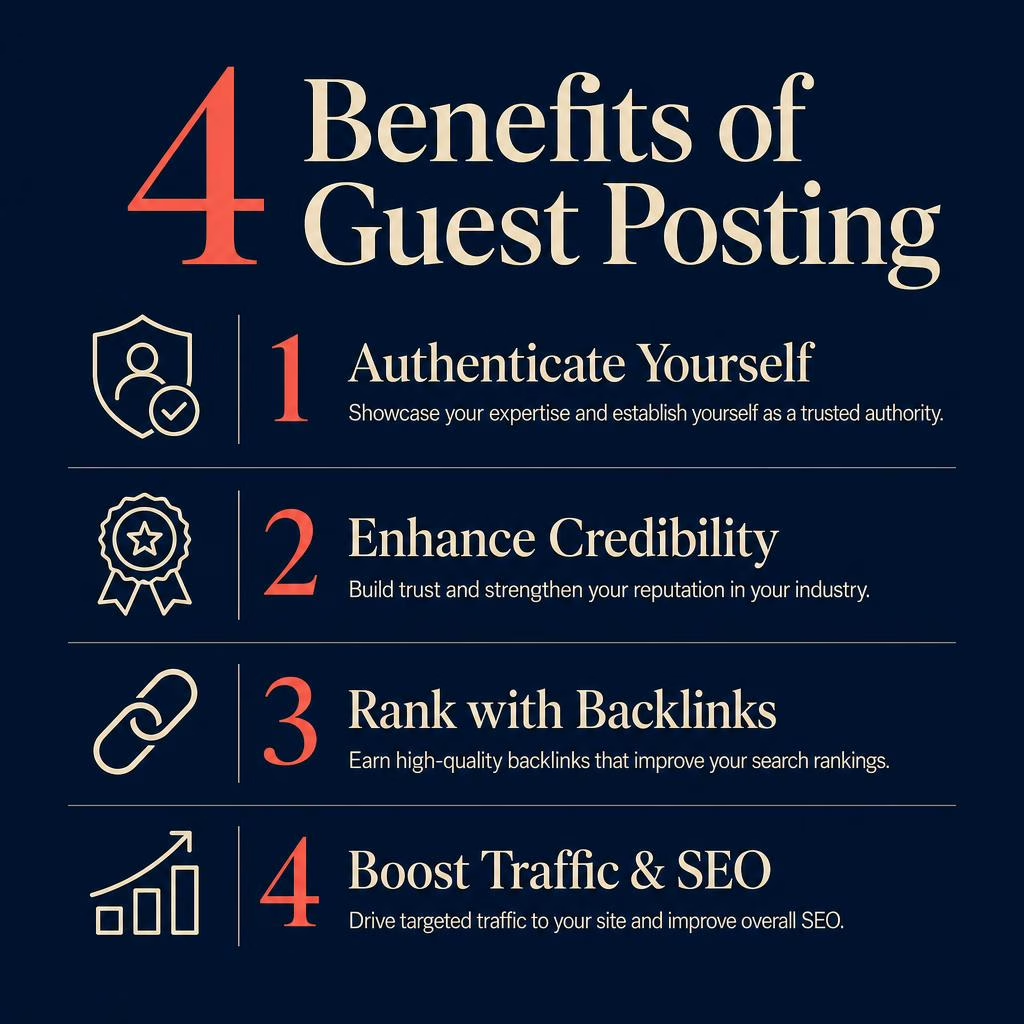
1. Authority quality that other tactics cannot match
The average Domain Rating of a backlink earned through digital PR in 2024 was 61, according to Reboot Online’s analysis of proprietary backlink data. Over 20% of digital PR backlinks came from sites with a DR between 70 and 79. Nearly 8% came from sites with a DR of 90 or above. These are the publications that Google treats as institutional authorities. A single link from one of them can outweigh dozens of links from lower-authority sources.
2. Brand mentions that influence AI search
Brand mentions from credible third-party sources now correlate three times more strongly with AI search visibility than traditional backlinks. As AI-generated answers replace the first click for more searches, being mentioned in the sources those systems trust becomes a distinct competitive advantage. Digital PR builds both the links and the mentions simultaneously, which is why it delivers disproportionate value in the current search environment.
3. Reputation signals that work at scale
A single well-executed digital PR campaign can earn links from 42 unique domains on average. That kind of breadth, from credible editorial sources across different publications and sectors, builds the trust signals that Google uses to evaluate E-E-A-T. It also creates the kind of search result presence that shapes first impressions for anyone who researches your brand. For businesses managing their Google reputation, earned editorial coverage is one of the most durable assets available.
4. Referral traffic that converts at higher rates
Unlike links buried in directories or comment sections, editorial links in relevant publications send visitors who are already interested in your topic. Early performance data shows visitors arriving from editorial placements convert at significantly higher rates than average organic traffic. The traffic volume is often modest. The quality is consistently high.
See Where Your Brand Stands Before You Start
NewReputation’s free scan shows what appears when people search your brand name, where your authority signals are strong, and where a digital PR campaign would have the most impact.
- See your current search presence and editorial coverage profile
- Identify gaps in your backlink profile and brand mention signals
- Get a clear starting point for your digital PR strategy
How a Digital PR Campaign Actually Works
A successful digital PR campaign follows a consistent structure regardless of the industry or objective. The specifics vary, but the framework holds.
Start with a story worth covering
Everything in digital PR starts with a story that has genuine news value. Not a press release announcing a new product feature. A story that gives a journalist something worth writing about that their readers would actually want to know.
The formats that earn coverage consistently are:
- Original research and data. Surveys, industry analysis, and proprietary data that reveal something new about a topic journalists cover regularly. One campaign using original survey data can generate 20 or more editorial links from DR 50+ publications when the findings are genuinely newsworthy.
- Reactive commentary. Expert responses to breaking news or industry developments. Fast, credible, and specific. Journalists working on a story about a trend need quotes from people who know the subject. Being available and articulate is enough.
- Expert analysis of publicly available data. Taking government statistics, industry reports, or trend data and producing original analysis gives journalists a citable source they did not have before.
- Free tools and interactive assets. Calculators, comparison tools, and interactive visualizations attract organic links from other sites over time, in addition to coverage when they launch.
Identify the right publications and journalists
Spray-and-pray pitching is the fastest way to get blacklisted by the journalists you most want to reach. Effective digital PR involves identifying the specific publications that cover your topic area, the specific journalists who write those stories, and what angle is most likely to fit their current editorial focus.
Tools like Connectively (the platform formerly known as HARO) connect journalists actively seeking expert sources with the professionals who can provide them. For outbound pitching, media databases like MuckRack or Prowly let you search journalists by beat and recent coverage to identify the right contacts.
A well-targeted pitch list of twenty journalists is far more effective than a mass blast to five hundred. Only one-third of pitches get opened by journalists, according to research from BuzzStream. Personalized subject lines see 33.79% higher open rates than templated ones. The story quality matters far less if the pitch does not get read.
What Makes a Pitch Journalists Actually Respond To
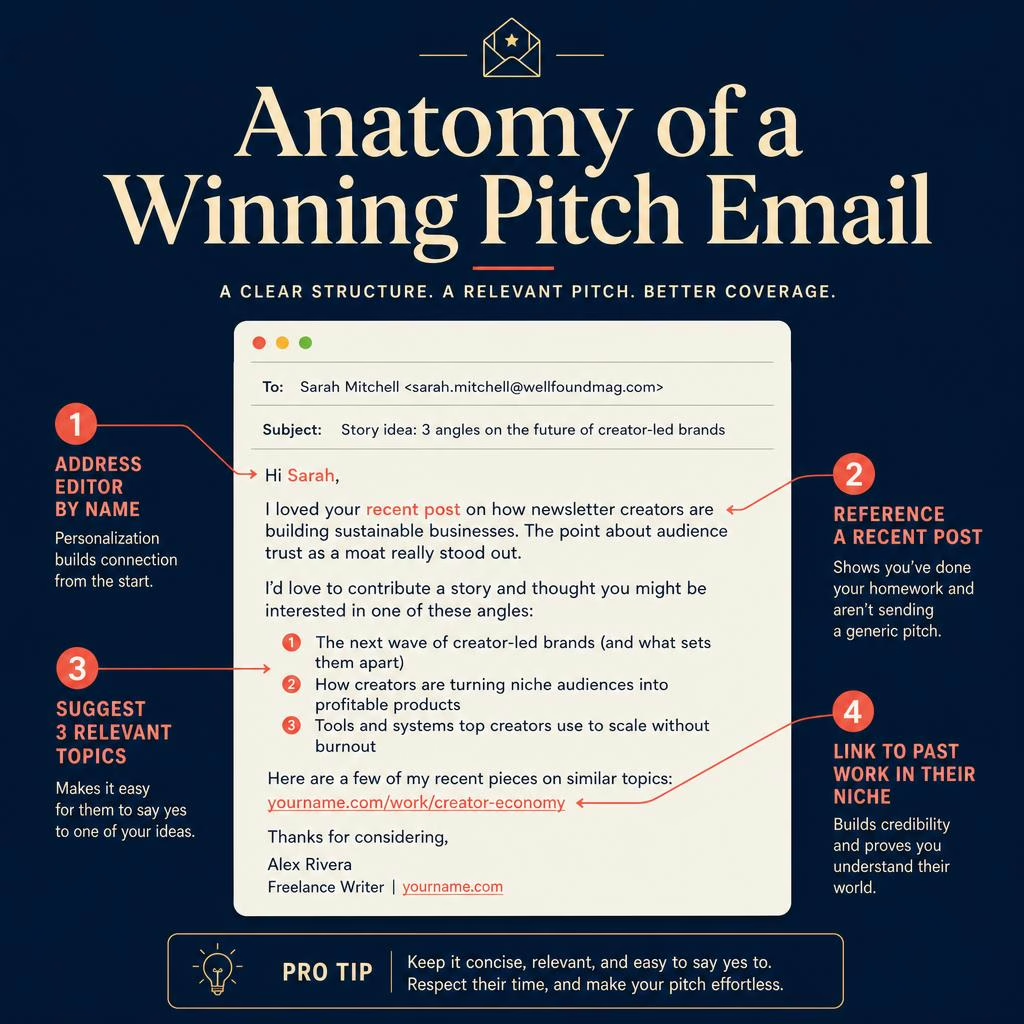
Pitching is a skill that most people underestimate until they see their first campaign’s open rates. Here is what separates pitches that earn coverage from the ones that never get read.
A subject line that states the story, not the ask. “Exclusive: new data on remote work burnout rates in US tech companies” works. “Partnership opportunity from [Company Name]” does not. The journalist decides whether to open based on whether your subject line sounds like a story their readers would click.
One paragraph that states the news value. Journalists can assess a story in thirty seconds. Your opening paragraph should tell them what you found, why it matters to their readers, and why it is new. Everything else is supporting detail they can read if interested.
The data or proof point upfront. If you have survey data, a statistic, or a specific finding that is genuinely surprising or counterintuitive, lead with it. This is the part that makes the story worth writing. Do not bury it three paragraphs in.
A specific, relevant offer. Tell them exactly what you are offering: an exclusive look at the full data set, a quote from a named expert, access to additional research. Be specific about what you can provide and make it easy to say yes.
A short, real follow-up sequence. It takes an average of 15 emails to secure one guest post opportunity, according to outreach research. Not 15 emails to the same person, but 15 contacts across a target list. Send an initial pitch, follow up once at day three with a brief nudge, and move on. Aggressive follow-up damages relationships with the journalists you want long-term access to.
Digital PR vs. Traditional Link Building: A Clear Comparison
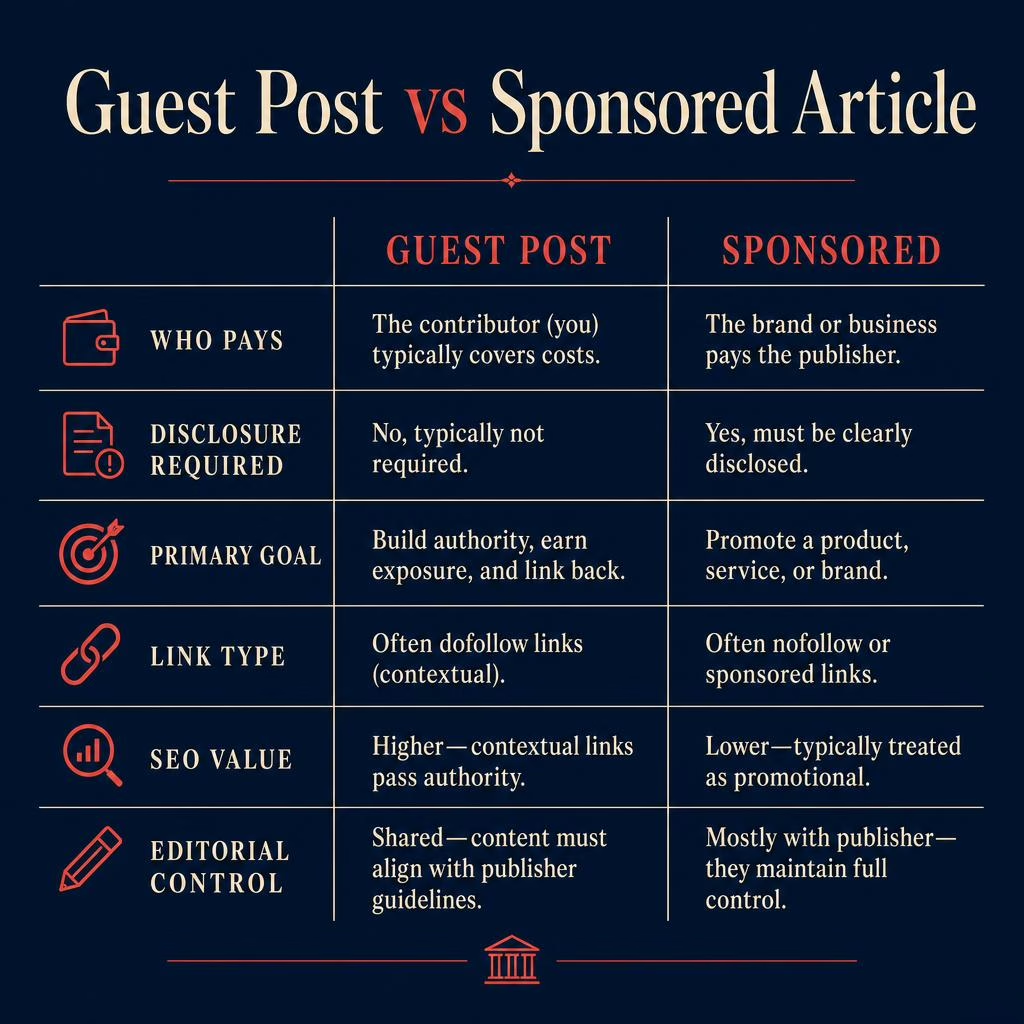
| Digital PR | Guest posting | Directory / niche edits | |
|---|---|---|---|
| Average link authority (DR) | 61 average, up to 90+ | Varies widely, often 20–50 | Typically 20–40 |
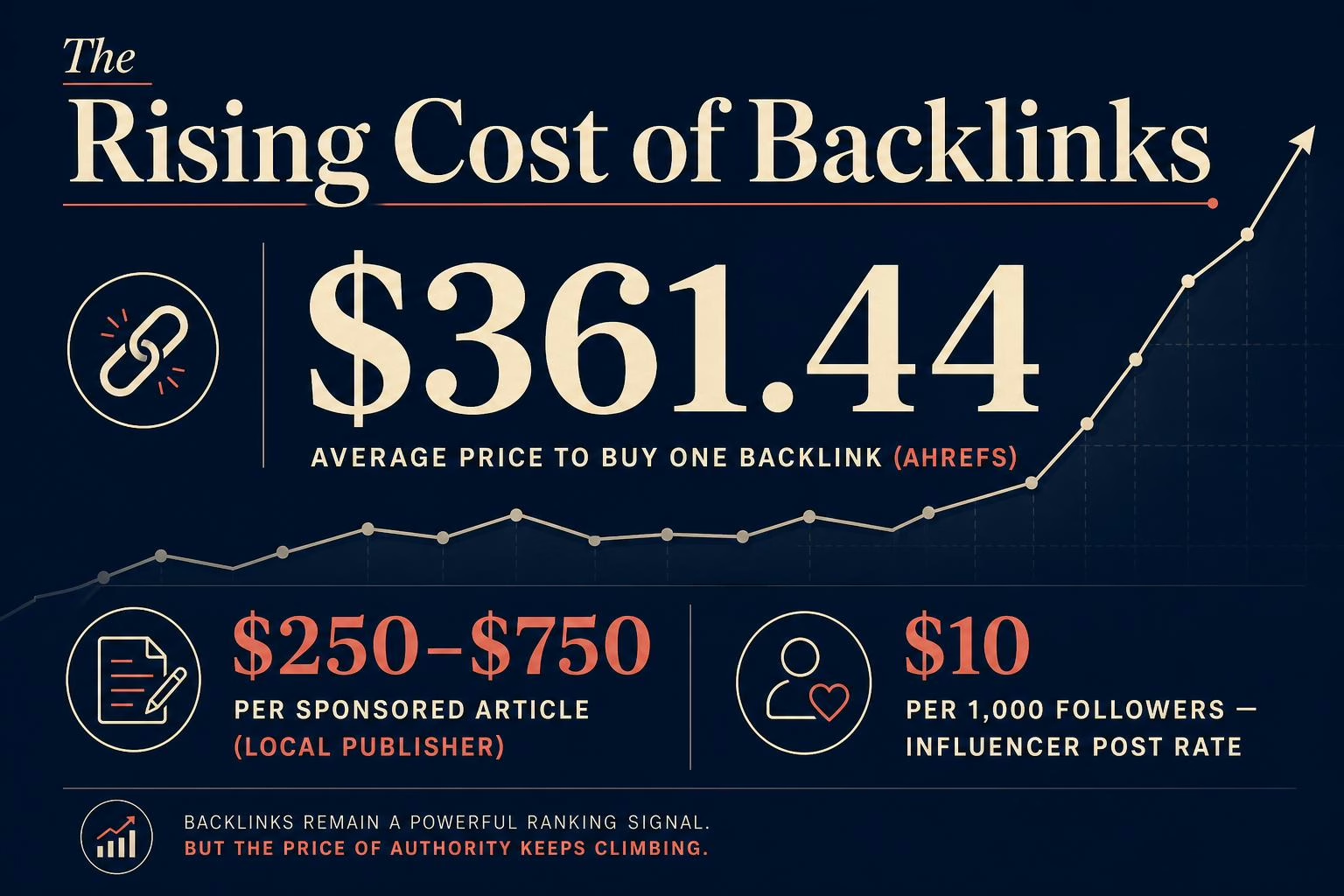
| Average cost per link | $750 per link (campaigns earn multiple) | $365–$1,459 depending on DR | $361 average niche edit |
| Editorial independence | High — journalist chooses to cover | Low — you write or pay for placement | Low — you pay for insertion |
| AI search visibility benefit | High — brand mentions and citations | Low to moderate | Low |
| Reputation benefit | High — third-party credibility | Moderate | Minimal |
| Scalability | Moderate — requires real story angles | High — can be systematized | High — transactional |
| Google policy risk | Low — genuinely earned links | Moderate — flagged in 2024 update | Higher — can trigger penalties |
Digital PR builds high-authority editorial links and brand signals. Traditional link building fills in the broader backlink profile with relevant niche links. They serve different purposes and work better together than either does alone. The 2024 Google documentation leaks confirmed that site authority is one of the algorithm’s most important ranking factors, which makes the quality differential between these approaches more significant than ever.
How Digital PR Connects to Reputation Management
Digital PR and reputation management are not separate disciplines. They use the same tools and produce the same raw material: credible, high-authority content that shapes what people find when they research your brand.
For businesses with negative news articles or damaging search results, digital PR is one of the most effective suppression tools available. An editorial placement in a publication with DR 70 or above can outrank a negative piece that has been sitting on page one for years. It earns its ranking through genuine authority, which is far more durable than content produced purely for suppression purposes. This is the heart of reverse SEO: building a stronger, more authoritative positive presence that displaces weaker negative content over time.
For businesses managing hospitality or consumer-facing industries, digital PR works alongside review management to create a comprehensive online presence. A hotel with strong editorial coverage in travel publications and a well-managed review profile is significantly more resilient to reputation threats than one that relies on either alone. Our guide on hotel reputation management covers how these two approaches combine.
Digital PR also directly supports content marketing strategy. The assets you create for PR campaigns, data reports, expert analyses, and original research, are the same assets that anchor strong content marketing. They earn links, generate coverage, and give your owned content more authority in search at the same time.
The Campaign Workflow From Idea to Coverage
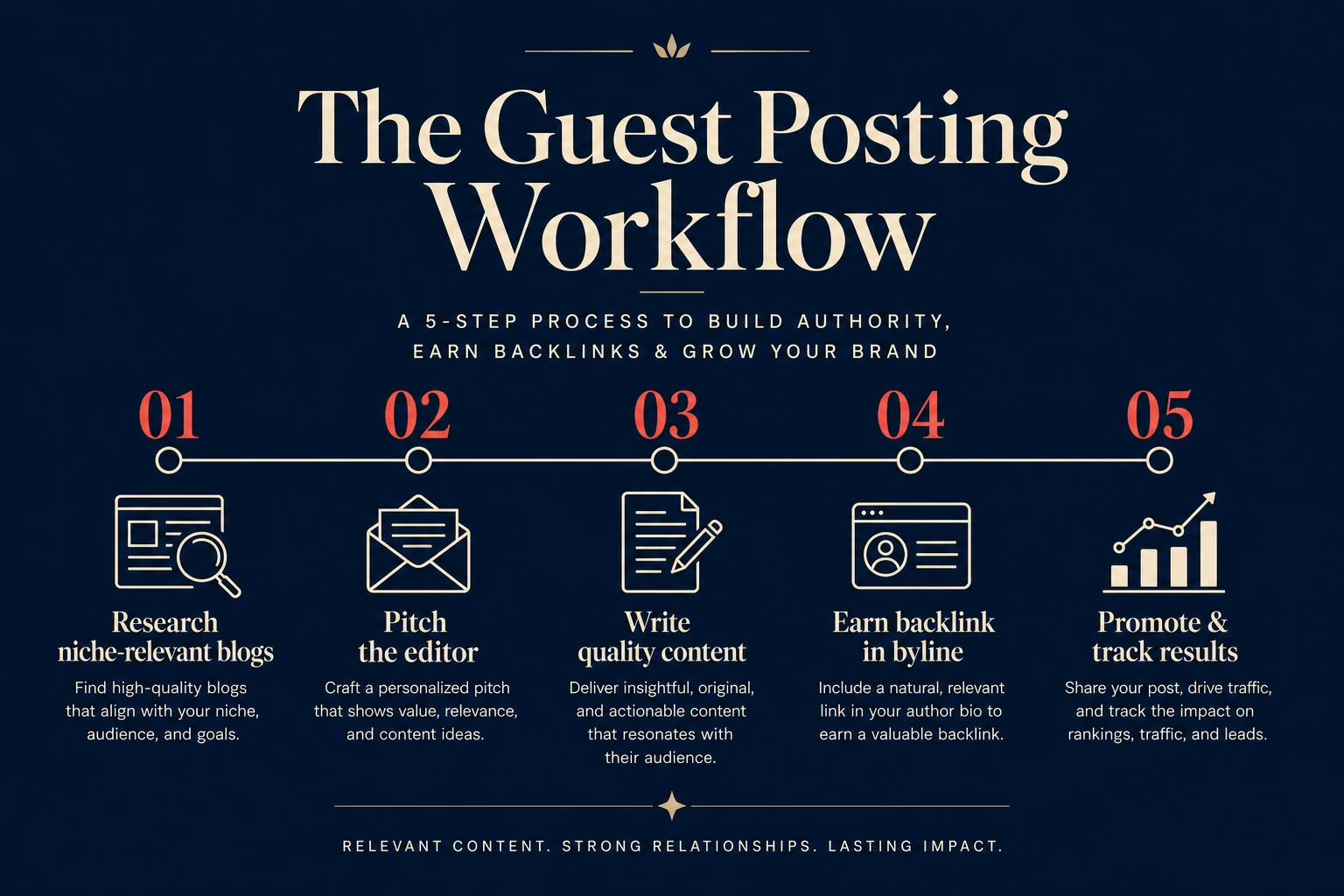
Understanding the timeline is important for setting realistic expectations. Digital PR is not a quick channel. A well-run campaign moves through predictable stages, and rushing any of them degrades results.
Weeks 1 to 2: Ideation and validation. Develop your story angle and validate that it has genuine news value. This means checking whether similar data or analysis already exists, identifying what would be genuinely new or surprising to journalists in your target publications, and confirming you have the resources to produce the asset.
Weeks 2 to 4: Asset creation. Produce the content that supports the pitch. For data-led campaigns, this typically means fielding a survey, analyzing results, and producing a summary report. For expert commentary, this means preparing the analysis and getting quotes approved by the relevant spokesperson. Quality at this stage determines coverage at the next stage.
Weeks 4 to 5: Pitch development and list building. Write the pitch emails and build the journalist contact list. Prioritize relevant beat journalists at target publications over generic news desks. Personalize subject lines based on each journalist’s recent coverage.
Weeks 5 to 7: Outreach and follow-up. Send pitches, monitor responses, and provide additional materials to journalists who express interest. The average time from pitch to publication is approximately three weeks once a journalist commits to covering a story. Some pieces publish faster; some take longer depending on editorial schedules.
Weeks 7 to 10: Coverage monitoring and link tracking. Track published pieces, verify that backlinks are live, and document results. Use Google Search Console and a tool like Ahrefs to monitor new referring domains and any changes in domain authority or target keyword rankings.
How to Measure Results
Digital PR campaigns need to be measured against the goals that motivated them. Different objectives require different metrics.
For link building and SEO: Track the number of unique referring domains earned, the Domain Rating distribution of those domains, and changes in target keyword rankings over the three to six months following a campaign. Referring domain count matters more than raw link count, since ten links from ten different publications carry more weight than ten links from the same one.
For reputation management: Monitor changes in page one search results for your brand name. Track whether editorial placements are appearing in the top five results. Measure whether the content that appeared has displaced any negative or unwanted results. Our guide on managing your Google reputation covers how to evaluate this systematically.
For AI search visibility: Tools like Otterly.ai track how often your brand is cited in AI-generated responses. This metric is becoming a standard KPI alongside traditional link metrics. Brand mention frequency across credible third-party sources, which digital PR directly increases, is the primary input into AI citation.
For brand awareness: Measure changes in branded search volume through Google Search Console and direct traffic. When digital PR is working, branded search tends to increase as new audiences discover the brand through coverage and then search for it directly.
Ready to Build Authority Through Digital PR?
NewReputation builds digital PR campaigns that earn editorial backlinks, strengthen your search presence, and improve how your brand appears when people research you.
- Free scan showing your current authority signals and brand mention profile
- Campaign strategy built around genuine story angles in your industry
- Journalist outreach and coverage tracking handled for you
Frequently Asked Questions
What is digital PR and how is it different from traditional PR?
Digital PR pursues media coverage with the explicit goal of earning editorial backlinks and building online authority, in addition to the traditional goal of brand awareness. Traditional PR measured success in impressions and placements. Digital PR measures success in referring domain quality, domain authority growth, and search ranking improvements. The tactics overlap significantly, but the objectives and measurement frameworks are distinct.
How long does a digital PR campaign take to show results?
From campaign inception to published coverage typically takes six to ten weeks. SEO results from those links, such as improved rankings and domain authority growth, generally become measurable over the following three to six months. Digital PR is not a fast channel. It is a compounding one: the authority built by one campaign makes the next campaign easier, and the cumulative effect over twelve months is substantially larger than any single campaign.
What does digital PR cost?
The average cost per high-quality backlink from digital PR is around $750, according to Editorial.link’s 2025 survey of 518 SEO professionals. The practical advantage is that a well-executed campaign earns multiple links per asset, which brings the effective cost per link down significantly. Monthly retainer engagements with agencies targeting Tier 1 publications typically run $3,000 to $12,000 per month. In-house campaigns can reduce cost but require dedicated staff time and existing journalist relationships.
Can digital PR help if I have negative content in my search results?
Yes, directly. Editorial placements from high-authority publications rank strongly in Google and can displace negative results over time through content suppression. This works because the new content earns its position through genuine authority rather than manipulation, which makes the displacement durable. Our guides on reverse SEO and whether negative news articles can be removed cover both the removal and suppression options in detail.
Do I need to produce original research for digital PR to work?
Original research is one of the most reliable formats, but it is not the only one. Expert commentary on breaking news, analysis of publicly available data, and reactive pitching to trending stories in your industry can all earn editorial coverage without a proprietary survey. Original research tends to earn more links from more diverse publications, but the right format depends on your industry, your resources, and the specific story you are pitching.
How does digital PR support content marketing?
The assets created for digital PR campaigns, data reports, expert analyses, interactive tools, and original research, are the same assets that anchor strong content marketing. They earn inbound links from other sites over time, give your owned content more authority in search, and generate coverage that brings new audiences to your site. Our guide on developing a content marketing strategy covers how these two disciplines work together as a single integrated approach.
See What Your Brand’s Authority Profile Looks Like Today
NewReputation’s free scan shows your current search presence, backlink profile, and brand mention signals so you know exactly where to focus first.
- Free scan, no obligation
- Clear picture of your current authority and reputation signals
- Practical starting point before any campaign investment