Last Updated on 3 months ago by Admin
Online reputation management is about one thing: making sure that when someone searches for you or your business, they see the right information first.
Most of the time, that means what shows up on Google. But your reputation is shaped by more than blue links. Review platforms, news coverage, directory profiles, social media, and AI-generated search answers all contribute to the first impression someone forms before they ever contact you.
93% of consumers say online reviews influence their buying decisions. 74% will not move forward with a purchase if they see negative content on the first page of results. That is not a future risk. That is happening right now for businesses that are not paying attention to what their search results say about them.
This guide covers everything that matters: what ORM actually is, why reputation gets damaged, how to fix it, and how to protect it going forward. We have also included real case study data from our own client work, because the principles only mean something when you can see them in action.
Table of Contents
- What ORM is (and is not)
- Why it matters more than ever
- How online reputation is actually shaped
- The three ORM strategies
- What ORM can and cannot do
- Real results: a case study
- Common mistakes that set businesses back
- How to tell if you need ORM now
- What good ORM looks like in the wild
- How to get started today
Prefer to listen?
What ORM Is (and Is Not)
Online reputation management is not just “posting more content.” Content is one tool, but it is far from the whole picture.
The actual goal of ORM is to change what people see, read, and believe when they research you online. That requires understanding why certain pages rank and others do not, then working systematically to improve those signals over time.
Two pages can say almost the same thing about your business. One ranks on page one and gets all the clicks. The other never leaves page three and might as well not exist. The difference is not usually the words. It is placement, source authority, and whether the content matches what the searcher is actually trying to figure out. ORM works on all three.
In practice, that means two things running in parallel. First, boosting accurate and positive content so it is easy to find. Second, reducing the visibility of outdated or misleading content by giving Google and other platforms better alternatives to rank in its place.
ORM is not the same as PR, though they overlap. PR shapes what gets published. ORM shapes what gets found. You can have great press coverage that nobody ever sees because it is buried on page four. ORM makes sure the right content rises.
See What Your Reputation Looks Like Right Now
NewReputation’s free First Impression Report shows exactly what people find when they search your name or business, where the problems are, and what it will take to fix them.
- See your search results the way customers see them
- Identify negative content, weak profiles, and missing signals
- Get a clear starting point before taking any action
Why It Matters More Than Ever
People form opinions before they ever speak to you. That has always been true. What has changed is the speed, scale, and permanence of how those opinions form online.
of consumers say online reviews influence their buying decisions
won’t proceed with a purchase after seeing negative content on page one
Search results are often the first interaction someone has with your business. One negative headline, one old complaint, one three-star review with no response can change a decision in seconds. People do not investigate context. They do not read past the first few results. They decide fast and move on.
The broader picture matters too. Reputation is not just search results. It is also reviews on Google, Yelp, and industry-specific platforms. It is what shows up when a journalist researches you, when an investor does due diligence, when a job candidate Googles the company before accepting an offer, or when a potential partner looks you up before a meeting. All of these interactions are shaped by what exists online, and all of them are within your ability to influence.
The businesses that take this seriously consistently outperform those that treat reputation as something that manages itself. For a broader look at the data, our online reputation statistics roundup has the full picture.
How Online Reputation Is Actually Shaped
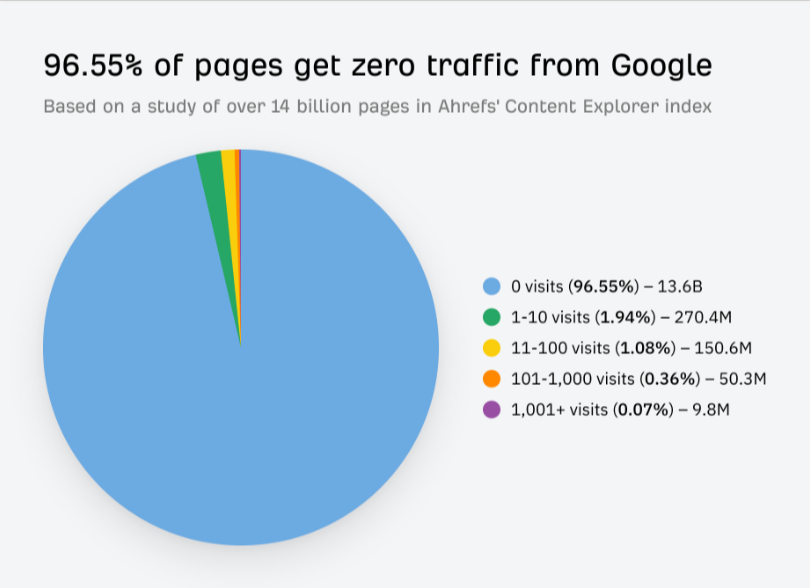
Your reputation online is determined largely by what Google chooses to show first. Most people never scroll past the top three or four results. An Ahrefs study on search traffic found that more than 90% of all web pages receive zero traffic from Google. Visibility is concentrated in a very small number of results. That concentration is what makes ORM both so important and so achievable: there are only a few positions to compete for.
Four factors determine which pages rank and which stay invisible.
Website authority. Google does not treat all sites equally. Pages published on established platforms, major news outlets, well-known review sites, large business directories, and trusted social networks rank more easily than new or low-authority sites. This is why a single article on a national news site can outrank years of content on a business’s own website. Google’s quality rater guidelines explain that sites with strong reputations, long histories, and many independent references are considered more trustworthy.
Name matching. When a page includes your full name or business name in the title, headline, and main text, Google treats it as a highly relevant match for name-based searches. This is why old profiles, outdated directories, and ancient articles can keep ranking for years. Relevance to the exact search query matters more than how recent the page is.
User behavior. Google monitors how people interact with results. Pages that consistently get clicks tend to maintain their rankings. This creates a frustrating loop: negative or dramatic headlines often attract more clicks out of curiosity, which signals to Google that they are meeting searcher needs, which keeps them ranked. Breaking that loop requires competing content that earns its own engagement.
What is available. Google can only rank pages that exist. If there are few pages about you online, those pages fill the results by default. A single negative article has nowhere to be pushed down to if there is no positive content competing for the same positions. This is the most important insight in ORM: building better content is not optional, it is the mechanism by which everything else works.
Online reputation management works by changing what Google has available to rank. When accurate, authoritative content exists, Google has something better to show. When it does not, whatever content is there fills the vacuum by default.
The Three ORM Strategies
Every ORM effort falls into one of three categories. Which one applies to you determines where to focus first.
| Strategy | When to use it | What it involves |
|---|---|---|
| Proactive | Before problems appear. Ideal for businesses, executives, and public-facing professionals | Building profiles, publishing content, claiming listings, monitoring mentions |
| Reactive | After a reputation problem has surfaced in search results | Publishing context and updates, strengthening positive pages, requesting corrections, responding to reviews |
| Defensive | Long-term maintenance for anyone in a high-visibility role | Maintaining trusted content sources, keeping profiles current, publishing regularly, monitoring continuously |
Proactive ORM
Proactive ORM is the most cost-effective approach because you are building in calm conditions rather than reacting under pressure. The goal is to establish a strong, accurate online presence before any problem can gain traction.
This means creating complete, verified profiles on the platforms that rank reliably for name searches. LinkedIn, Google Business Profile, About.me, Crunchbase, and industry-specific directories all carry domain authority that your own site may not yet have. It means publishing content that answers real questions your customers are searching for. And it means monitoring what is being said so you can respond early, before a single complaint becomes a pattern.
Google explains the importance of this approach in its guidance on creating helpful, reliable content: when strong, trustworthy content already exists, it is much harder for a negative or misleading page to dominate results.
Reactive ORM
Reactive ORM kicks in when something damaging is already ranking. That might be a negative news article, an unfair review that has gotten traction, an outdated directory listing, or content that tells only part of a story.
The goal here is not to erase history. It is to provide better alternatives. Google does not remove pages simply because they are old or because you do not like them. New content must earn its position by being more relevant, more authoritative, and more useful to the searcher than what is already there. That competition is how suppression actually works.
Reactive ORM also includes requesting corrections when information is factually wrong, responding to reviews in a way that demonstrates professionalism, and in some cases pursuing platform-level removal for content that violates specific policies. Our guides on reverse SEO and how to repair your online reputation cover the tactical details.
Defensive ORM
Defensive ORM is the ongoing maintenance layer. Executives, founders, and high-profile professionals are particularly exposed here. A career change, a controversial industry decision, or a public dispute can suddenly send people to your name in Google with very different intent than usual. If your online presence is not actively maintained, that search finds a vacuum that the wrong content fills fast.
Defensive ORM means keeping multiple trusted sources updated and accurate, publishing consistently so there is always fresh content for Google to index, and monitoring for new mentions before they compound. Our executive reputation management guide and personal SEO guide cover this level in depth.
Publishing generic content will not help if one highly-ranked negative article needs to be addressed directly. Focusing only on removal without building a stronger foundation leaves you exposed to the next problem. The right diagnosis comes first.
What ORM Can and Cannot Do
Knowing the limits of ORM is as important as knowing what it can achieve. Any service that promises more than this is not being honest with you.
| ORM Can Do This | ORM Cannot Do This |
|---|---|
| Improve what appears first in search results by creating stronger alternatives | Remove truthful reporting, public records, or factual news coverage |
| Request corrections when content is demonstrably false | Guarantee removal of any specific piece of content |
| Reduce the visibility of harmful or outdated results through suppression | Change search results overnight — rankings take time to shift |
| Manage reviews within platform rules and improve overall ratings over time | Override real customer experiences or cover up ongoing operational problems |
| Build a presence that protects against future reputation threats | Guarantee any specific ranking position on Google |
The most important limit to understand is that ORM cannot compensate for an ongoing problem. If a business keeps generating complaints, those complaints keep appearing online. No amount of positive content creation changes that. The reputation work and the operational work have to move together.
The FTC’s guidance on consumer reviews is worth reading for what businesses can and cannot do with review management specifically. It draws clear lines around what is legitimate engagement and what crosses into manipulation.
Real Results: A Case Study
Principles are easier to understand when you can see them at work. Here is a real example from our client work.
We worked with a tri-state tree service that had been operating for years and was genuinely well-regarded by the customers who knew them. Their problem was that their online presence did not reflect that. When potential customers searched their name, what came back was an average rating of 3.1, old negative reviews near the top of results, weak local SEO, and almost no useful content anywhere online. They were getting roughly 200 website visits per month despite doing solid work in a competitive market.
The reputation problem had not been caused by one bad event. It had accumulated gradually through years of not managing their online presence, which is the most common situation we see.
Step 1: Give Customers a Place to Be Heard
The first move was to proactively request reviews from real customers. This sounds obvious, but most businesses do not do it systematically. The result of not asking is that the people who leave reviews unprompted tend to be the ones who had a problem, not the ones who were quietly satisfied.
When you give satisfied customers a clear, easy path to leave feedback, two things happen. Their voices start to balance the existing record. And customers who might have vented publicly instead have a more direct channel, which often leads them to raise issues privately where they can be resolved. The tone of the online presence started shifting within the first few weeks.
Step 2: Fix the Technical Foundation
Next, we audited what was holding back their search visibility. We found slow page speeds, especially on mobile. Weak location signals, with unclear service areas and inconsistent local information. And missing service pages, so Google could not easily understand what the business actually did or where it operated.
These are not glamorous fixes, but they are critical. Search engines need to understand a business before they can match it to the right searches. Once the foundation was corrected, the site’s technical health improved significantly and Google began surfacing it for more relevant local searches.
Step 3: Answer Real Customer Questions
With the technical work in place, we turned to content. Not generic posts, but content built around the actual questions their customers were searching: whether tree removal requires a permit, what tree trimming costs in their area, how to handle storm-damaged trees, what local tree diseases to watch for. Each piece was matched to a real search intent.
The company also became more active on social media during this period, sharing before-and-after photos and customer highlights. This combination of useful content and visible social proof reinforced both search visibility and credibility.
What Changed
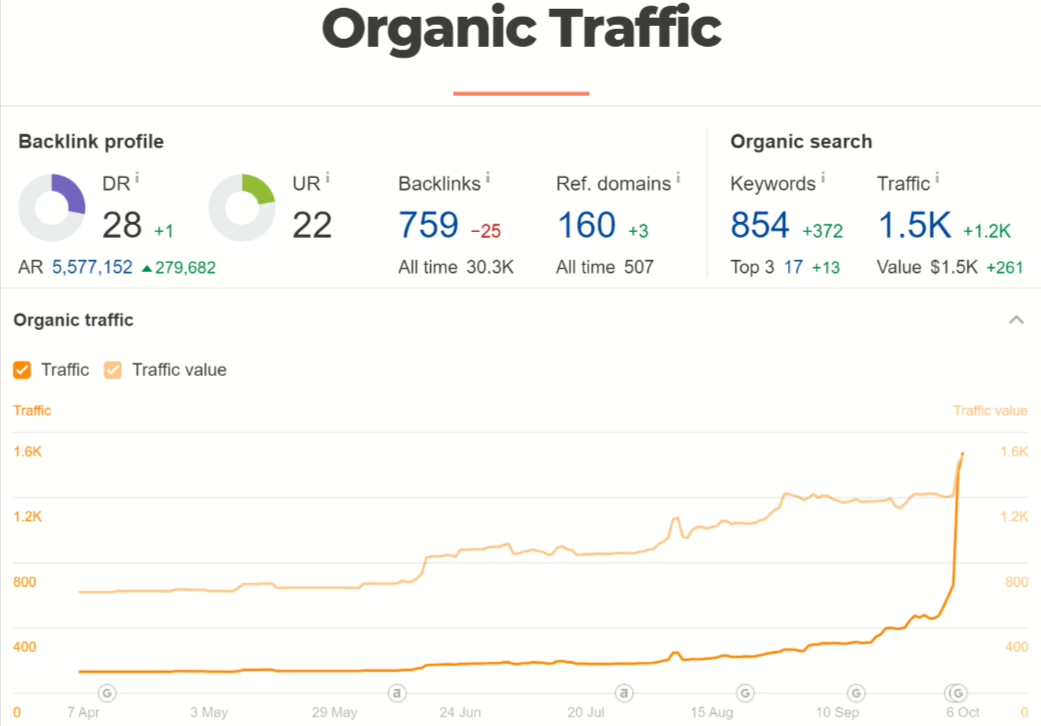
Within the first thirty days, monthly website traffic grew from around 625 visits to over 1,000. Search impressions increased by an additional 6,000 in the first month, then 30,000 as content indexed and began ranking. These early signals showed the technical fixes and new content were both working.
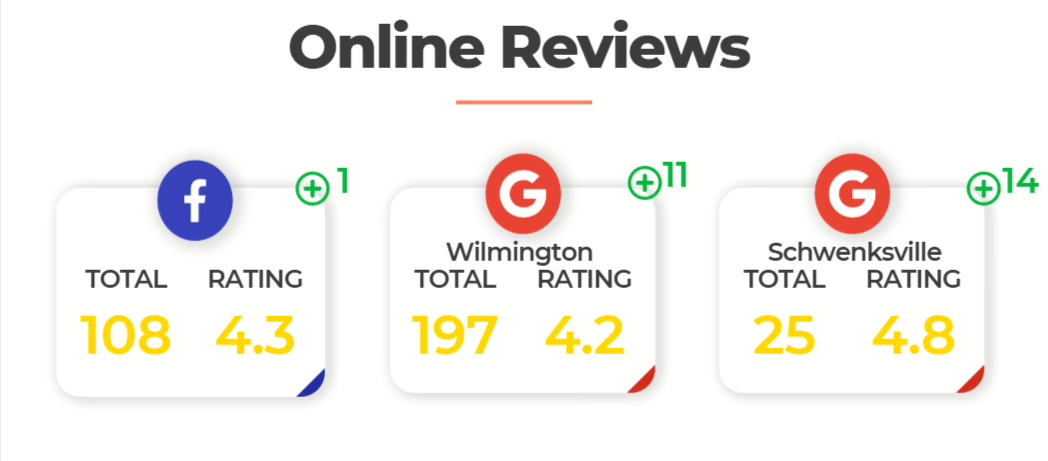
Over six months, the review rating improved from 3.8 to 4.2, with a healthier volume of recent reviews providing better context. Positive, relevant content began appearing on page one in place of the outdated and negative results that had been there before. Local visibility strengthened in both search results and map rankings.
The most significant change was not in any individual metric. It was that new customers now encountered a search result that accurately reflected the quality of the business. Their online reputation caught up with the reputation they had already earned in the real world. That is what realistic ORM looks like.
Your Business Deserves to Be Found the Right Way
Whether you are starting from scratch or recovering from damage, NewReputation builds the strategy, the content, and the monitoring infrastructure to make your online presence work for you.
- Full reputation audit covering search results, reviews, and profiles
- Content and SEO strategy built around your specific situation
- Ongoing monitoring so problems are caught before they compound
Common Mistakes That Set Businesses Back
Most reputation damage does not arrive in a single dramatic event. It accumulates through a series of consistent small mistakes that compound over time. These are the patterns we see most often.
Waiting too long to engage with reviews. When businesses do not actively collect reviews, the ones that get posted unprompted skew negative. Older negative feedback sits near the top of results with no recent positive context around it. Research from the Medill Spiegel Research Center at Northwestern University shows that early review activity increases both visibility and conversion. Waiting gives outdated feedback disproportionate influence.
Responding emotionally or not at all. Some businesses respond defensively to negative reviews. Others never respond. Both are worse than a calm, professional reply. Studies show that responding to both positive and negative reviews increases trust. Your response is not just for the reviewer. It is for every person who reads it afterward, which is often many more people than those who leave the review.
Focusing on removal instead of visibility. A common mistake is spending energy trying to get negative content removed rather than building stronger alternatives. Third-party platforms control what stays up, and most reviews that businesses dislike remain because they reflect a genuine customer experience. The more effective use of that same effort is creating content that competes for the same rankings and wins. Our guide on how to bury negative search results covers the right approach.
Publishing content that does not match what customers search for. Generic blog posts that are not tied to real customer questions rarely rank and rarely help. Content built around specific search intent, what services cost, how a process works, what to expect, answers to common questions, earns rankings and trust at the same time.
Inconsistent business information across platforms. When your name, address, and phone number differ between Google, Yelp, Facebook, and other directories, local visibility drops and consumer confidence suffers. Consistency across all platforms is a basic requirement, not a bonus. Our online review management strategy guide covers how to keep this tidy over time.
Stopping once initial results improve. Search engines constantly reassess what to show based on freshness and relevance. If review requests stop, content publishing stops, and profiles go stale, old negative content can resurface. ORM is maintenance work, not a one-time project.
How to Tell If You Need ORM Now
You do not need a specialist to tell you whether your reputation needs attention. A five-minute check will give you the answer.
Open an incognito browser window and search your full name, your business name, and your business name combined with your city or main service. Use incognito so your personal search history does not influence what you see. What you find in that window is what a new customer, journalist, investor, or potential partner sees when they look you up.
Focus only on the first three to four results. These are the only ones that matter for most searches. Ask yourself honestly: would someone who did not already know you trust what they see here?
Then check your review activity. Not just your average star rating, but how recent your last review is and whether reviews are getting responses. Old, unanswered reviews in a quiet profile signal to potential customers that no one is paying attention.
Next, verify that your business name, address, and phone number match exactly across Google, Yelp, Facebook, and any other directories you appear in. Even small differences, like “St.” versus “Street,” reduce local search visibility and create confusion.
Finally, look for content gaps. Is there a clear explanation of your services, your process, your pricing range? If someone is researching you before making a decision and cannot find answers to basic questions on your own platforms, they will either go elsewhere or form their opinion based on whatever third-party content fills that gap.
ORM is necessary if any of the following are true: one or two negative results dominate your first page, your reviews are outdated or unanswered, your business information is inconsistent across platforms, or accurate content about what you do is simply absent. At that point, your reputation is being shaped by what exists online without any input from you.
What Good ORM Looks Like in the Wild
The clearest examples of online reputation in action are not on your website or in your press releases. They are in conversations between your customers on platforms you do not control.
Costco: When customers become your best communicators
In this Reddit thread, a Costco member describes returning a product and how easy the process was. What happens next is the interesting part.
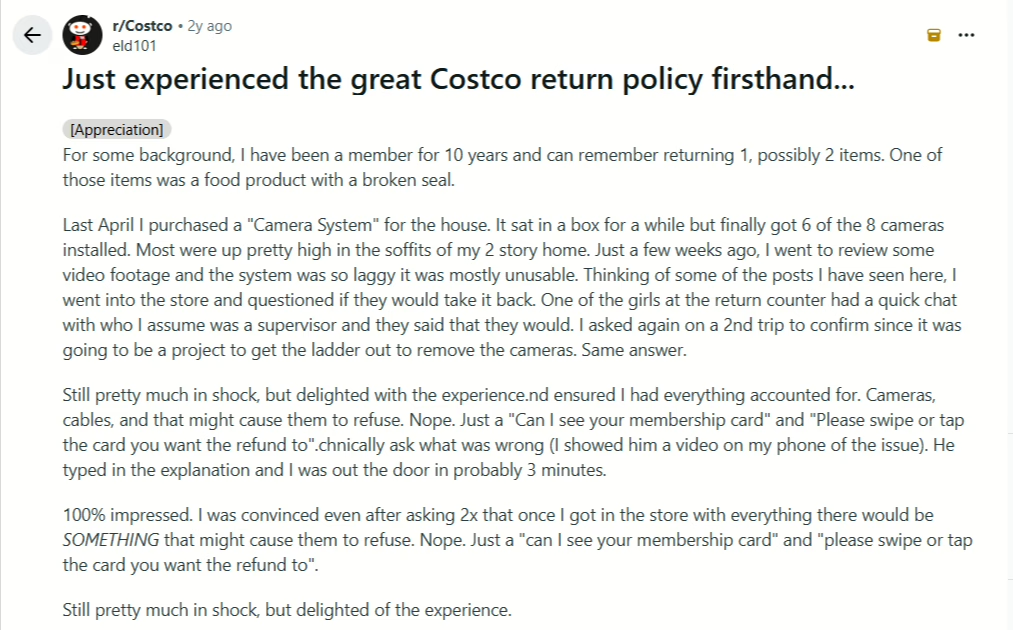
Other customers reply and explain Costco’s return policy in their own words. They describe what the policy allows, what it does not allow, and why it works the way it does. Costco does not appear in the thread. No employee jumps in. The community does the explanation.
This works because Costco’s return process is consistent and simple enough that customers can repeat it accurately. The policy is the same whether you bought something three days ago or three years ago, and everyone has experienced that same consistency. That predictability turns into social proof at a scale no marketing campaign can replicate.
What ORM lesson does this carry? Your reputation in these conversations is built entirely by whether your processes produce repeatable, predictable experiences. When customers know what to expect, they explain it to each other. When they do not, speculation fills the gap and the speculation is rarely charitable.
NVIDIA: The difference clarity makes
These two Reddit threads show the same company handling similar situations with very different outcomes.
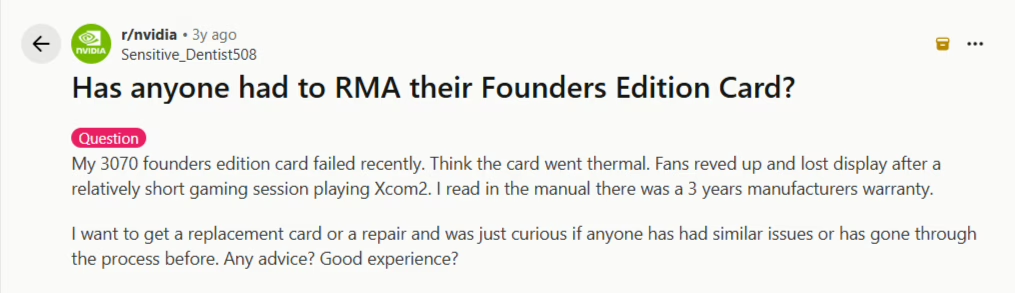
In the first thread, a user asks about returning a faulty graphics card. Responses share timelines, steps, and outcomes. The discussion stays factual and relatively calm because people know what the process usually looks like.
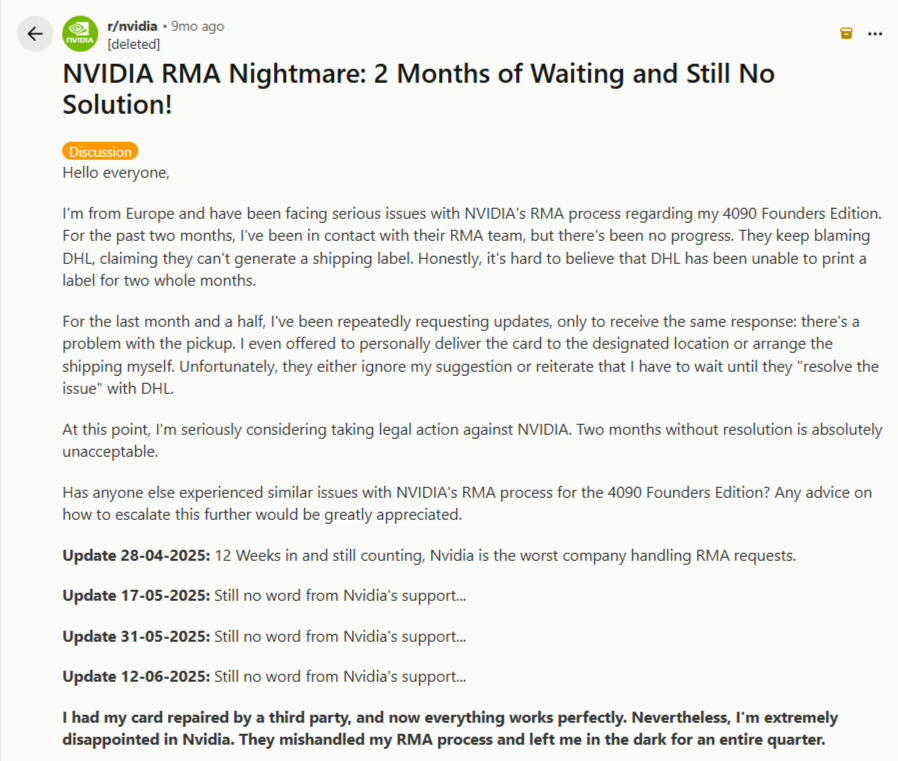
In the second thread, a user does not know what is happening with their return or when it will be resolved. The comments become emotional. The thread grows long. Others share similar experiences of unclear communication. The frustration becomes the story rather than the product issue itself.
The problem in the second thread is not that NVIDIA made mistakes. It is that customers had no clear picture of what to expect, so they filled the silence with anxiety. That anxiety became public, and public anxiety compounds.
These two threads show clearly what ORM researchers mean when they say reputation is built by process, not messaging. A simple, consistently communicated process that customers can describe accurately is worth more than any amount of brand positioning content.
Online reputation management is not about controlling conversations. It is about creating experiences and processes that produce clear, repeatable stories when customers talk to each other. The content you publish matters. The way you handle complaints matters more. The consistency of your processes matters most.
How to Get Started Today
You do not need a large budget or specialized software to begin managing your reputation. The tools that matter most are free. The work that matters most is consistent.
Here are the steps in the order they produce the most impact.
Make sure you have a functional website. It does not need to be elaborate. It needs to clearly state your business name, what you do, where you operate, and how to contact you. This is the home base that all your other online presence links back to. A basic Google Sites, WordPress.com, or Wix site is enough to start.
Verify your site works on mobile. Most searches happen on phones. Google’s mobile-friendly test is free and takes sixty seconds. If your site fails it, fix this before anything else.
Set up Google Search Console. This free tool from Google shows you exactly how your site appears in search, what people are searching to find it, and what errors Google has found. It is the clearest window available into what Google actually sees. Set it up at search.google.com/search-console.
Create Google Alerts for your name and business. Go to google.com/alerts and create alerts for your business name, your personal name if you are public-facing, and common misspellings. This is how you catch new mentions early, before they gain traction.
Claim and complete your core profiles. At minimum: your Google Business Profile, Yelp, and Facebook page. Make sure the business name, address, phone number, and service description match exactly across all three. Inconsistency here directly reduces local search visibility.
Start responding to reviews consistently. Every review deserves a response, positive and negative alike. Keep responses professional, specific, and calm. If you are unsure what to say, our free review response generator provides a starting point. And our free sentiment analysis tool helps you spot patterns in what customers are saying before problems compound.
Publish content that answers real questions. Start with the four or five questions your customers ask most often before they hire you. What does your service cost? How does your process work? How long does it take? What should they expect? Post clear, honest answers on your website. These pages earn rankings and build trust simultaneously.
Check results once a month. ORM does not require daily attention, but it requires consistent attention. Once a month, search your name in incognito, check new reviews, review your Google Alerts, and look at Search Console for any new issues. This cadence keeps you ahead of problems rather than reacting after they have grown.
Every step listed above can be done for free. The investment is time and consistency. Businesses that start this work before they need it have dramatically less work to do when a challenge eventually appears. The ones who wait until something goes wrong have a much harder road back.
If you want to go deeper on any of these areas, or if you are dealing with an active reputation problem that needs more than these basics can address, contact the NewReputation team for a free consultation. We work with businesses and individuals at every stage, from building a presence from scratch to recovering from serious damage.
Take Control of What People Find When They Search You
NewReputation helps businesses and individuals build, protect, and repair their online reputation through a complete strategy covering search results, reviews, content, and monitoring.
- Free reputation audit showing exactly where you stand today
- Strategy across search results, reviews, content, and profiles
- Ongoing monitoring and management so nothing slips through
Related Guides