
Last Updated on 6 months ago by Admin
Snapchat is one of the most popular social media apps in the world. Millions of people use Snapchat every day to share photos, chat with friends, and post short stories from their daily lives. Because messages disappear quickly and accounts are easy to create, the platform has also become a target for fake profiles.
You might receive a random friend request from someone you have never met. The profile photo might look attractive and the person may start messaging immediately. At first everything can feel normal. But after a few messages you may start wondering something important. Is this person real, or is it a fake account trying to scam you?
Fake Snapchat accounts are used for many different purposes. Some people create them for harmless reasons like anonymity. Others use them for more harmful activities such as catfishing, romance scams, harassment, or even sextortion schemes. In many cases scammers try to build trust quickly and then ask for personal information, photos, or money.
Learning how to recognize the warning signs can help you avoid these situations. When you know what to look for, it becomes much easier to spot suspicious behavior before things go too far.
In this guide you will learn:
- The most common signs of a fake Snapchat account
- Behavioral patterns that reveal scammers and bots
- Practical tools you can use to investigate a profile
- Simple ways to find clues about who might actually be behind the account
By the end of this article you will have a clear checklist you can use anytime a suspicious account adds you. To read more about the risks and benefits of social Media, check out our blog here.
Why Fake Snapchat Accounts Are So Common
Fake accounts appear on almost every social media platform, but they are especially common on Snapchat. The design of the platform makes it attractive for people who want to hide their identity.
First, creating an account takes only a few minutes. A person can register with a new email address or phone number and start adding strangers right away. If the account gets reported or banned, it is easy to create another one.
Second, Snapchat messages disappear after they are viewed. This makes it harder to track conversations later. Scammers often take advantage of this feature because it removes evidence quickly.
Third, many users accept friend requests without thinking much about it. People often assume the person might be a friend of a friend or someone they met briefly.
Fake Snapchat accounts are usually created for several main reasons:
Scams: Some accounts try to convince users to send money, gift cards, or cryptocurrency.
Catfishing: A person pretends to be someone else by using stolen photos.
Harassment or stalking: Fake profiles can hide the real identity of someone targeting another person.
Selling adult content: Many spam accounts advertise paid content or external websites.
Data collection: Some fake profiles try to gather personal information.
Understanding these motives helps explain why suspicious behavior appears so often on the platform. The good news is that fake accounts usually reveal themselves through certain patterns.
10 Signs a Snapchat Account Might Be Fake
Spotting a fake account on Snapchat is rarely about one single clue. Most fake profiles reveal themselves through a combination of small signals. When you start noticing several of these patterns together, the chances that the account is fake increase significantly.
Below are ten common warning signs and simple ways you can check each one.
1. The Snap Score Is Extremely Low
One of the first things worth checking is the Snap Score, which reflects how active a user has been on Snapchat.
Long time users usually accumulate thousands of points because the score increases when they send snaps, receive snaps, and interact with friends. A score close to zero often means the account was created very recently.
That alone does not prove anything. Someone could simply be new to the platform. But when a brand new account starts adding strangers and messaging aggressively, it becomes suspicious.
General guideline:
- 0 to 50 often means the account was created very recently
- 100 to 1000 suggests a casual user
- 10,000 or more usually indicates a long term active user
How to check it
- Open the chat with the person.
- Tap their profile icon.
- Look under their username to see the Snap Score.
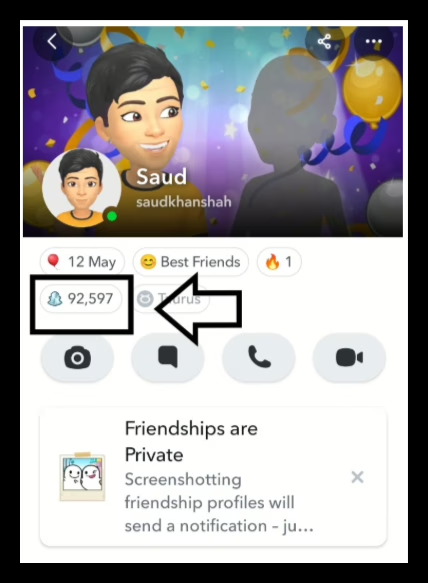
If the score is extremely low and the person is aggressively messaging strangers, that is a strong warning sign.
2. The Username Looks Random or Artificial
Usernames can also reveal a lot about an account. Real users typically choose something personal such as their name, nickname, or a hobby.
Fake accounts often look different. Their usernames may contain:
- Long strings of numbers
- Unusual letter combinations
- Flirtatious phrases designed to attract attention
For example, names like angelgirl45829 or snapbabe7772 are commonly associated with spam or catfish accounts.’
For anyone online, managing your reputation is important. People often check others on the internet, so it’s useful to know how you appear online. Visit our page for a free reputation audit.
A quick way to investigate
Search the same username on other social media platforms. If the username appears nowhere else online, it may have been created quickly just for Snapchat.
3. The Profile Photo Looks Too Perfect
Many fake profiles rely on attractive photos to gain trust quickly. These pictures are often stolen from influencers, models, or stock photography websites.
If the images look unusually professional or polished, it may be worth verifying them.
Some clues to watch for:
- Studio quality lighting
- Photos that look like modeling portfolios
- Images that seem unrelated to everyday life
A simple verification technique is reverse image search using Google Images.
How to do it
- Screenshot the profile picture.
- Upload it to Google Images reverse search.
- Review the websites where the photo appears.
If the same image belongs to someone else on Instagram or a photography site, you are likely dealing with a fake profile.
4. You Were Added Completely at Random
Think about how the person actually found you.
Many fake Snapchat accounts use the Quick Add feature to send hundreds of friend requests to random users. The goal is simple. If even a small percentage accept the request, the scammer still gains potential targets.
Ask yourself a simple question.
Do you have any connection to this person?
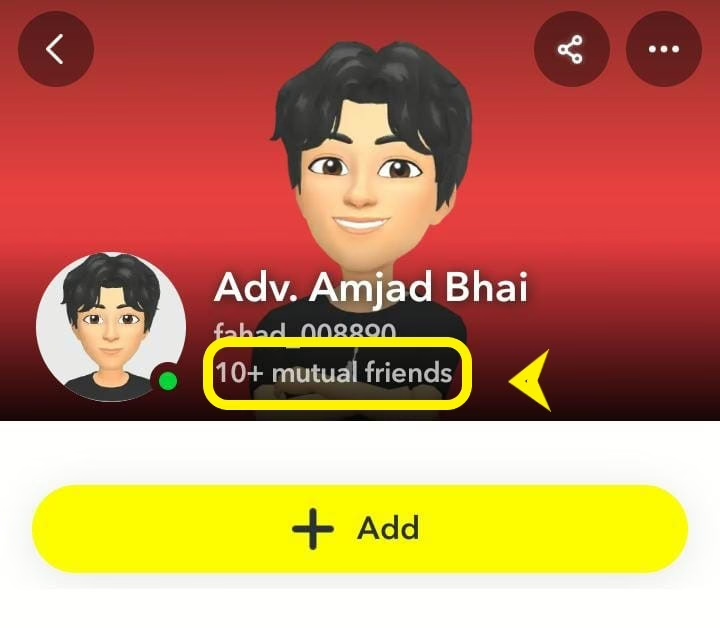
Look for things like:
- Mutual friends
- Shared groups
- A common location
If none of these exist and the person cannot explain how they found you, the request might not be genuine.
5. The Conversation Starts Almost Instantly
A typical fake account starts messaging within seconds of being accepted. The first messages are usually very generic.
Common opening lines include:
- “Hey”
- “Where are you from”
- “You look cute”
These messages are often part of automated scripts used by bots or scammers who are chatting with multiple people at once.
One way to test this is to ask a specific question. For example, ask about their hobbies or their city. Bots often respond with unrelated messages that do not answer the question.
6. They Avoid Sending Live Snaps
Real Snapchat users can easily send a live snap at any moment. Fake accounts usually cannot because they rely on photos taken from somewhere else.
When asked for a live snap, they often provide excuses such as, their camera is broken, their internet is slow or they are feeling shy.
A simple test is to request a very specific snap.
For example, ask them to:
- Hold up two fingers
- Send a short video saying hello
Someone using stolen images will usually avoid these requests.
7. The Account Has No Stories or Personal Activity
Most Snapchat users post occasional stories. These might include everyday moments like food, friends, travel, or hobbies.
Fake accounts often look strangely empty. You might notice:
- No stories at all
- Only promotional content
- Generic reposted images
An account that claims to have existed for a long time but has no personal activity is worth questioning.
8. The Replies Feel Robotic
Another sign appears during the conversation itself. Fake accounts often send responses that feel scripted.
For example, you might ask where they live and receive a reply like:
“Nice to meet you dear.”
When messages repeatedly ignore your questions or sound generic, the account may be using copy and paste scripts.
A good way to test this is to ask several unrelated questions. If the answers remain vague or repetitive, the conversation may not be genuine.
9. They Push You to Another App
Many scammers try to move the conversation away from Snapchat very quickly.
They may suggest switching to:
- Telegram
There is usually a reason for this. Snapchat allows users to easily block and report suspicious accounts. Moving the conversation to another platform gives scammers more freedom.
If someone insists on changing platforms after only a few messages, it is wise to be cautious.
10. The Conversation Turns Toward Money or Private Photos
The biggest red flag appears when the conversation shifts toward money or personal images.
Some fake accounts attempt romance scams. Others run sextortion schemes where they convince users to send explicit photos and then threaten to share them.
Requests might include:
- asking for gift cards
- requesting cryptocurrency
- suggesting paid content
- asking for intimate photos
When a new contact quickly brings up these topics, it is usually a strong signal that the account is not genuine.
In situations like this, the safest response is simple. Stop engaging with the account and report it immediately.
How to Find the Person Behind a Fake Snapchat Account
While Snapchat accounts are designed to be private, there are a few verified ways to investigate a suspicious profile. The most effective method relies on digital footprints outside Snapchat.
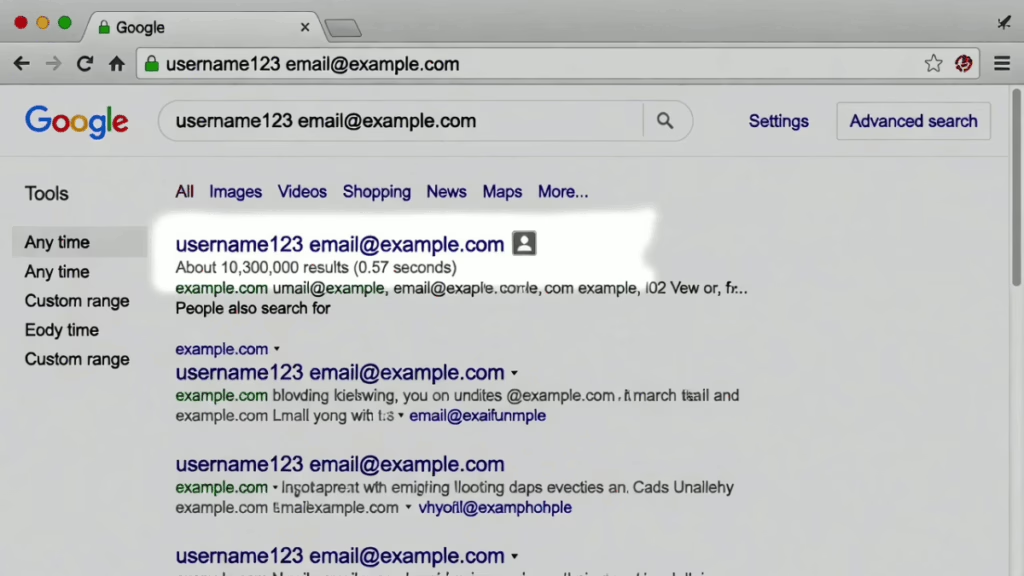
Start with a careful Google search. Take any information you can confirm from the account: the username, any shared email, or phone number. Put quotes around exact phrases to search them precisely.
For example, searching “username123” or “username123 [email protected]” can reveal accounts on other social media platforms, forum posts, or websites linked to the same identity. If the user has reused their photos or usernames elsewhere, this often leads to a personal profile with real details.
Next, if the account shares photos, you can use Google’s reverse image search. Save the image, go to Google Images, click the camera icon, and upload the file. This process can reveal the original source of the photo. If it appears on Instagram, a blog, or a modeling website, you know the Snapchat profile is using someone else’s identity.
Another method is looking for indirect clues in the account itself. Screenshots of locations, visible backgrounds, or even writing style can help when combined with Google searches. While these clues rarely identify someone with absolute certainty, they sometimes narrow down the possibilities.
Ultimately, if none of these searches reveal a real identity, it is safest to block and report the account. Snapchat reviews reported accounts and removes those that violate their terms, protecting other users from potential scams.
FAQs
Can I always find the person behind a fake Snapchat account?
No. Many fake accounts are created using stolen images, fake usernames, and anonymous email addresses, making identification difficult without legal access to Snapchat records.
Is it safe to try and contact someone pretending to be fake?
No. Engaging with a fake account can expose you to scams, harassment, or phishing attempts. Stick to observation and investigation using publicly available information.
Which tools are best for verifying a Snapchat account?
Google search, reverse image search on Google Images, and careful username searches across social platforms are the most reliable methods. Avoid unverified “Snapchat lookup” tools, as they may be scams themselves.
Should I report every suspicious account?
Yes. Reporting helps Snapchat remove fake profiles and protects other users from scams or harassment.
Conclusion
Fake Snapchat accounts are common, and while you cannot always uncover the person behind them, digital investigation using Google searches and reverse image tools can provide valuable clues. Always prioritize your safety, avoid sharing personal information, and report any suspicious profiles.
At NewReputation, we help people and businesses protect their online privacy and reputations. Don’t be afraid to ask for help if you don’t know what to do.

The NewReputation Help Center discusses brand reputation, online PR, search engine marketing, content marketing, and much more.