Impression management is the act of controlling how others perceive you. It happens in daily life, whether consciously or unconsciously. People use impression management to influence opinions, gain trust, and achieve personal or professional goals.
How Impression Management Works
People naturally adjust their behavior, appearance, and communication to shape how others see them. This can happen in everyday conversations, at work, or online. Someone might dress professionally for an interview, speak confidently in a meeting, or carefully curate their social media posts. The goal is to build relationships, gain trust, and avoid negative judgments.
Impression management is especially important in career growth and social status. A well-crafted image can lead to professional success, better opportunities, and stronger personal connections. In business, companies use branding, marketing, and customer service to control how the public perceives them. On social media, individuals highlight their achievements, lifestyles, and interests to shape their personal brand. Whether in personal life, business, or online, managing impressions helps people persuade others and create a positive reputation.
Impression Construction: Shaping Your Public Image
Impression construction is the process of creating and maintaining a public image. People do this by balancing their self-concept (how they see themselves) with their desired identity (how they want to be seen). Every interaction, from casual conversations to networking events, influences how others perceive us.
In different situations, people adjust their self-presentation to fit social norms and expectations. This happens naturally because of social context and social expectancy – what others expect based on roles, culture, or status.
For example, a business professional may present themselves with confidence at an event to gain social capital, while a student might act reserved in a classroom setting.
However, role constraints can limit how freely someone expresses their identity. A manager may need to appear strict at work, even if they are easygoing outside the office. In any situation, people aim to maximize their target value – the qualities that make them desirable or respected within a status hierarchy.
Building a strong social image takes strategy, self-awareness, and consistency. Whether online or in person, the way we manage our identity can shape our opportunities, relationships, and success.
Impression Management Techniques
People use different strategies to shape how others see them. These techniques help control perceptions in personal, social, and professional situations. Sociologist Erving Goffman introduced the concept of self-presentation, explaining how people adjust their behavior to fit social expectations.
- Aligning Actions: Individuals explain their actions in order to make their actions appear reasonable. For example, someone may miss a deadline and then claim that something unforeseen happened to them in order to maintain their credibility.
- Alter-Casting: Individuals give others roles or identities in order to influence how they interact with them. Teachers may refer to students as “leaders” in an effort to motivate them to become responsible.
- Conformity: Individuals modify their behaviors to fit in with a particular group. This can involve dressing a certain way, sharing similar views with others, or hiding emotions in order to prevent disagreements with others.
- Defensive Strategies: Individuals defend their images by avoiding behaviors that could harm their reputation. For example, someone who lacks confidence in public speaking may deliberately avoid presenting in front of groups.
- Ingratiation: Individuals praise others or agree with others in order to gain favor. Examples of ingratiating behavior include complimenting a supervisor prior to requesting a promotion or saying things that please a friend.
- Managing Appearances: Individuals present themselves in a manner that sends a specific message to others. For example, wearing formal clothing to a business meeting conveys professionalism.
- Self-Control: Individuals regulate their emotions and reactions in order to maintain a specific image. Displaying composure in a stressful situation, such as a job interview, indicates confidence.
- Selective Disclosure: Individuals disclose selective amounts of information regarding their lives in order to shape how others perceive them. For example, a job applicant may highlight leadership positions in his/her resume, while failing to mention previous failures.
- Suppressing Emotions: Individuals suppress their actual emotions in order to avoid being judged negatively. Customer service representatives may smile and respond politely to customers, despite being frustrated by them.
- Target Value: Individuals tailor their self-presentation to align with the values of their audience. Politicians may emphasize their commitment to family values when communicating with families, and their expertise in economics when communicating with business leaders.
Impression management happens everywhere, from social media to the workplace. Understanding these techniques can help people navigate relationships, build trust, and achieve personal and professional success.

Impression Motivation: Why People Care About Their Public Image
People manage their impressions because how they are perceived affects their opportunities, relationships, and self-esteem. The motivation to shape an image depends on several factors, including personal goals, cultural influences, and social expectations.
Social Expectations: Individuals are often subject to expectations from others regarding how they should present themselves. For example, an employee may be expected to dress professionally for work.
Personal Goals: Individuals often strive to achieve certain goals, such as attaining a position or increasing their visibility.
Cultural Factors: Impression management is influenced by cultural norms and expectations. For example, maintaining a strong reputation is often viewed as important in many Asian cultures.
Sociological Perspectives on Impression Management
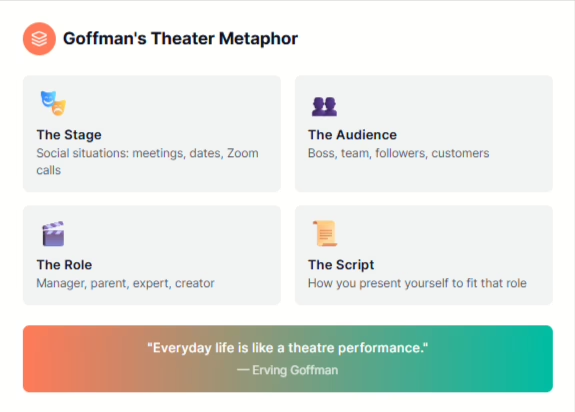
Impression management plays a key role in social interaction. It shapes how people present themselves and how others perceive them. Sociologists like Erving Goffman and Edward E. Jones have studied this concept in depth. Goffman’s book, The Presentation of Self in Everyday Life, introduced the dramaturgical analysis, comparing social interaction to a theatrical performance. People adjust their behavior based on their audience, much like actors on a stage.
In everyday life, impression management happens in both personal and professional settings. In corporate communication, businesses carefully craft messages to maintain a strong public image. In political impression management, leaders use speeches, media appearances, and social platforms to shape their reputation and gain public trust. These strategies are based on rules of conduct, which guide how individuals or organizations should behave in different social settings.
The self-presentational view explains that people consciously or unconsciously manage their image to fit social expectations. This is especially evident in social media influence, where users curate their online presence to create a desirable identity. The symbolic interactionist perspective suggests that social meaning is built through interactions, and perception plays a key role in shaping relationships. This is evident in asymmetrical relationships, where power dynamics influence how individuals present themselves to those with greater authority or influence.
Theories Behind Impression Management
Impression management is grounded in both psychology and sociology. Impression management is the study of how individuals create an image of themselves to others based on their motivations, the social context in which they find themselves, and their emotional intelligence. Self-presentation theory is one of the primary theoretical foundations of impression management. According to self-presentation theory, individuals modify their behavior in order to create a specific impression of themselves. This may be intentional, such as dressing formally for a job interview, or unintentional, such as modifying one’s language usage to fit the expectations of a group.
Goffman extended the theater metaphor to analyze social interactions. Goffman argues that people act in ways that correspond to their social roles, and that they may modify their behavior to reflect social expectations. For example, a manager may exhibit confidence and assertiveness at work, but be relaxed and informal at home. These variations in behavior represent examples of performative social interaction, in which individuals modify their behavior to meet the social expectations of others.
The social context in which an individual finds himself/herself influences the types of impression management strategies that are used. In professional settings, individuals are more concerned with building a strong reputation and demonstrating socio-emotional skills such as empathy and flexibility. In personal relationships, individuals are more concerned with exhibiting socially desirable traits, such as kindness and humor.
The motivations behind an individual’s impression management efforts are critical. Some individuals are motivated by a desire for approval and affiliation, while others are motivated by a desire for power and influence. Strong human relationships rely heavily on emotional intelligence, which allows individuals to successfully navigate social situations. By understanding how motivations and social cues affect an individual’s self-presentation, individuals can manage impressions to promote their personal and professional success.
Impression Management in the Digital Age
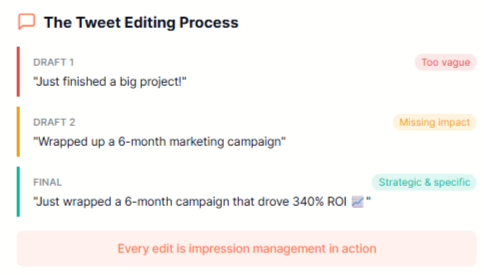
Social media has changed how people manage impressions. Online, people curate their profiles to reflect a specific image.
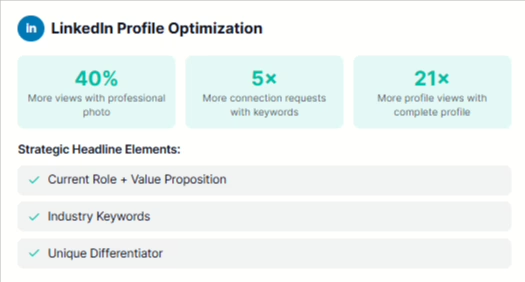
- Professional Profiles: Users highlight work experience and achievements on LinkedIn to attract job opportunities.
- Personal Branding: Influencers craft a specific online identity to gain followers.
- Selective Sharing: People post curated moments of success and happiness, avoiding negative aspects of life.
Businesses also use impression management to shape brand perception. They craft messaging, design, and content to appeal to customers and build trust.
Why Impression Management Matters in Business
In business, perception is everything. How customers, clients, and competitors see you can influence success. Companies use impression management to build credibility and maintain a strong reputation. A positive image fosters trust, making customers more likely to engage with a brand. Strong relationships with clients lead to repeat business, positive reviews, and word-of-mouth marketing.
Sales and revenue also benefit from a well-managed reputation. When a company presents itself as reliable and customer-focused, people feel more comfortable buying its products or services. Businesses that actively manage their public image gain a competitive edge, standing out in crowded markets. Whether through marketing, social media, or customer interactions, controlling perception is key to long-term success.
Ethical Considerations in Impression Management
Impression management plays a major role in professional settings, especially in fields like healthcare, corporate leadership, and public relations. While shaping perceptions can be beneficial, it also raises ethical concerns. In hospital wards, for example, healthcare professionals must balance self-presentational requirements with moral standards. They need to appear confident and competent while ensuring patient care remains the top priority.
The international public relations code of ethics outlines principles for honesty and transparency, yet some professionals engage in cynical manipulation to control narratives. In public health ethics, integrity is essential, but the pressure to maintain a polished image can sometimes lead to misleading presentations. The concept of front stage and backstage settings from dramaturgical discipline explains how professionals behave differently in public versus private interactions. A doctor may present an unwavering front stage persona to reassure patients while discussing concerns backstage with colleagues.
Ceremonial rules and substantive rules dictate behavior in structured environments, from corporate boardrooms to interprofessional practice in hospitals. Gender roles also shape impression management, influencing expectations of leadership and communication styles. Ethical concerns arise when individuals feel pressured to conform rather than act authentically.
Ultimately, impression management should align with ethical guidelines. Professionals must balance self-presentation with honesty, ensuring credibility and trust remain intact. Whether in business, healthcare, or public relations, ethical impression management fosters genuine connections and long-term success.
How to Improve Your Impression Management
Impressions are how other people see you, but impression management has nothing to do with pretending to be someone else. The goal is to show people the best version of yourself while being as honest as possible. Honesty is a huge factor in building trust, therefore it is unwise to exaggerate your skills, accomplishments or even your interests. Most importantly, people tend to appreciate when they are told the truth; if you lie about something, most likely it will come back to haunt you.
Online reputation, and by extension, digital footprint, play a very important role in impression management. Keep your social media and professional accounts up to date, to ensure that your online presence accurately reflects your values, and your area of expertise. Many times, potential employers, clients, and peers will first look at you online before deciding whether to pursue a relationship with you. Additionally, regularly checking and updating your digital presence can help create a consistent and positive image of yourself.
The same principles of impression management don’t apply to all types of relationships or interactions. For example, the way you would want to represent yourself during a job interview, may be different than how you choose to interact on social media, or how you want to network with friends. Knowing your audience and understanding who you’re communicating with, will help you tailor your communication style to build better relationships.
How you frame your experiences and conversations also plays a significant role in impression management. Highlight your strengths, and frame challenges as opportunities for growth, learning and resilience. Instead of dwelling on your failures, focus on what you have learned and how you have grown as a result. Framing your experiences positively, will allow you to leave a lasting impression, and give others an opportunity to view you favorably.
Lastly, feedback is essential for growth. Ask people you know and trust (colleagues, mentors, or clients), for their opinion on how you are perceived. What they tell you could be a great tool to use in making small adjustments to your impression management plan. These small changes can have a significant impact on how people perceive you, both online and in person.
Final Thoughts
Impression management is a powerful tool in both personal and professional life. It can open doors, strengthen relationships, and improve career prospects when used effectively. However, authenticity remains key—people value honesty and consistency over time.
Want to manage your online reputation? NewReputation helps individuals and businesses shape their digital presence for success. Contact us today!