Last Updated on 4 months ago by Admin
Your personal brand already exists. The question is whether you are shaping it or leaving it to chance.
Every time someone Googles your name before a job interview, a business meeting, a speaking invitation, or a sales call, they form an impression based on what they find. That impression is your personal brand in action. It is built from your LinkedIn profile, your published content, articles about you, your social media presence, and the absence of any of those things.
Over 77% of people who recently changed jobs used LinkedIn to help them find new opportunities, according to The Social Shepherd’s LinkedIn data. 67% of recruiters say professionals hired through LinkedIn are higher quality than those found elsewhere. Hiring managers research candidates online before interviews as a matter of routine. Investors look up founders before taking meetings. Journalists search your name before deciding whether to quote you.
A strong personal brand does not just improve how you are perceived. It changes what opportunities reach you and at what rate. This guide covers every step of building one: the foundation work, the platform strategy, the content approach, and the ongoing reputation management that keeps it working over time.
Table of Contents
- What a personal brand actually is
- Step 1: Build the foundation before anything else
- Step 2: Audit what already exists about you
- Step 3: Create a home base you own
- Step 4: Optimize LinkedIn as your primary professional presence
- Step 5: Choose your additional platforms deliberately
- Step 6: Publish content that earns authority
- Step 7: Build consistency across every touchpoint
- Step 8: Control what Google shows for your name
- Step 9: Protect what you have built
- Common mistakes that stall personal brands
- Frequently asked questions
What a Personal Brand Actually Is
A personal brand is the consistent, specific impression you create in the minds of the people you want to influence. Not the impression you intend to create. The one they actually form based on the evidence available to them.
That distinction matters. Many people think of personal branding as self-promotion, and so they resist it. But branding is not promotion. It is positioning. It is being clear enough about who you are, what you know, and what you stand for that the right people can find you, evaluate you accurately, and choose you with confidence.
A personal brand answers three questions for the people who encounter it. Who is this person? What do they know or do exceptionally well? Can I trust them to deliver on that? When those three questions have clear, consistent answers across every place someone might encounter you online, you have a personal brand. When the answers are unclear, inconsistent, or absent, you have a gap that often gets filled by whatever content happens to rank for your name.
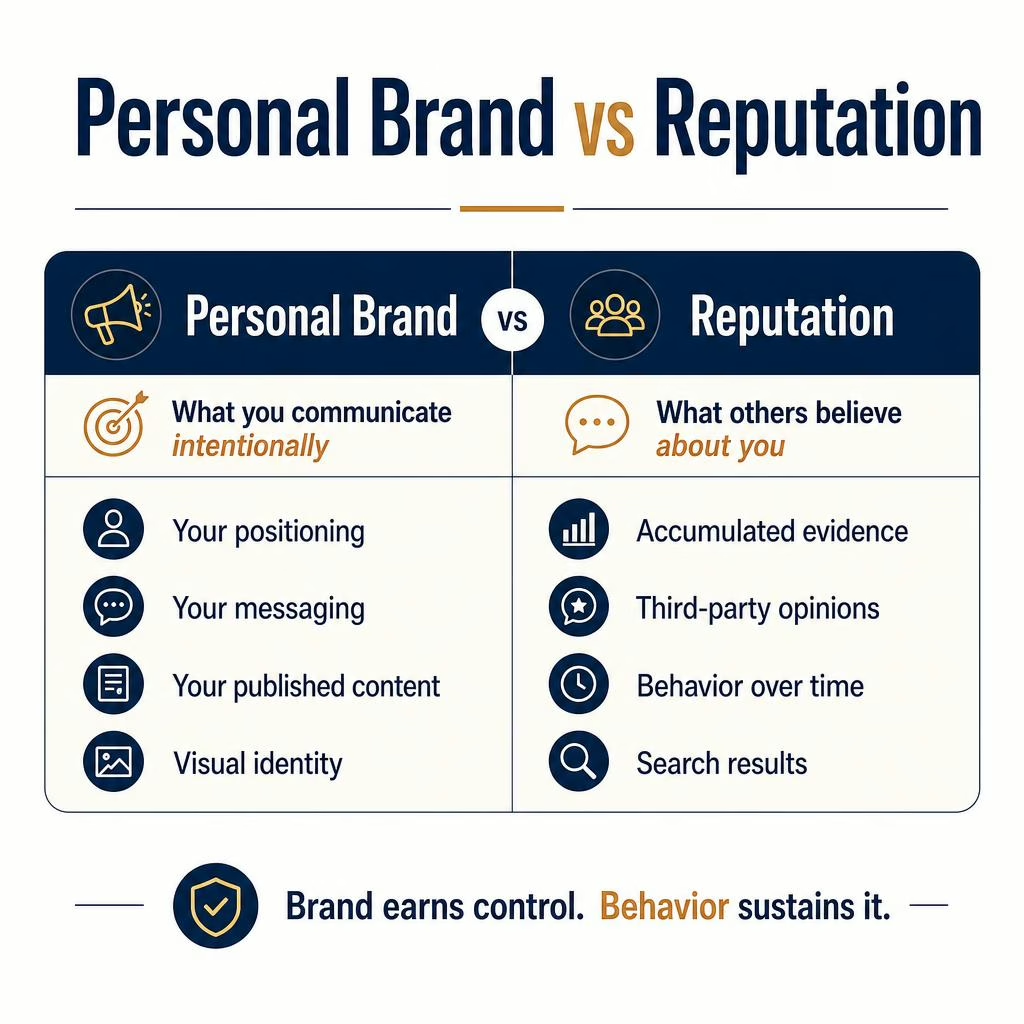
Your personal brand is what you intentionally communicate. Your reputation is what others believe based on accumulated evidence, both what you communicate and what others say about you. Building a personal brand earns you more control over your reputation, but the two are not identical. A strong personal brand requires both proactive communication and consistent behavior that backs it up. Our guide on what reputation means in business covers this distinction in depth.
Step 1: Build the Foundation Before Anything Else
Most personal branding advice jumps straight to tactics: set up LinkedIn, post content, get a headshot. Those are useful steps, but they produce weak results without the foundational thinking that gives them direction.
Before you create or update any profile, answer these four questions in writing.
What do you want to be known for?
This is more specific than “my industry” or “my job title.” Think about the one or two things where your name, over the next three years, should reliably surface as a relevant reference. What is the specific problem you solve, the specific perspective you hold, or the specific expertise you have built that is genuinely differentiated?
You do not need a tagline. You need clarity. Someone who wants to be known as a B2B sales leader for enterprise software companies has something to work with. Someone who wants to be known as “a results-driven professional with strong communication skills” has nothing to build on.
Who are you trying to reach?
Identify the specific group of people whose awareness, trust, or attention you are building toward. This might be potential clients, hiring managers in a specific industry, investors in your stage and sector, journalists covering your field, or collaborators in your professional community. The answer shapes every platform and content decision that follows.
What is your proof?
A personal brand is a claim. Proof is what makes the claim credible. Your work history, published content, case studies, testimonials, speaking experience, research, results you have produced for others. What exists that backs up the positioning you are building? What needs to be created or documented?
What is your existing starting point?
What does a search of your name currently return? What profiles exist? What content is out there, and what impression does it create? You need an honest baseline before you can measure progress or decide where to focus first.
Step 2: Audit What Already Exists About You
Open an incognito browser window and search your full name. Then search your name combined with your city, your company, and your professional role. Make note of everything that appears on pages one and two.
For each result, identify whether it is accurate, current, and consistent with the brand you want to build. Some results you will want to strengthen. Some you will want to update. Some may need to be addressed through content suppression if they are outdated or damaging.
Also check:
- All social media profiles you have created, including ones you may have abandoned
- Old employer directory pages or bios
- Comments or contributions attributed to you on public forums
- Any news coverage or press mentions
- Data broker listings that may include your personal information
This audit gives you two things: a clear picture of what the world currently sees when it looks you up, and a prioritized list of what needs to be created, updated, or addressed. You can also set up tools to track when people are actively searching for you, our guide on how to see if someone Googled you covers the options. And our guide on what a digital footprint is explains what feeds into this picture and how it accumulates over time.
Want to See Your Personal Brand the Way Others See It?
NewReputation’s free First Impression Report shows exactly what appears when someone searches your name, where the gaps are, and what it will take to control the narrative.
- See your current search results and profile presence across platforms
- Identify outdated, inconsistent, or damaging content in your results
- Get a clear starting point before you build or rebuild
Step 3: Create a Home Base You Own
Your personal website is the only piece of your online presence you fully control. Social media platforms change their algorithms, restrict organic reach, and occasionally disappear. A website at yourname.com is permanent, fully customizable, and signals professional seriousness in a way that a LinkedIn profile alone does not.
It also ranks. A personal website optimized for your name is almost always the first result Google shows when someone searches for you directly, which means it is your most powerful tool for controlling the first impression you make.
What your site needs
It does not need to be elaborate. A clean, well-structured site with the following pages is enough to start:
- Home: A clear statement of who you are, what you do, and who you help. One paragraph is enough if it is specific.
- About: Your professional story, your background, and what drives your work. Include a professional photo that matches your LinkedIn headshot.
- Work or Services: What you actually do, with enough specificity that a visitor understands whether you are relevant to them.
- Writing, Speaking, or Content: Whatever format you publish in, link it here. This is where your expertise accumulates visibly over time.
- Contact: A way to reach you that does not require social media.
Technical basics that matter for search
Include your full name in the page title and the first paragraph of your home page. This is how Google identifies the page as a relevant result for name searches. Use your name as part of your domain where possible. Ensure the site loads fast and works well on mobile, since most people searching your name will do so on a phone. Submit your site to Google Search Console so Google indexes it promptly.
If you already have a website but it is outdated or generic, update the home page first. That single page has the highest impact on both search visibility and first impressions.
Step 4: Optimize LinkedIn as Your Primary Professional Presence
LinkedIn is the closest thing to a universal professional directory that exists. It appears in the top three search results for almost every professional’s name search. 45% of LinkedIn article readers are in upper-level positions, managers, VPs, directors, and C-suite executives, according to The Social Shepherd. For most professionals, this is the single highest-impact profile to optimize. If you have ever wondered exactly how to classify it, our explainer on whether LinkedIn is considered social media covers the distinction and what it means for how you should use it.
Profile elements that actually affect how you are found and perceived
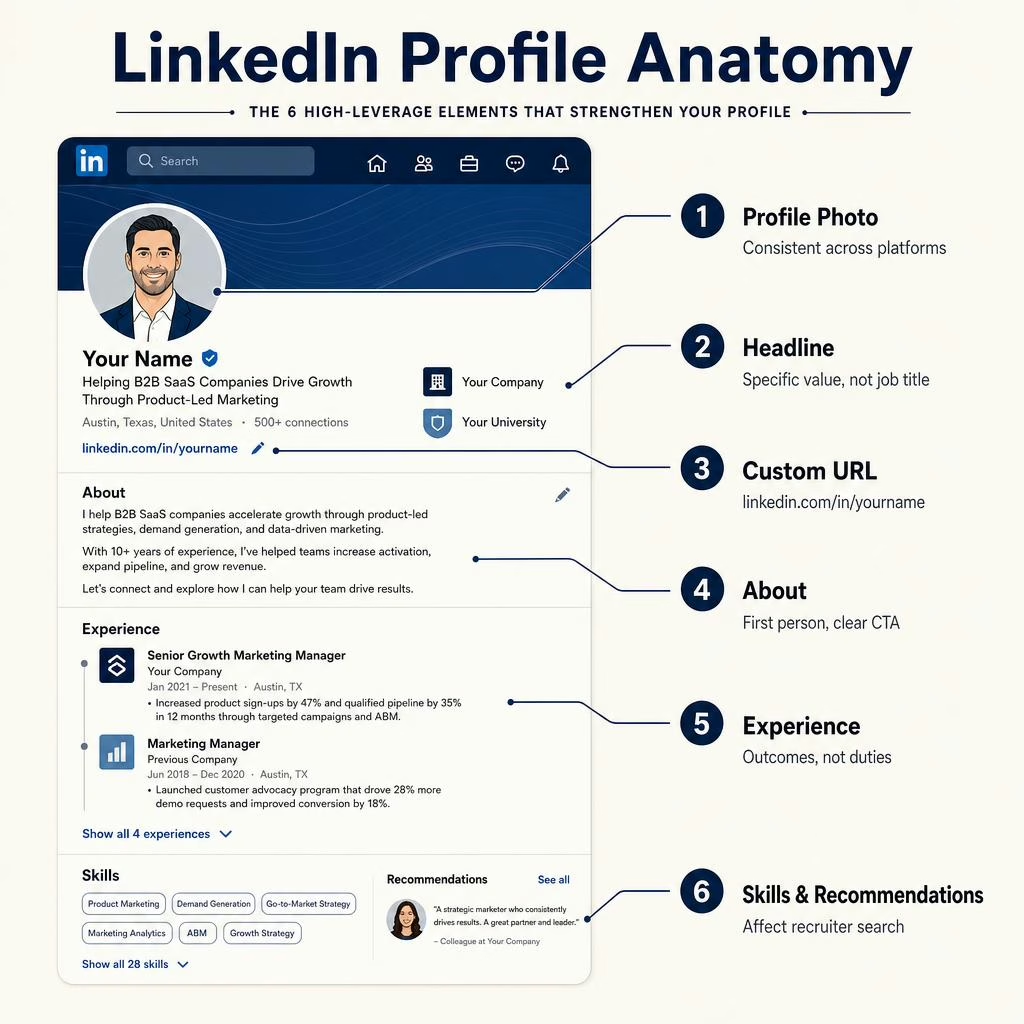
Headline. Do not use your job title. Use a specific description of the value you provide and to whom. “VP of Sales at Acme Corp” tells people your title. “Helping B2B SaaS companies build outbound sales systems that scale past $10M ARR” tells them why they should care. The headline appears in search results, in connection requests, and whenever your name is shown on the platform. It is the highest-leverage text on your profile.
Profile photo. A professional headshot that matches your other platforms. Consistent photos across LinkedIn, your website, and other profiles create the visual continuity that makes a personal brand feel cohesive rather than scattered.
About section. Write in first person. Tell your story: what you do, why you do it, and what distinguishes your approach. Include specific results or examples where possible. End with a clear call to action. What do you want someone reading this to do next?
Experience section. Each role should include specific accomplishments, not job description bullet points. Numbers and outcomes wherever you have them. What changed as a result of your work?
Skills and recommendations. Skills affect how you appear in recruiter searches. Recommendations from credible people in your network are the LinkedIn equivalent of testimonials. Three to five genuine recommendations from people who can speak specifically to your work carry significant weight.
Custom URL. Claim linkedin.com/in/yourname. This makes the URL clean and shareable, and it strengthens the profile’s authority for name searches.
Activity. An inactive LinkedIn profile with excellent copy is less effective than a moderately optimized one with consistent activity. Posting, commenting, and sharing content keeps your profile visible and signals that the person behind it is genuinely engaged in their field. Our guide on LinkedIn lead generation covers how to build strategic visibility on the platform.
Step 5: Choose Your Additional Platforms Deliberately
Every platform you create a profile on that you do not maintain actively is a liability, not an asset. An abandoned Twitter account from 2018 or a half-finished Facebook business page sends a worse signal than no profile at all. Be selective.
Choose platforms based on two criteria: where your target audience actually spends time, and where you can realistically sustain consistent activity. Both conditions need to be true.
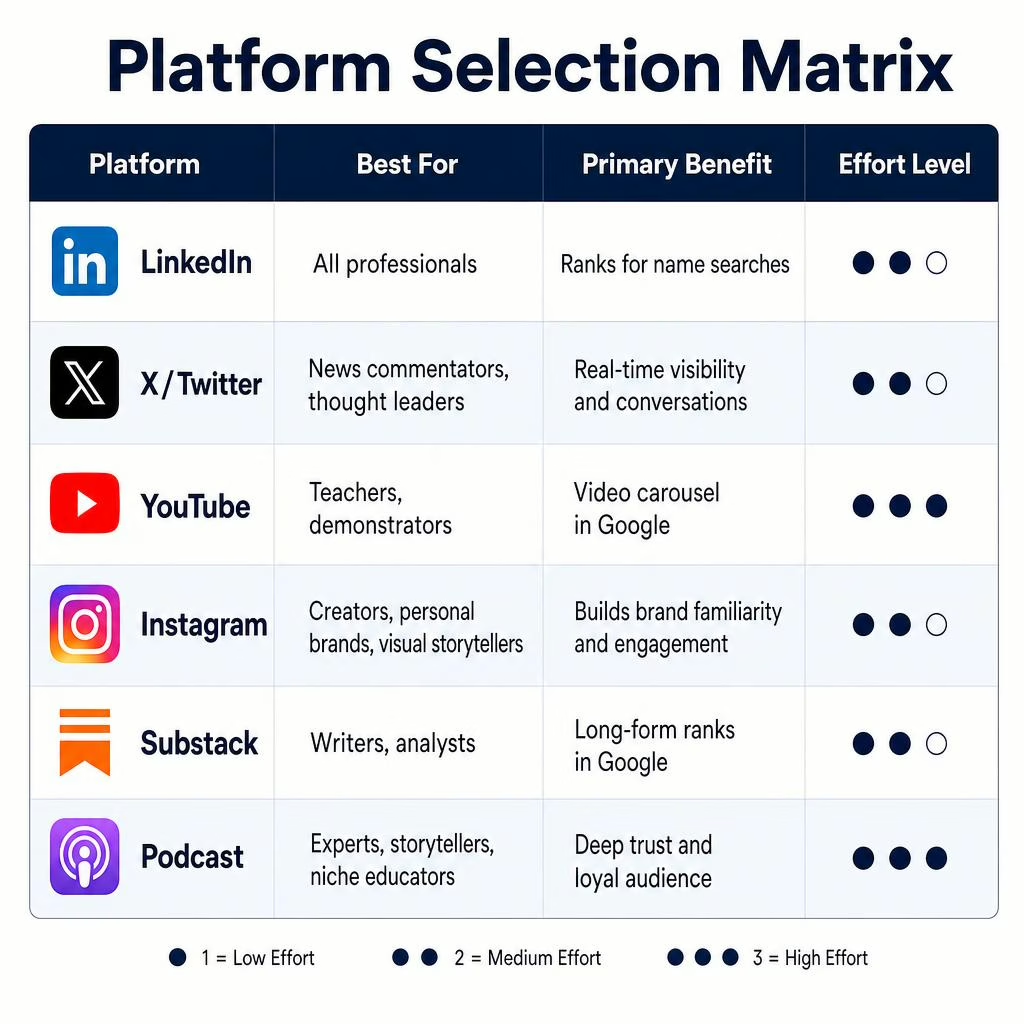
| Platform | Best for | Primary benefit for personal brand |
|---|---|---|
| All professionals, B2B, career development | Ranks for name searches. Highest professional credibility signal. | |
| X (Twitter) | Journalists, tech, politics, finance, media, academia | Real-time thought leadership. Strong for building connections in specific fields. |
| YouTube | Anyone who can teach, demonstrate, or explain on video | Video carousel in Google search results. Strongest signal for expertise credibility. |
| Visual industries, consumer brands, lifestyle, design | Visual portfolio. Strong for industries where aesthetics matter. | |
| Substack or Medium | Writers, analysts, thinkers in any field | Long-form content that ranks in Google under your name. |
| Podcast | Anyone with deep expertise and conversation skills | Authority building through association with guests and depth of content. |
One platform executed consistently beats five platforms updated sporadically. Most professionals building a personal brand from scratch should prioritize LinkedIn and their personal website, then add one additional platform where their audience is concentrated.
Also claim your name on platforms you are not actively using yet. Registering your name on major platforms prevents someone else from claiming it and ensures you can activate those profiles when you are ready.
Step 6: Publish Content That Earns Authority
Content is how you demonstrate the expertise behind your personal brand rather than simply claiming it. Anyone can write a headline saying they are an expert. Published, useful content that proves that expertise is what actually builds authority over time.
The good news is that volume matters much less than most people think. Only about 3 million of LinkedIn’s 1 billion+ users post content weekly, roughly 1% of active users, according to platform data. The bar for standing out through consistent, useful content is remarkably low.
What to publish
The most effective personal brand content answers real questions that your target audience is actually asking. Not questions you wish they were asking, and not content designed primarily to demonstrate your range. The content that builds authority fastest is the content that people in your target audience find genuinely useful when they encounter it.
Start with the questions you get asked most often in your professional life. The questions that show up repeatedly in your inbox, in client conversations, or in industry forums. Each of those questions is a piece of content waiting to be written.
Practical formats that work consistently:
- How-to guides and frameworks that teach a specific process you have developed or refined
- Case studies and specific examples from your own experience, with outcomes and lessons
- Analysis and perspective on industry developments, with a clear point of view rather than neutral summary
- Lessons from mistakes, which generate more trust and engagement than success stories alone
- Curation with commentary, adding your specific perspective to research or news your audience needs to know about
How often to publish
Consistency matters more than frequency. Two posts a month, published reliably, is better than ten posts in January followed by silence until May. Set a cadence you can sustain before you start, not after you have already overcommitted.
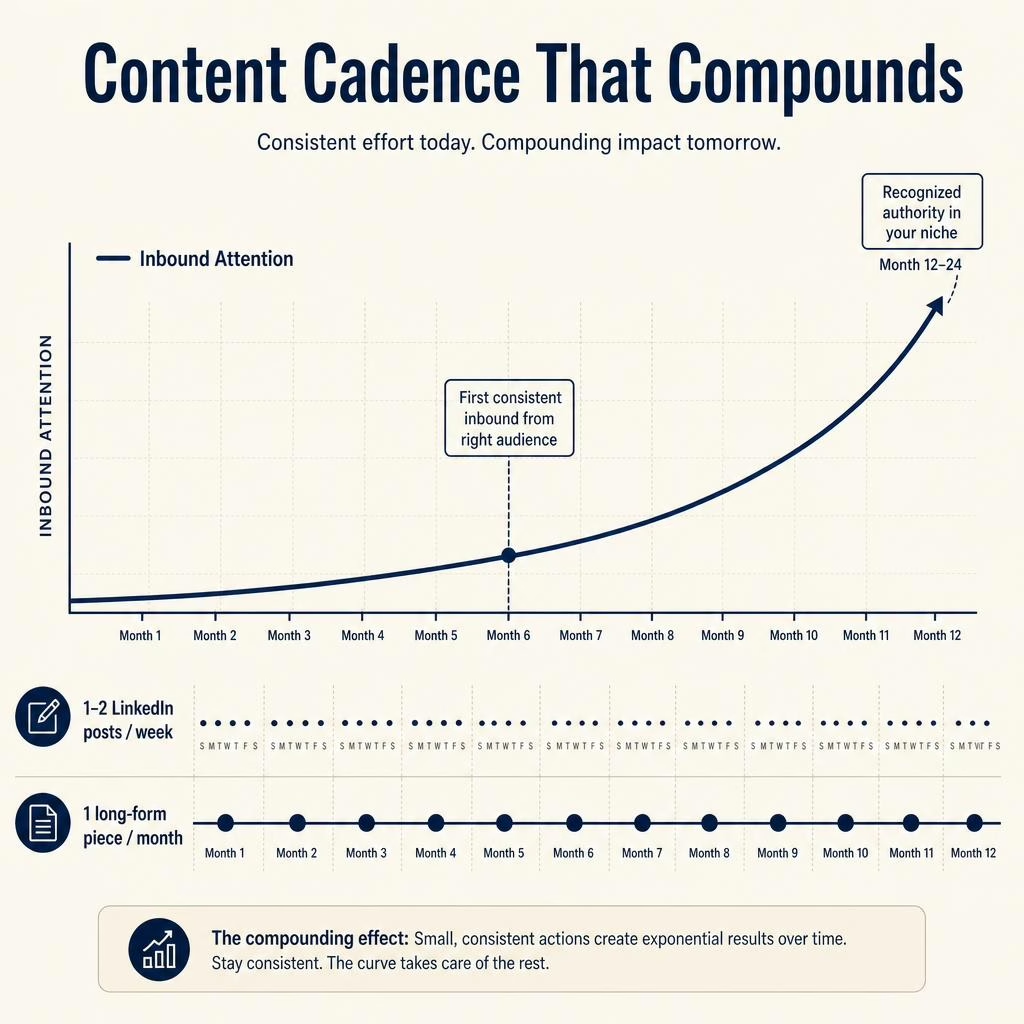
For most people building a personal brand alongside a full-time role, one to two LinkedIn posts per week and one longer piece per month (a newsletter, blog post, or article) is a sustainable starting point. It takes around six months of that cadence to begin seeing consistent inbound attention from the right people.
Where to publish for maximum search impact
Publishing on platforms with high domain authority helps your content rank in searches for your name and your topic area. LinkedIn articles, Medium, Substack, and guest contributions to established industry publications all carry more search weight than content published on a brand-new personal blog.
Over time, your personal website should become the authoritative home for your best content. But in the early stages, publishing on established platforms gets you in front of audiences and into search results faster than building domain authority from scratch.
Building a Personal Brand That Holds Up Under Scrutiny?
NewReputation helps executives, founders, and professionals build a search presence that earns trust before they walk into the room.
- Search result strategy built around your name and professional positioning
- Content planning and profile optimization across key platforms
- Ongoing monitoring so your brand stays accurate as your career evolves
Step 7: Build Consistency Across Every Touchpoint
A personal brand is a coherent signal. Every time someone encounters you online in a different context, the impression they form should be consistent with the one they formed the first time. When it is not, the inconsistency creates uncertainty, and uncertainty reduces trust.
Consistency operates at several levels.
Visual consistency. The same professional headshot across LinkedIn, your website, your newsletter, your speaking bio, and anywhere else you appear. The same color palette and visual style wherever you control the design. These details create recognizability, which builds familiarity, which builds trust over repeated exposure.
Messaging consistency. Your bio on LinkedIn, your website About page, your Twitter profile, and your email signature should all tell the same story about who you are and what you do, adapted in length and format for each context. Someone who reads all four should have the same understanding of you after each one.
Behavioral consistency. This is the most important and the least discussed. Your personal brand is ultimately built through repeated behavior that people observe, witness, or hear about. How you respond to critics in public. Whether your content reflects the expertise you claim. How you treat people who cannot help your career. These behavioral signals accumulate and either reinforce or undermine the brand you are actively building.
The fastest way to destroy a personal brand you have invested in is to behave publicly in ways that contradict it. The most durable personal brands belong to people whose public positioning and private conduct are not two different things.
Step 8: Control What Google Shows for Your Name
Building a personal brand and managing your search results are the same activity viewed from two angles. Every profile you build, every piece of content you publish, and every platform you engage with creates another page that can rank when someone searches your name. More good pages mean more of page one under your influence and less room for any single negative or outdated result to dominate.
This is personal SEO: the practice of ensuring that the most accurate, relevant, and favorable representation of you occupies the visible real estate in your name search results.
What determines which pages rank for your name
Google ranks pages that closely match the search query, come from authoritative sources, and have demonstrated engagement from users who find them relevant. For name searches, this means pages that include your full name prominently, published on platforms Google already trusts, that are actively maintained and linked to from other credible sources.
Your personal website typically ranks first for your name because it is the most directly optimized for that specific search. LinkedIn typically ranks second or third because of its massive domain authority. From there, other platforms, publications, and profiles fill out the page.
Link your properties together
Every profile and platform you maintain should link to your personal website. Your website should link to your key profiles. This cross-linking pattern tells Google that all these properties belong to the same person, passes authority between them, and makes the whole network rank more strongly together than any individual property would alone.
Set up monitoring so you know what changes
Set up Google Alerts for your full name and common variations. This notifies you when new content mentioning your name gets indexed, so you can respond quickly to anything unexpected. Check your name in incognito mode at least once a month to see current results without your personal search history influencing what you see.
For a comprehensive approach to controlling your search results, our guide on using SEO for reputation management covers the full strategy. Our guide on reverse SEO specifically addresses how to push down results that no longer represent you accurately.
Step 9: Protect What You Have Built
A personal brand is not a project you complete. It is an asset you maintain. The investment you make in building it can be eroded quickly if you stop paying attention or if something goes wrong and you have no system for catching it.
Monitor your digital footprint regularly
Beyond Google Alerts, periodically search your name across different platforms directly. Check that your profiles are still accurate and that no one has created fake accounts impersonating you. If you encounter unwanted attention or harassment on LinkedIn specifically, our guide on how to block someone on LinkedIn covers your options there. Verify that old content you no longer stand behind is not still ranking prominently. Our guide on understanding your digital footprint covers what to look for and how to address what you find.
Address negative content proactively
Not everything that appears about you will be positive, accurate, or current. When something surfaces that misrepresents you, addressing it early is far easier than addressing it after it has accumulated links, shares, and search authority. Options range from requesting corrections from publishers, to pursuing platform removal for content that violates policies, to content suppression through building better-ranking material that displaces the problematic result over time. Our guide on removing content from Google Search walks through which approach applies to which type of content.
Keep your profiles current
An outdated LinkedIn profile, a website with a three-year-old bio, or a Twitter bio that describes a role you left in 2022 all create friction and confusion. Set a calendar reminder once per quarter to review your key profiles and update anything that no longer reflects your current work, role, or positioning.
For executives and senior leaders whose personal brand is closely tied to their organization’s reputation, our executive reputation management guide covers the specific considerations and risks at that level.
Common Mistakes That Stall Personal Brands
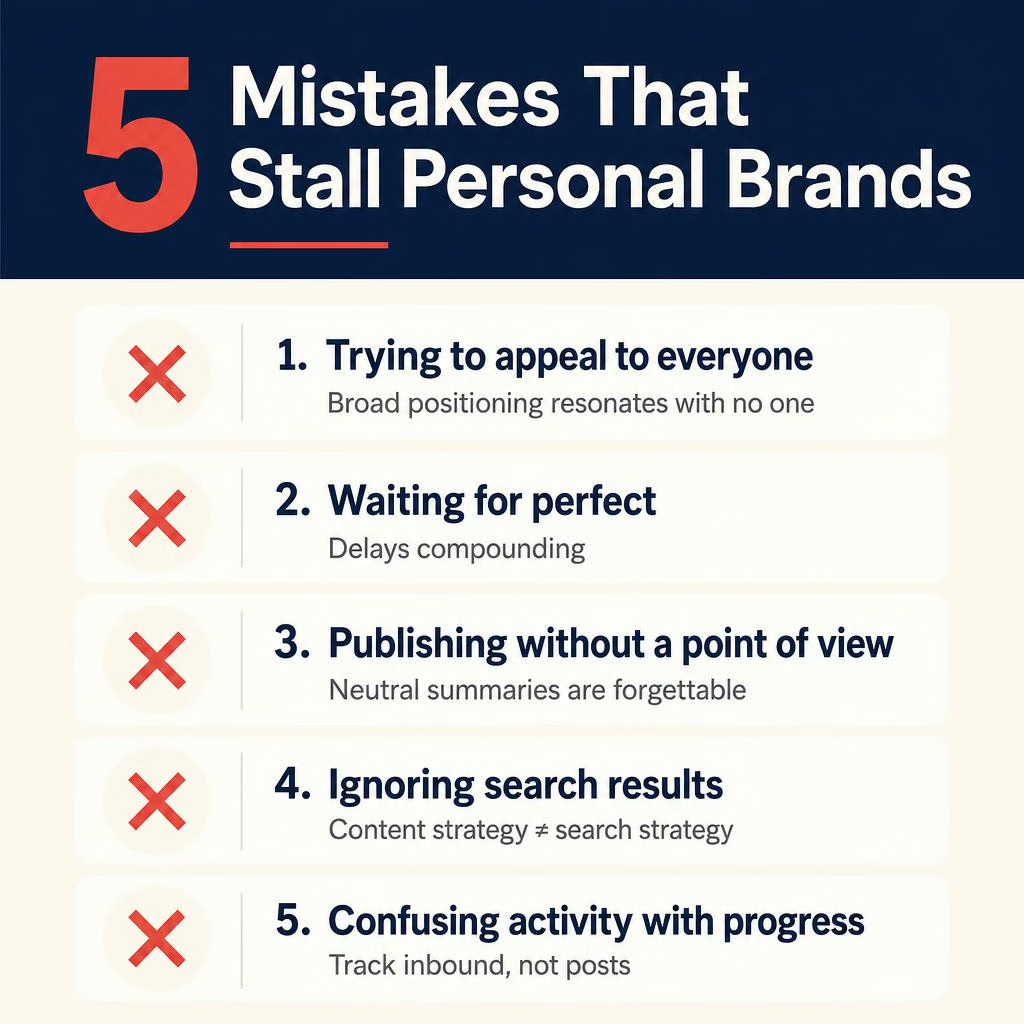
Most personal brand efforts plateau not because the person lacks interesting things to say, but because of a small number of consistent mistakes. These are the ones we see most often.
Trying to appeal to everyone. A personal brand that tries to be relevant to too broad an audience ends up being compelling to no one. The narrower and more specific your positioning, the more powerfully it resonates with the people you actually want to reach. You will seem less visible to the general public and far more visible to the specific community that matters to you.
Waiting until everything is perfect. The professionals with the strongest personal brands did not build them before they started publishing. They built them by publishing consistently for years, improving iteratively, and allowing their positioning to sharpen through repeated practice. Waiting for a perfect first post delays the compounding that makes personal brand building worthwhile.
Publishing without a point of view. The most forgettable personal brand content is neutral summaries of industry news that could have been written by anyone. The content that builds authority is opinionated, specific, and clearly authored. You do not need to be provocative. You need to have a perspective that is recognizably yours.
Ignoring search results entirely. Many professionals invest significant time in content creation while their name search results still surface outdated job profiles, old addresses on data broker sites, or critical content from years ago. The content strategy and the search result strategy need to work in parallel, not in sequence.
Conflating activity with progress. Posting daily without measuring whether the right people are paying attention is a common way to exhaust yourself without advancing your brand. Track the right metrics: inbound connection requests from relevant people, speaking or media inquiries, direct client or employer inquiries that reference your content. Those are the signals that a personal brand is actually working.
Frequently Asked Questions
How long does it take to build a personal brand?
The first meaningful results, such as inbound connection requests, mentions in the right communities, or search results you recognize and control, typically take three to six months of consistent activity. Significant professional impact, being known by name in your field, inbound speaking or collaboration requests, happens on a twelve to twenty-four month horizon. Personal brand building is one of the highest-return investments a professional can make, but it compounds slowly rather than paying off immediately.
Do I need a personal brand if I am not looking for a job?
Yes, especially if you are not actively looking. People research you before deciding to work with you, invest in you, recommend you, collaborate with you, or introduce you to others. That research happens whether or not you are on the market. A strong personal brand means those moments produce the impression you want rather than whatever happens to rank for your name by default.
What is the single highest-impact first step?
Complete your LinkedIn profile fully and optimize your headline for specificity rather than job title. LinkedIn is the most searched professional platform, appears at the top of name search results for almost every professional, and reaches the most relevant audience for most career and business goals. A fully optimized LinkedIn profile delivers more return faster than almost any other single action.
Should I use my real name or a professional brand name?
For most professionals, your real name is your strongest brand asset. It connects your online presence directly to your professional reputation, it is what people search for when they look you up, and it cannot be confused with anyone else’s brand. The exception is if your name is extremely common, in which case adding a middle name, initial, or specific professional descriptor can help differentiate your search presence.
How do I handle negative content that appears when someone searches my name?
The strategy depends on the nature of the content. Content that is false, violates platform policies, or contains your private information may qualify for removal requests. Content that is true but outdated or no longer representative is typically addressed through content suppression: building strong, current content that earns higher rankings and pushes the older result down. Our guides on how to bury negative search results and repairing your online reputation cover both approaches.
What is the difference between a personal brand and a business brand?
A personal brand is tied to an individual and transfers with them across roles, companies, and career transitions. A business brand is tied to the company and does not follow the founder if they leave. Many founders and executives benefit from building both in parallel: the business brand serves customers and partners, while the personal brand builds the founder’s own authority and credibility in ways that survive and outlast any single company.
Ready to Build a Personal Brand That Opens Doors?
NewReputation helps executives, founders, and professionals build the kind of online presence that earns trust before a conversation starts.
- Free First Impression Report showing what others see when they search your name
- Strategy for search results, profiles, and content that works together
- Ongoing monitoring so your brand stays current and protected