Last Updated on 4 months ago by Admin
Reputation management done right is one of the most valuable things a business or individual can invest in. Done wrong, it is one of the most damaging.
There is a version of reputation management that genuinely works: building trust through consistent behavior, honest communication, and real accountability. And there is a version that creates the appearance of trustworthiness without any of the substance behind it. That second version is called reputation washing.
Understanding the difference matters whether you are evaluating a company’s public commitments, hiring a reputation management firm, or auditing your own practices. Because reputation washing does not just fail eventually. It often makes things significantly worse when the gap between image and reality is exposed.
Table of Contents
What Is Reputation Washing?
Reputation washing is the use of PR, marketing, or communications tactics to create the impression of a positive reputation without making the underlying changes that would actually justify it.
The term is borrowed from greenwashing, the practice of presenting a company as environmentally responsible while its actual practices contradict that claim. Reputation washing extends the same idea to trust, ethics, social responsibility, and public accountability more broadly.
As the European Financial Review put it: “You can’t communicate your way out of a crisis you behaved your way into. If your actions or negligence are the problem, you must start addressing that before you can begin rebuilding your reputation. When PR techniques are used by those who see reputation as something that can be gamed and rapidly assembled, we call this reputation washing.”
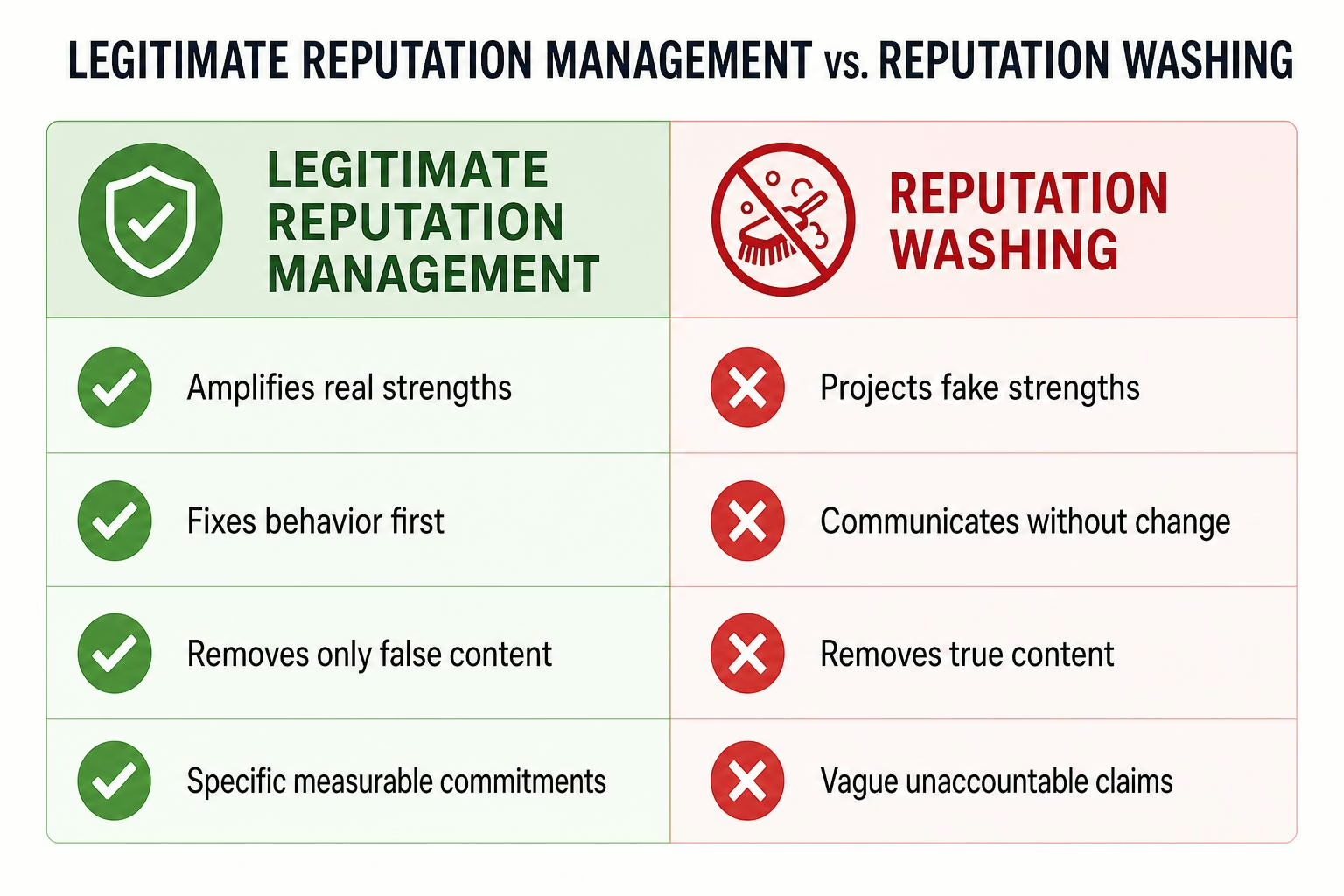
The key distinction is between managing how you are perceived and earning how you are perceived. Legitimate reputation management shapes and amplifies genuine reality. Reputation washing substitutes a crafted narrative for reality entirely.
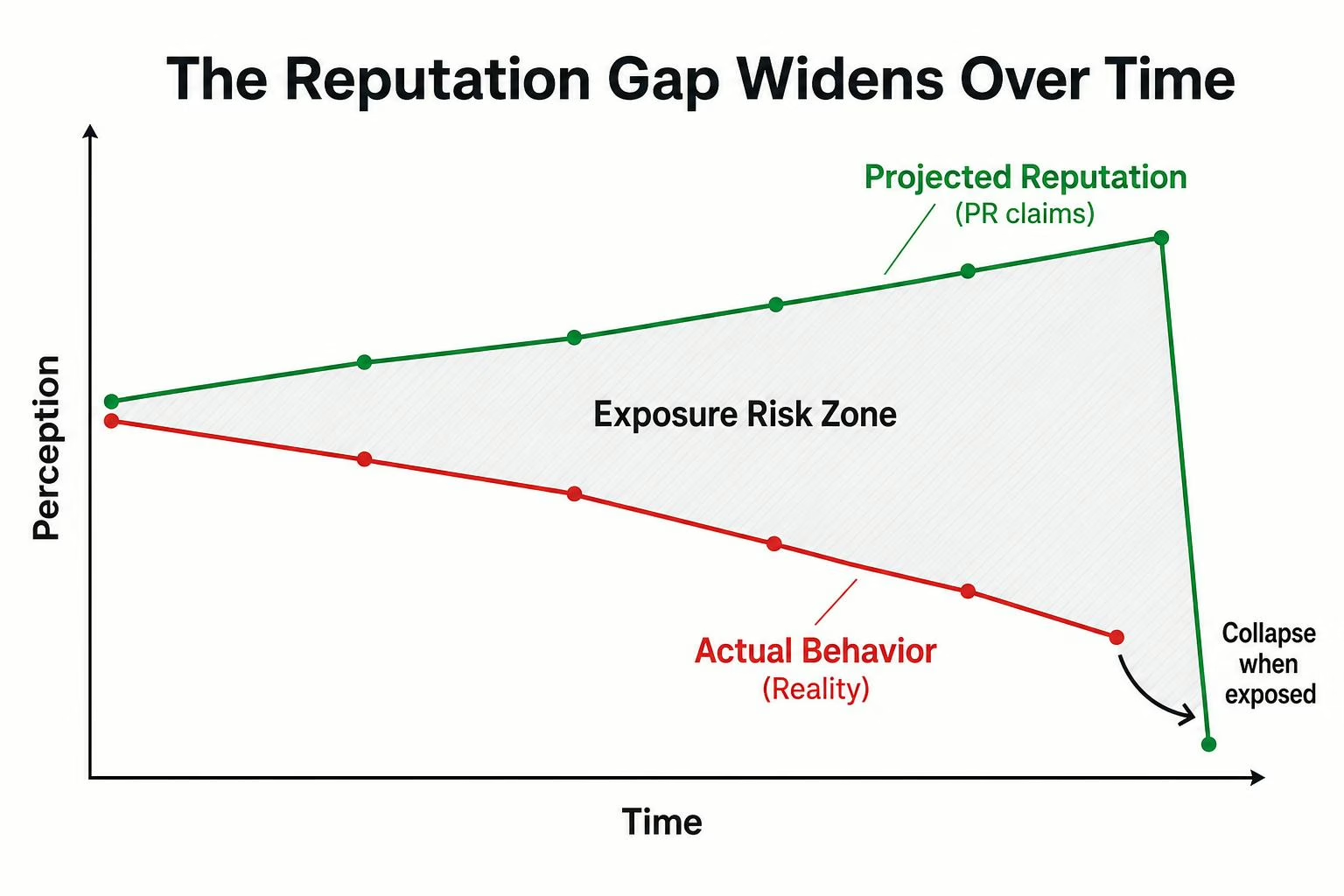
Reputation is the sum of what people believe to be true about you based on accumulated evidence. Washing tactics manipulate the appearance of that evidence. But the actual behavior continues, new evidence keeps accumulating, and the gap between the claimed reputation and the real one eventually becomes impossible to maintain.
The Main Types of Reputation Washing
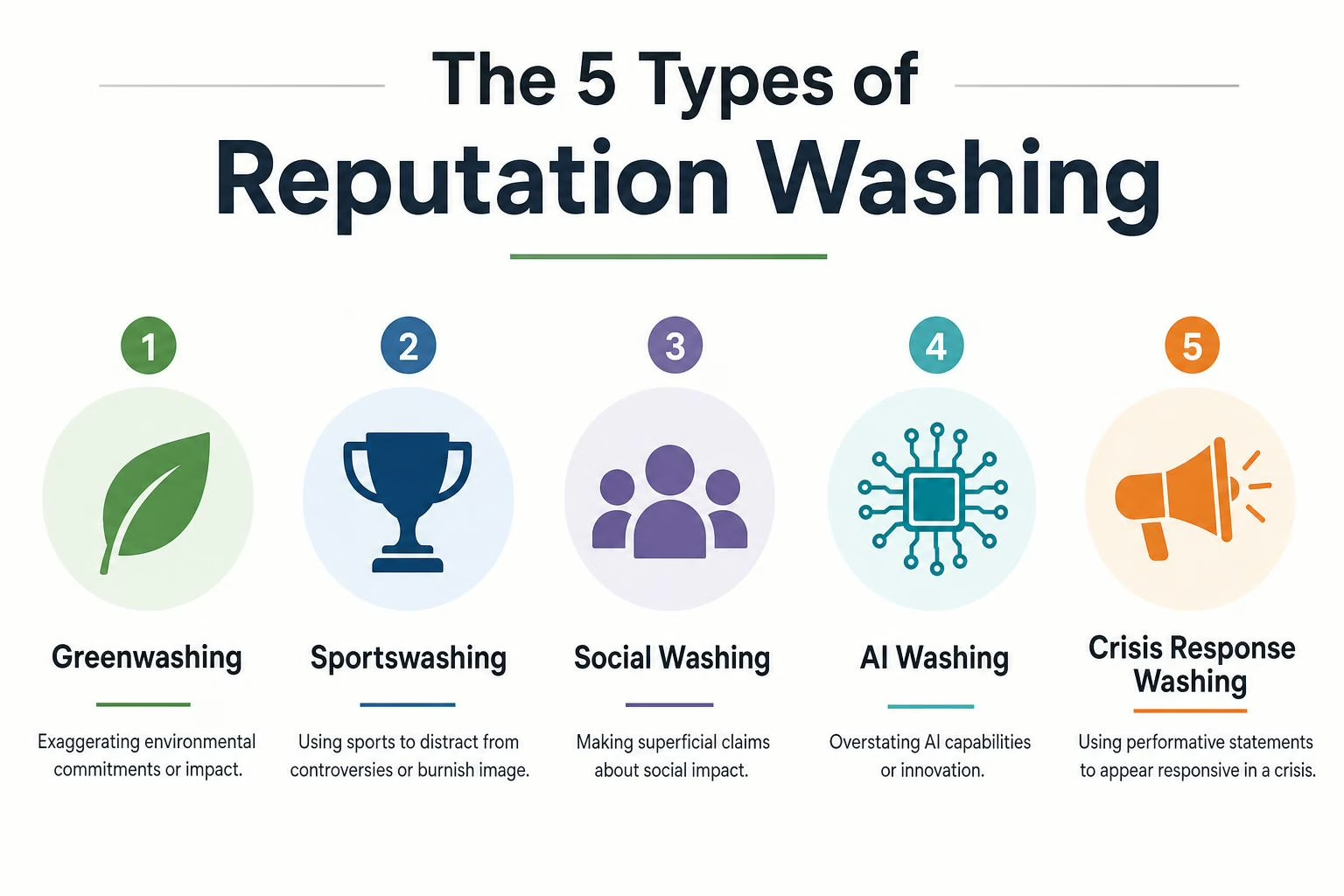
Reputation washing takes several specific forms. Each is worth understanding separately because the tactics look different even though the underlying pattern is the same.
Greenwashing
The original and most widely recognized form. A company markets itself as environmentally responsible while its actual practices contradict that positioning. Coca-Cola’s 2022 “World Without Waste” campaign is a frequently cited example: the campaign used prominent green imagery and claimed sustainability commitments while, according to a 2025 Oceana report, the company produced 3.61 million metric tons of plastic that year, nearly double the output of the next company on the list. The messaging and the reality were moving in opposite directions simultaneously.
This matters because long term company reputation is built on actions, not marketing campaigns.
Sportswashing
Using sports sponsorships, event hosting, or athletic investments to launder a damaged or problematic national or corporate image. Governments with documented human rights records have hosted major international sporting events precisely because the global attention and positive association creates cover for the underlying reality. The reputational benefit is real in the short term. The underlying reality is unchanged.
Social Washing
Claiming strong social responsibility commitments, diverse and inclusive workplaces, or community investment without the actual programs, measurable outcomes, or internal culture to back them up. This became significantly more visible after 2020, when many companies made public commitments to diversity and social justice that were not reflected in their hiring practices, pay equity data, or supplier relationships. Employees and journalists with access to actual internal data made the gap visible.
Companies that fail to align messaging with reality often damage their long term corporate reputation.
AI Washing
A newer and rapidly growing variant. Companies overstate the degree to which their products and services use artificial intelligence in order to command higher valuations, attract investment, or appear more innovative than competitors. The SEC took action against two investment advisory firms in 2024, Delphia and Global Predictions, based on allegations of making false and misleading statements about their use of AI. Delphia paid $225,000 and Global Predictions paid $175,000 in settlements. Beyond legal risk, AI washing creates credibility damage when customers discover the gap between claimed capability and actual product performance.
Crisis Response Washing
This is perhaps the most relevant to online reputation management specifically. A company or individual faces a crisis, issues a carefully worded apology or public statement, then continues the behavior that caused the problem. The communications tactics are genuine reputation management tools being applied to a problem that has not actually been addressed. The statement looks like accountability. The follow-through is absent.
This is distinct from a genuine apology followed by imperfect execution. Everyone struggles to change behavior consistently. The washing version involves no real attempt to change, just continued investment in managing how the situation appears.
Not Sure Whether Your Reputation Strategy Is Genuine or Performative?
NewReputation helps businesses audit what they are actually communicating versus what they are actually doing, and build reputation strategies that hold up under scrutiny.
- Free reputation audit showing what others see when they search your name
- Honest assessment of where your claims and your reality align or diverge
- Strategy built on genuine strengths rather than managed appearances
How to Spot Reputation Washing
Recognizing reputation washing, whether in a company you are evaluating or in your own practices, comes down to looking for the gap between what is being said and what is actually being done.
Many reputation washing campaigns rely heavily on psychological triggers similar to Cialdini’s six principles of persuasion without providing evidence that supports the underlying claims.
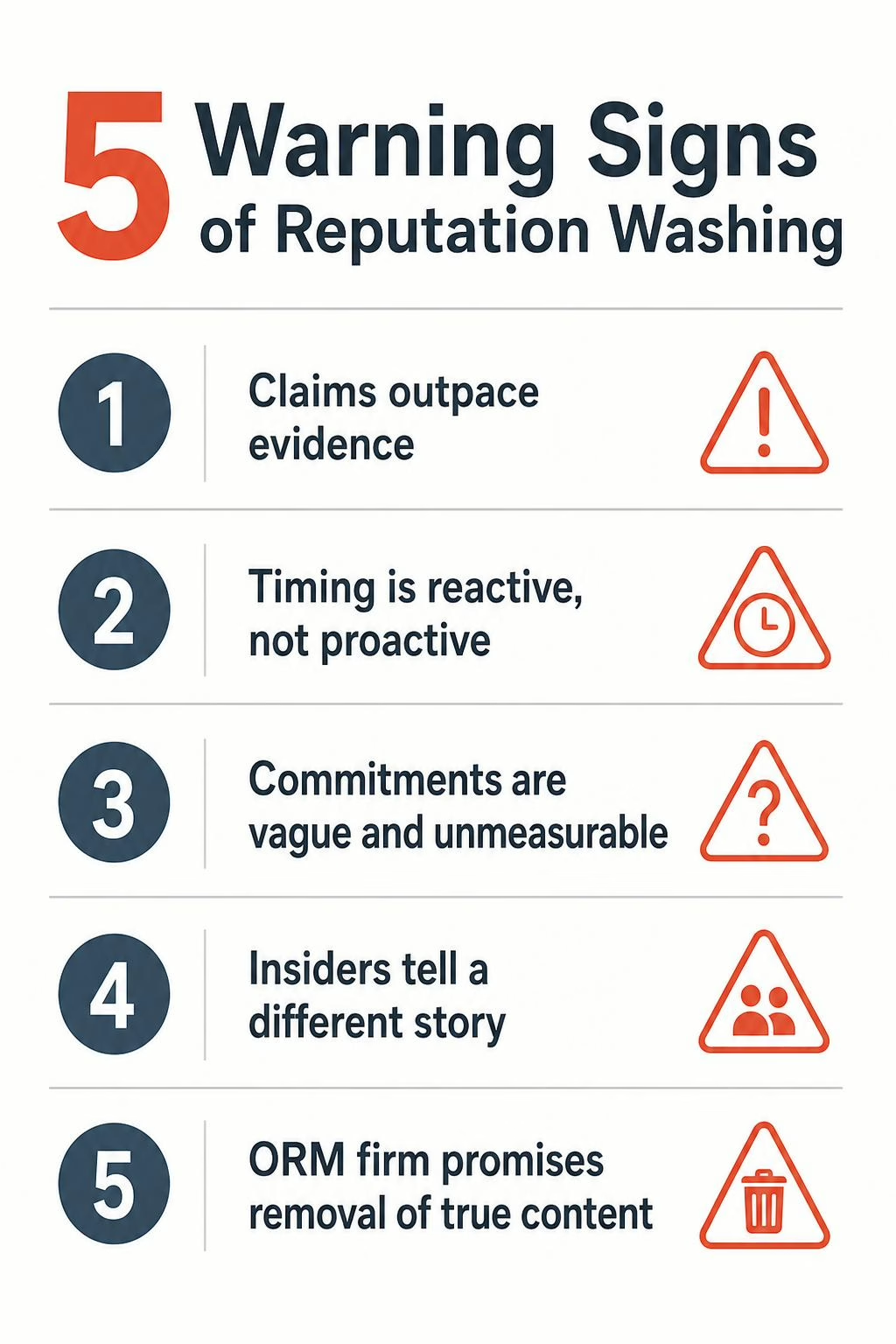
Claims outpace evidence
The most reliable signal is that the reputation being projected is significantly ahead of the evidence that would justify it. A company announcing major sustainability commitments with no published data to support them. A leader publicly apologizing for a workplace culture problem while the internal environment is unchanged. An executive’s public profile describing values and leadership qualities that employees do not recognize.
Look for measurable, verifiable evidence behind each claim. Annual reports with third-party audits, employee satisfaction data, independently verified certifications, published pay equity analyses. The absence of verifiable specifics where specifics should exist is itself a signal.
The timing is reactive, not proactive
Legitimate reputation building happens continuously, not in response to being caught. When a company’s sustainability campaign launches the same week investigative journalists publish a critical story, or when a leader’s public apology arrives after the story has already gone viral rather than before, the timing itself reveals the motivation.
This does not mean every crisis response is washing. Companies that have genuinely been working on an issue and then communicate about it publicly when a crisis creates an opportunity are doing something different from companies that launch a campaign purely as a distraction. The difference is whether the substance preceded the communication or the communication preceded the substance.
The commitment is not specific and not measurable
Genuine accountability involves specific, measurable commitments with timelines and consequences. “We are committed to becoming a more diverse organization” is a statement. “We will achieve gender pay parity by 2026, publish our pay gap data annually, and tie executive compensation to diversity metrics” is a commitment. The first can never be verified as having been kept or broken. The second cannot be walked back without being noticed.
Reputation washing relies heavily on language that sounds accountable without creating accountability. Watch for vague commitments, undefined timelines, and language that positions aspirations as accomplishments.
Employees, customers, and insiders tell a different story
The gap between external reputation claims and internal reality almost always surfaces eventually through the people who live inside it. Glassdoor reviews, anonymous employee comments, customer complaints on forums, and investigative journalism all draw on insider knowledge that PR management cannot fully control.
When a company’s external brand positioning consistently contradicts what current and former employees describe on review platforms, that divergence is significant. The Ellen DeGeneres case is an instructive example: a public persona built entirely around kindness that was contradicted by years of consistent accounts from people who worked with her. The brand was real. The reality behind it was not. When those two things diverged visibly enough, the brand collapsed. Our guide on reputation management examples covers this and other cases in detail.
The ORM firm promises removal of true content
This applies specifically when you are evaluating a reputation management company. Legitimate ORM builds and strengthens accurate content. It can pursue removal of content that violates platform policies, contains false information, or breaches privacy. It cannot legitimately remove true, factual reporting, honest customer reviews, or accurate public records.
Any firm that promises to remove legitimate negative coverage as a core service, rather than suppressing it through content competition, is offering you a form of washing: the appearance of a clean reputation rather than the reality of one. Some use tactics that violate platform terms, gaming review systems or mass-reporting accurate content, which creates legal and reputational exposure far worse than the original content they were hired to address.
Similar concerns arise with fake reviews on Trustpilot and other review platforms where manufactured sentiment can create a misleading picture of customer satisfaction.
Why It Always Backfires Eventually
Reputation washing is not just ethically questionable. It is strategically self-defeating over any meaningful time horizon, and the evidence for this is consistent across industries and decades.
The core reason: reputation is built through accumulated evidence. Washing tactics manipulate the surface signals, the press coverage, the review scores, the public statements, while the underlying behavior continues producing new evidence that contradicts the projected image. Over time the gap widens. The more investment goes into maintaining the projected image, the more dramatic the eventual contrast when the reality becomes visible.
Lance Armstrong’s case is perhaps the most extreme illustration. He spent over a decade aggressively defending a reputation built entirely on a lie, including suing journalists who told the truth about him. When the admission came, it was not just the doping that defined his fall. It was the decade of aggressive deception layered on top of it. The cover-up vastly exceeded the original offense in terms of reputational damage. Our reputation examples guide covers his case alongside others in the same pattern.
For businesses, the mechanism is similar but faster in the social media era. Employees post on Glassdoor. Customers compare notes on Reddit. Investigative journalists have better tools for document analysis and source protection than at any previous point in history. Environmental groups publish annual plastic output data. The information environment makes it much harder to maintain a significant gap between projected and actual reputation for long.
When the gap is exposed, the damage is compounded by the washing itself. A company that tried to cover something up faces not just the original issue but the credibility destruction that comes with being caught deceiving. That recovery is significantly harder than recovering from honest acknowledgment of the original problem would have been. Our guide on managing and recovering from a reputation crisis covers the research on this consistently.
Legitimate ORM vs. Reputation Washing: The Practical Difference
The line between managing your reputation well and washing it is not always obvious from the outside. Here is a clear framework for the distinction.
| Legitimate reputation management | Reputation washing |
|---|---|
| Amplifies genuine strengths and real improvements | Projects strengths or improvements that do not exist |
| Addresses the behavior that caused the problem, then communicates that change | Communicates change while behavior continues unchanged |
| Pursues removal of false, policy-violating, or privacy-invasive content | Pursues removal of accurate, factual content that reflects real customer experience |
| Encourages genuine reviews from real customers through legitimate channels | Manufactures fake reviews, suppresses real negative ones, or incentivizes reviews in ways that violate platform policies |
| Makes specific, measurable, time-bound commitments | Makes vague commitments with no accountability structure |
| Builds content that accurately represents the organization | Floods search results with content designed to bury accurate negative information rather than compete with better true information |
| Responds to criticism by acknowledging it and demonstrating change | Responds to criticism with legal threats, aggressive denial, or coordinated attacks on sources |
The test for any specific action is: does this represent reality accurately, or does it substitute a crafted narrative for reality? Legitimate ORM passes that test. Washing fails it.
What This Means for Your Own Business
Most businesses that engage in reputation washing are not doing it deliberately. They are taking shortcuts under pressure, prioritizing the optics of a situation over the substance, or working with vendors who promised results they could not deliver legitimately.
Here is how to make sure your reputation strategy stays on the right side of that line.
The same principle applies whether you are trying to improve your personal brand or strengthen a company reputation. Real improvements must come before promotion.
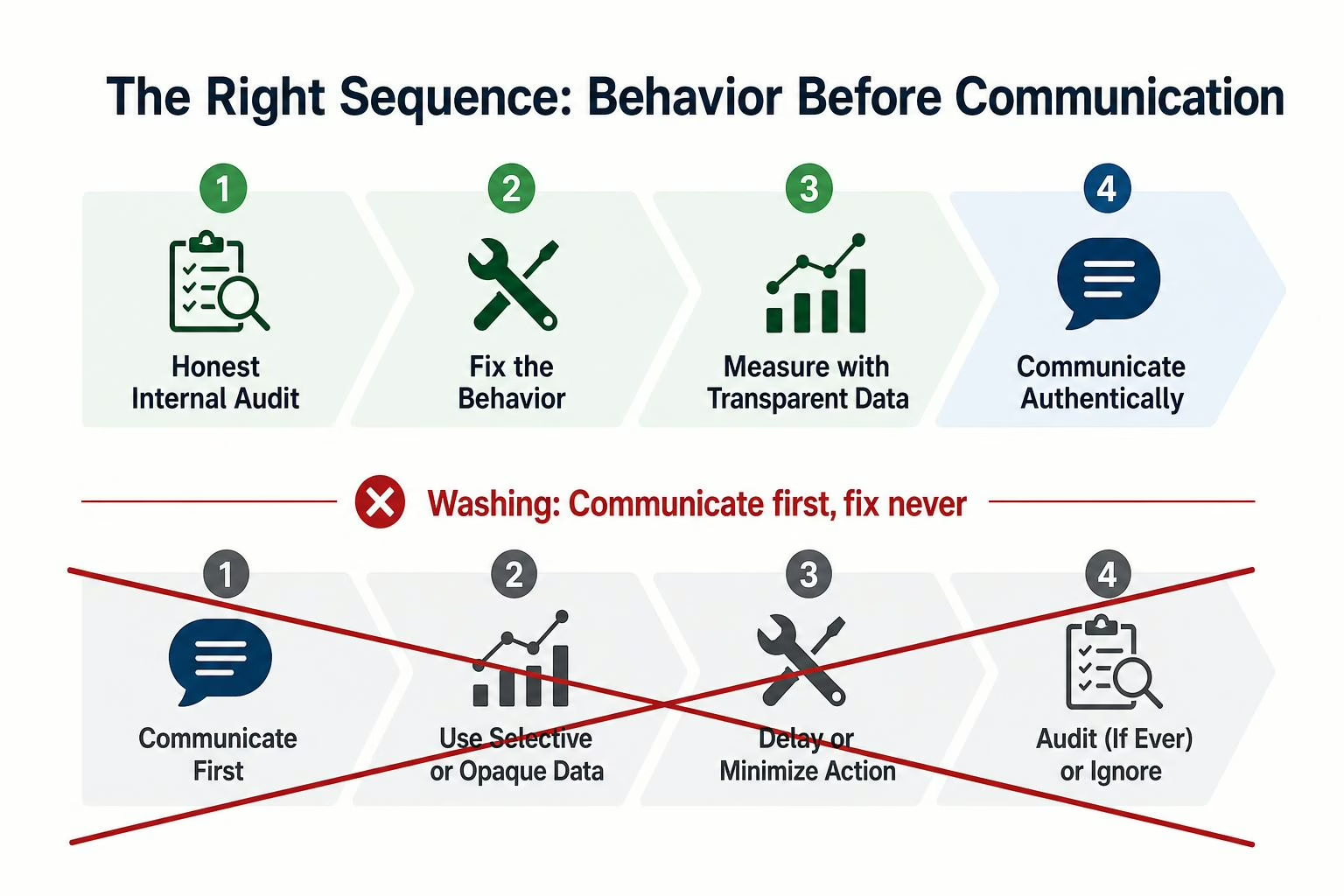
Start with an honest internal audit
Before any external reputation work, look honestly at where your claimed reputation and your actual performance diverge. Where are customers consistently disappointed versus what your marketing promises? Where do employee reviews describe a culture that contradicts your public employer brand? Where do your public commitments lack the internal programs to back them up?
This audit is uncomfortable. It is also the only starting point that leads somewhere good. Everything built on top of it has a foundation. Everything built without it is eventually exposed. Our guide on what reputation means in business covers why this internal alignment is the prerequisite for everything else.
Fix the behavior before investing in the communication
If your customer service generates consistent complaints, the right sequence is to fix the customer service, then tell people about it. Not the reverse. Investing in reputation management before fixing the underlying problem means you are spending money to create a gap that will be exposed. Investing in it after creates communication with something real behind it.
This does not mean waiting until everything is perfect. It means ensuring the direction of change is real before claiming it publicly. The Starbucks 2018 response worked because the action, closing 8,000 stores for a full day of racial bias training, was costly enough to be credible. It demonstrated that the commitment was real, not just linguistic.
Use honest metrics and transparent reporting
If you make public commitments, attach them to specific, verifiable numbers. Publish the data annually. Let third parties audit the results where possible. This creates accountability that deters washing, because the same structure that would let you claim credit for progress would expose the absence of it.
This is particularly important for corporate social responsibility commitments. Vague CSR statements with no reporting structure behind them are the most common form of social washing. Specific, audited, publicly available data is the antidote.
Choose reputation management partners carefully
If you work with an external reputation management firm, evaluate them against the legitimate versus washing framework above. Ask specifically how they would handle a piece of accurate negative content. Ask whether they use review generation tactics that comply with FTC guidelines and platform terms. Ask what their approach is to suppression versus genuine content competition.
Firms that promise to remove true negative content, that generate fake reviews at scale, or that use coordinated reporting campaigns to take down accurate information are not managing your reputation. They are creating liability. The FTC’s guidance on consumer reviews and endorsements draws clear lines around what is legitimate, and violations carry real penalties.
Legitimate online reputation management builds and strengthens accurate content, pursues removal only where removal is genuinely warranted, and improves your actual standing through improved real-world performance communicated honestly. That is a slower and more demanding process than washing. It is also the only one that holds.
Build a Reputation That Actually Reflects Your Business
NewReputation builds reputation strategies grounded in what is genuinely true about you, not in manufactured appearances. We help you earn the reputation your work deserves.
- Honest audit of where your reputation stands and what is driving it
- Strategy built on amplifying real strengths, not papering over weaknesses
- Content and SEO that earns trust rather than manufacturing it
Frequently Asked Questions
What is the difference between reputation washing and reputation management?
Legitimate reputation management amplifies genuine reality. It builds on real strengths, addresses actual problems, and communicates honestly. Reputation washing substitutes a crafted image for reality. The tactics can look similar from the outside, but the test is whether the reputation being projected is backed by the behavior needed to justify it. If it is, it is management. If it is not, it is washing.
Is greenwashing the same as reputation washing?
Greenwashing is a specific form of reputation washing applied to environmental claims. Reputation washing is the broader category. It includes greenwashing, sportswashing, social washing, AI washing, and any other tactic that uses PR or communications to create the appearance of trustworthiness without the underlying substance. The pattern across all of them is the same: the communication claims something the behavior contradicts.
How do I know if a reputation management company is using ethical practices?
Ask them directly how they would handle a piece of accurate negative content about you. Ethical firms will tell you they use content suppression through competitive ranking, which means building better content that earns its position above the negative result. They will not promise removal of true content. Ask whether their review generation practices comply with FTC guidelines and platform terms of service. Ask for case studies where the underlying problem was addressed, not just the search results. Firms that promise fast results through tactics they are unwilling to explain in detail are a significant risk.
Can reputation washing ever work in the short term?
Sometimes, temporarily. In a crisis, well-executed communications can buy time and limit initial damage. But buying time only helps if the underlying problem is being fixed during that window. Companies that use crisis communications as a substitute for changing behavior find that each subsequent incident is more damaging than the last, because the pattern of claiming change while delivering none becomes its own story. The short-term gain is almost always outweighed by the long-term cost.
What should I do if I think my current ORM strategy has elements of washing in it?
Start with the internal audit described above. Identify where your public claims and your actual performance diverge. Then address those gaps operationally before investing further in the communication. The reputation you build by earning it through genuine improvement is more durable, more credible, and ultimately more valuable than anything built on managed appearances. Our guide on repairing a business reputation covers how to approach this honestly and effectively.
How does reputation washing affect SEO and search results?
In the short term, it can improve search rankings by flooding results with managed content. In the longer term, it creates significant exposure. If the washing is exposed, the coverage of the exposure ranks alongside or above the original managed content. The gap between claimed and actual reputation becomes searchable. And tactics like fake reviews or mass-reporting of accurate content can result in platform penalties that remove managed content and leave only the authentic negative content behind. Our guide on using SEO for reputation management explains the right approach to content-based suppression that does not create this kind of exposure.
Ready to Build Something Real?
NewReputation works with businesses and individuals who want a reputation built on substance. Free consultation, no obligation.
- Honest assessment of your current reputation and what is shaping it
- Strategy that earns trust rather than manufacturing the appearance of it
- Transparent process with clear timelines and measurable outcomes