Last Updated on 3 months ago by Admin
When people talk about reputation, they usually treat it as one thing. Good or bad. Strong or weak. But researchers in management and sociology have identified something more useful: reputation is actually two separate things that work differently, get damaged differently, and need to be rebuilt differently.
The two types are capability reputation and character reputation. Understanding the difference between them is practical knowledge. It tells you which part of your reputation is under attack, why certain crises hit harder than others, and where to focus your effort when something goes wrong.
This guide breaks down both types clearly, what they mean in the real world, how they interact, and what you can do to protect them. For a broader look at how reputation functions in a business context, see our guide on what reputation means in business.
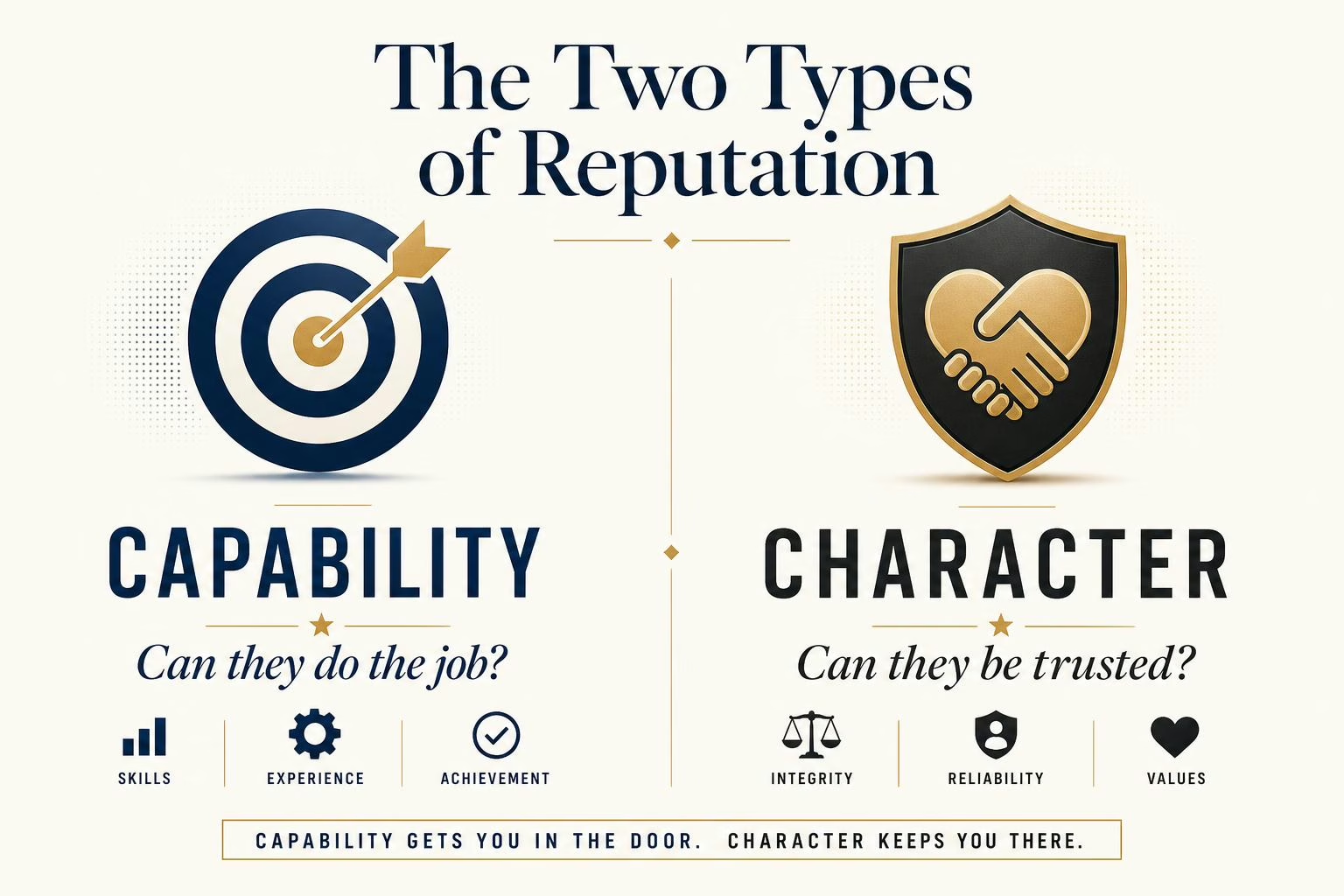
Table of Contents
The Two Types of Reputation Explained
The distinction between capability and character reputation comes from academic research in organizational management. The Academy of Management Journal defines them this way:
- Capability reputation reflects collective judgments about the quality and performance of what an organization or person delivers. It answers the question: can they do the job?
- Character reputation reflects collective judgments about an organization’s or person’s values, intentions, and ethical behavior. It answers the question: can they be trusted?
Both matter. But they operate through different mechanisms, respond differently under pressure, and are built through different actions. Treating them as the same thing leads to misdiagnosed problems and misdirected fixes.
Capability Reputation: What You Can Do
Capability reputation is built on results. It is what people believe about your skills, your quality, your track record, and your ability to deliver. When someone says a business is the best in its field, that is a capability statement. When a professional is known for getting things done, that is capability reputation at work.
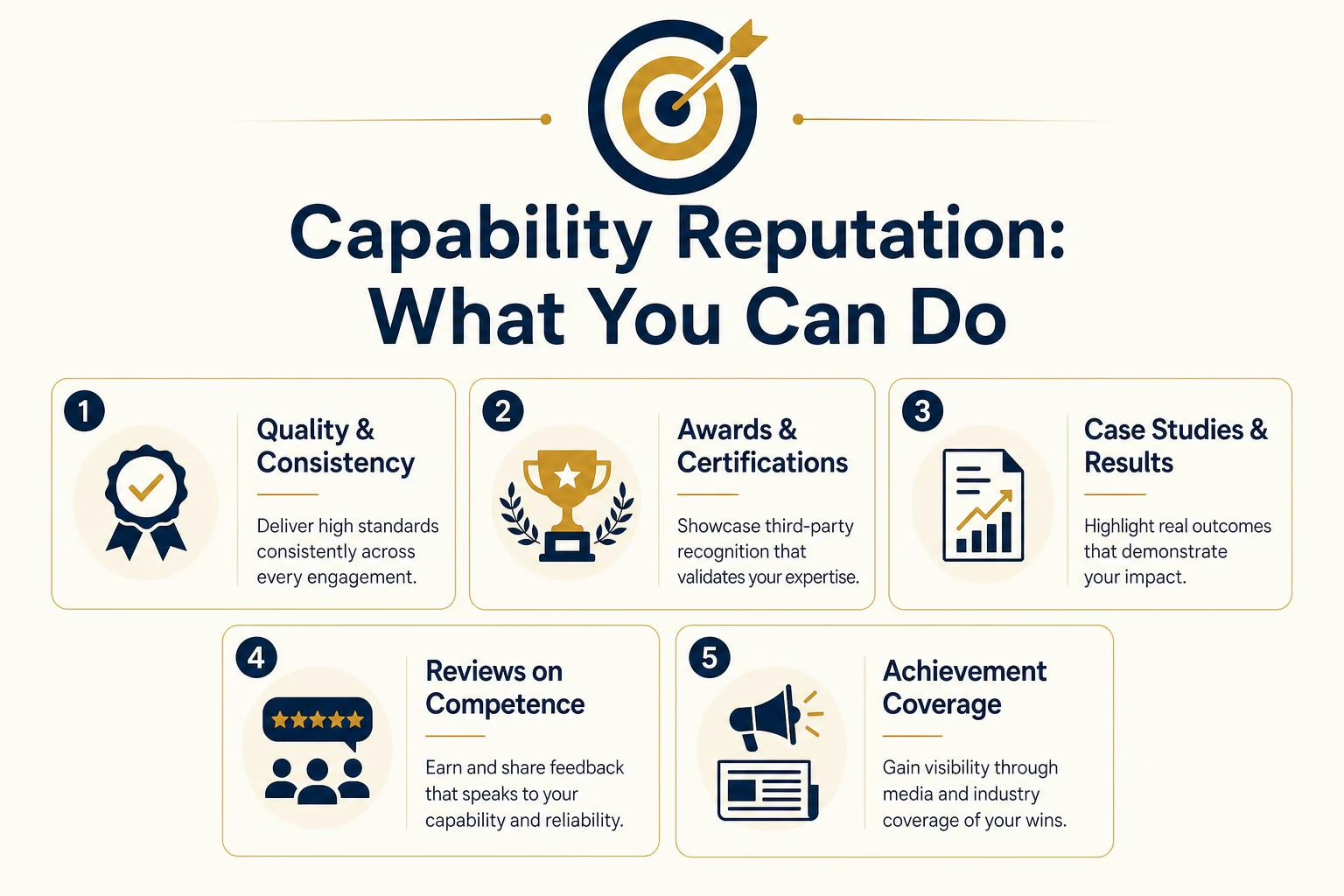
For businesses, capability reputation shows up in:
- Product or service quality and consistency
- Industry recognition, awards, and certifications
- Case studies, results, and client outcomes
- Reviews and ratings that speak to competence and delivery
- Media coverage that focuses on what the business has achieved
Amazon is a common example used in management research. Customers trust Amazon to deliver orders quickly and accurately. That trust is rooted in capability. People do not choose Amazon because of its values. They choose it because it reliably does what it says it will do.
Capability reputation is externally driven, meaning it depends heavily on observable performance over time. Because of that, it is also relatively fragile. One major failure, a product recall, a string of bad service experiences, or a high-profile mistake can shake it quickly. People update their assessment of what you can do based on what they see you doing.
Character Reputation: Who You Are
Character reputation is built on values and behavior. It reflects how people perceive your integrity, your ethics, how you treat others, and whether your actions line up with what you say you stand for. It goes beyond what you deliver and speaks to how and why you deliver it.
For businesses, character reputation shows up in:
- How complaints and problems are handled
- How employees are treated, both publicly and internally
- Transparency in communications, especially during difficult situations
- Ethical sourcing, environmental practices, and community involvement
- Whether the business does the right thing when no one is watching
A useful example from management research: Insomniac Games, the video game developer, has built a strong character reputation through how it treats its employees. The company is widely known for generous parental leave, strong internal culture, and visible care for the people who work there. That reputation attracts talent and generates goodwill that extends well beyond their products.
Character reputation tends to be more stable than capability reputation. A business controls its own values and how it chooses to behave. It cannot fully control market shifts, competitor performance, or public perception of quality, but it can control its integrity. Because character is internally driven, it is also harder to fake over time. Inconsistent behavior catches up with organizations eventually. For a deeper look at how the two concepts relate, see our guide on reputation vs. character.
The Key Difference Between the Two
The clearest way to see the difference is to think about how each one breaks down. As many of the most enduring reputation quotes reflect, the distinction between what you do and who you are has long defined how people judge others.
| Capability Reputation | Character Reputation | |
|---|---|---|
| Answers the question | Can they do the job? | Can they be trusted? |
| Built through | Results, performance, quality | Values, ethics, consistent behavior |
| Driven by | External perception of outcomes | Internal choices and conduct |
| Stability | Fragile, shifts with performance | Stable, harder to build and harder to destroy |
| Damaged by | Failures, errors, poor delivery | Dishonesty, ethical lapses, scandal |
| Rebuilt through | Demonstrated improvement and results | Consistent ethical behavior over time |
Research from the Academy of Management found that partners and customers respond differently to adverse events depending on which type of reputation a business holds. An organization with strong character reputation is more likely to receive benefit of the doubt after a capability failure. The reverse is also true: strong capability reputation offers much less protection when a character failure occurs.
This has direct implications for crisis management. A brand that drops the ball on delivery can often recover by demonstrating improvement. A brand caught acting deceptively or unethically faces a fundamentally harder recovery, because the trust that underpins everything else has been called into question.
Wondering Where Your Reputation Stands Right Now?
NewReputation’s free First Impression Report shows exactly what people find when they search your name or business, covering both the quality signals and the trust signals that shape how you are perceived.
- See your current search results the way others see them
- Identify gaps in your capability and character signals online
- Get a clear starting point for improving either type of reputation
Why You Need Both
Some businesses try to get by on capability alone. They deliver excellent work but ignore how they treat people, how they communicate, or what they stand for. This works until something goes wrong. Without character reputation as a buffer, a single failure can feel like proof that the whole operation is unreliable.
Others focus heavily on values and culture without building genuine competence. Character without capability produces goodwill without results. Customers and partners eventually notice the gap between how good a business seems and what it actually delivers.
The businesses that last tend to hold both. Research published in the Strategic Management Journal found that firms with strong reputations across both capability and character dimensions consistently outperformed peers on financial metrics over time. Character and capability are not competing priorities. They reinforce each other.
Think about how Apple is perceived. The capability side is obvious: products that work, consistent design quality, a reliable ecosystem. The character side is more contested, but for decades the brand carried strong associations with creativity, independence, and thinking differently. Both halves contributed to a level of customer loyalty that most companies never approach. The same pattern holds across the world’s most admired companies: strong performance and strong values tend to travel together. Our guide on company reputation management explores how businesses build this kind of dual-sided trust over time.
How Each Type Gets Damaged
Understanding what damages each type helps you recognize what you are dealing with when something goes wrong. For a broader look at the patterns behind reputation loss, our guide on bad reputation covers the most common causes and what they cost.
What Damages Capability Reputation
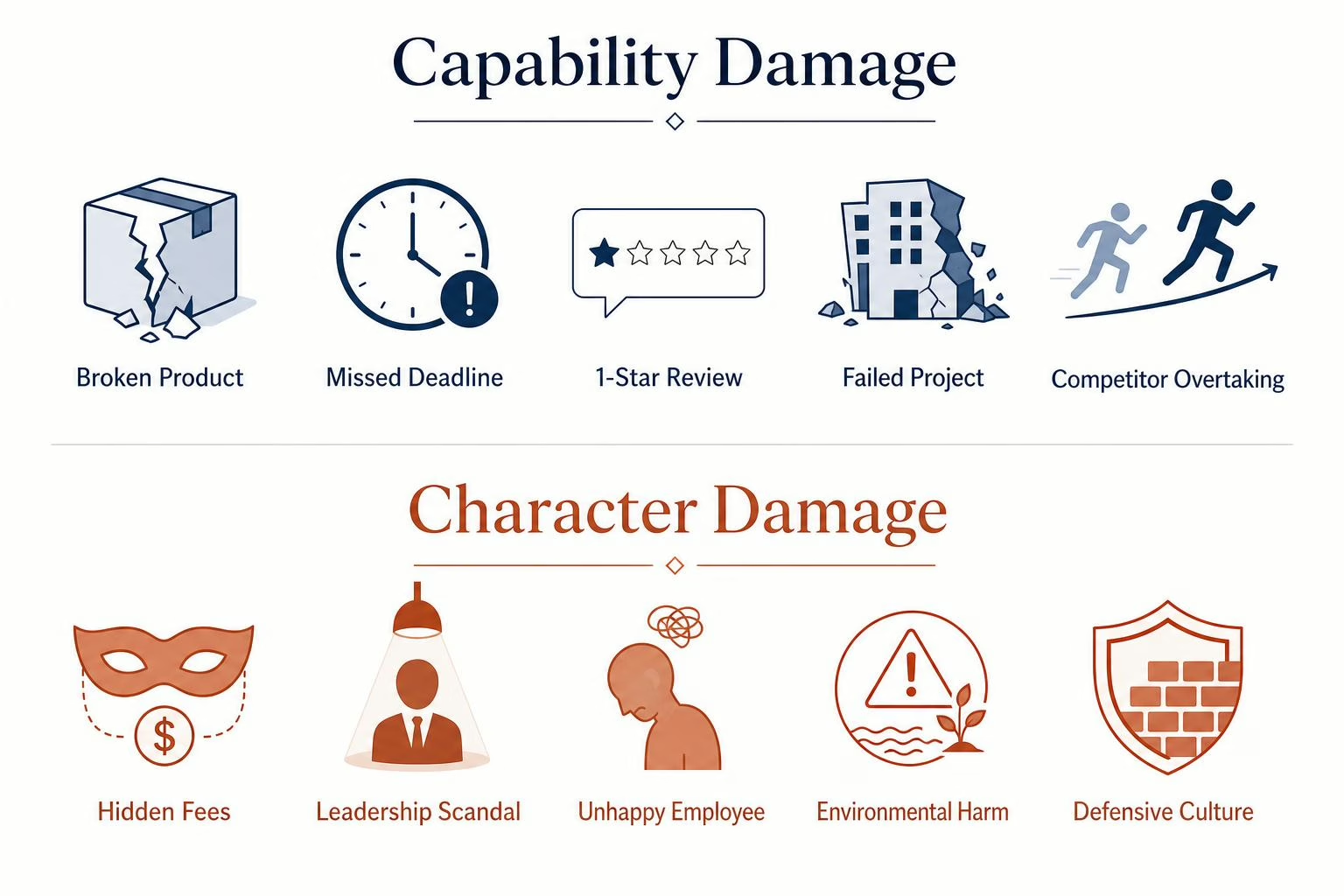
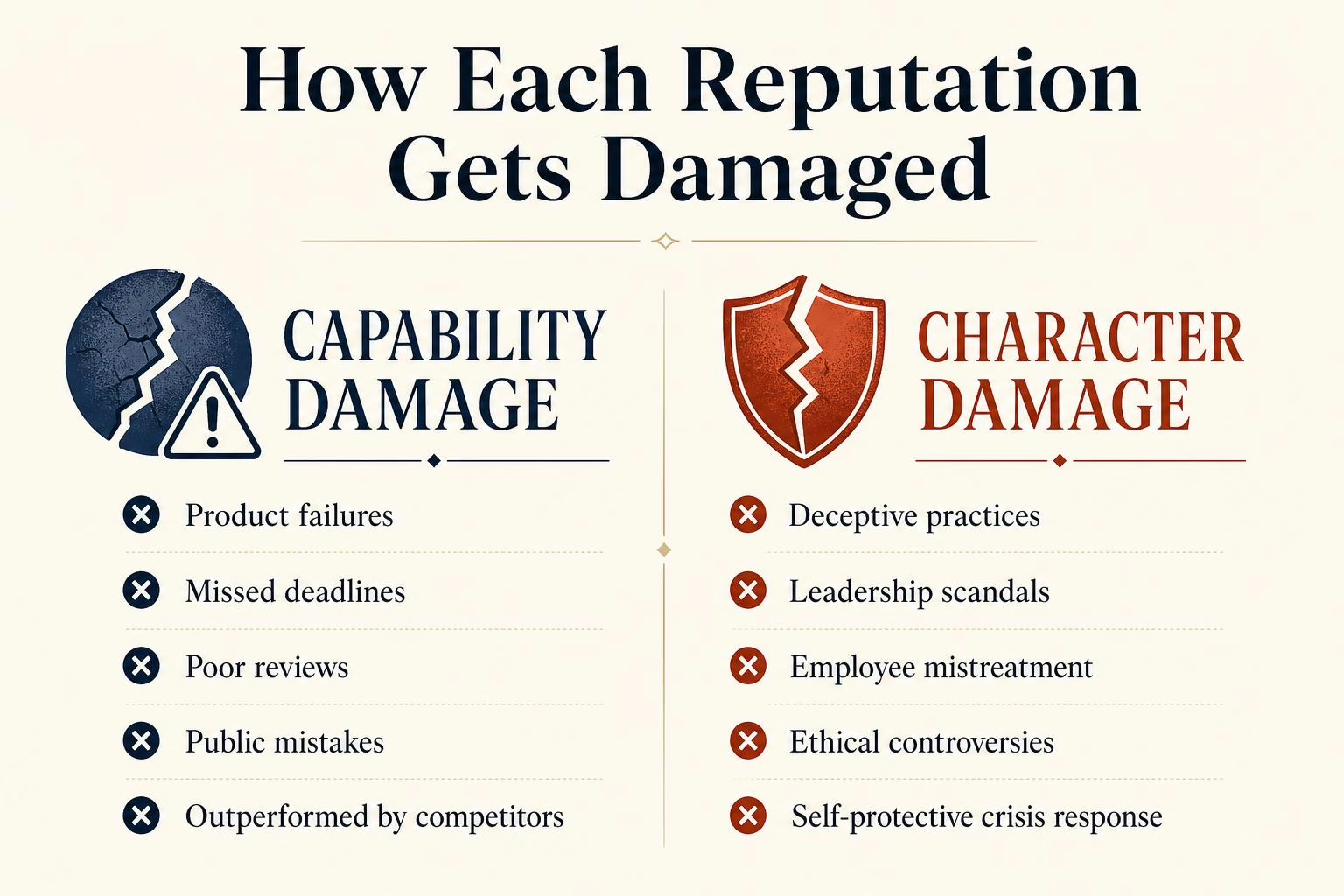
Capability reputation takes a hit when performance falls short of expectation. Common causes include:
- Product failures, defects, or quality control issues
- Consistently missed deadlines or poor delivery
- Negative reviews focused on service quality or competence
- High-profile project failures or public mistakes
- A competitor who demonstrably outperforms you
Because capability reputation is based on observable results, it is also possible to rebuild through observable improvement. Domino’s overhauled its pizza recipe in 2009 after customer feedback made it clear the product wasn’t good enough. They acknowledged the failure publicly, changed the product, and invited people to judge the results. The turnaround worked because the improvement was genuine and visible.
What Damages Character Reputation
Character reputation is damaged by ethical failures, dishonesty, and behavior that contradicts stated values. Common causes include:
- Deceptive practices, hidden fees, or misleading claims
- Scandals involving leadership behavior
- Treatment of employees that conflicts with public-facing values
- Environmental, social, or ethical controversies
- Responses to crisis that prioritize self-protection over accountability
Character damage is slower to rebuild. It requires sustained behavioral change, not just a statement or a campaign. Wells Fargo’s reputation problems persisted for years not because the company couldn’t perform banking functions, but because the ethical failures kept recurring. No amount of capability could compensate for repeated character lapses.
When reputation damage is already appearing in search results, the situation needs active management. Our guides on using SEO for reputation management and reverse SEO cover the practical steps for pushing negative content down and building better signals up.
Dealing With Reputation Damage Right Now?
Whether the damage is to your capability reputation, your character reputation, or both, NewReputation builds the strategy to address it. We identify what is driving the problem and put the right fix in place.
- Reputation audit to identify which type of damage you are facing
- Content strategy to rebuild the signals that matter
- Search result suppression and removal where needed
How to Build and Protect Both
Building Capability Reputation
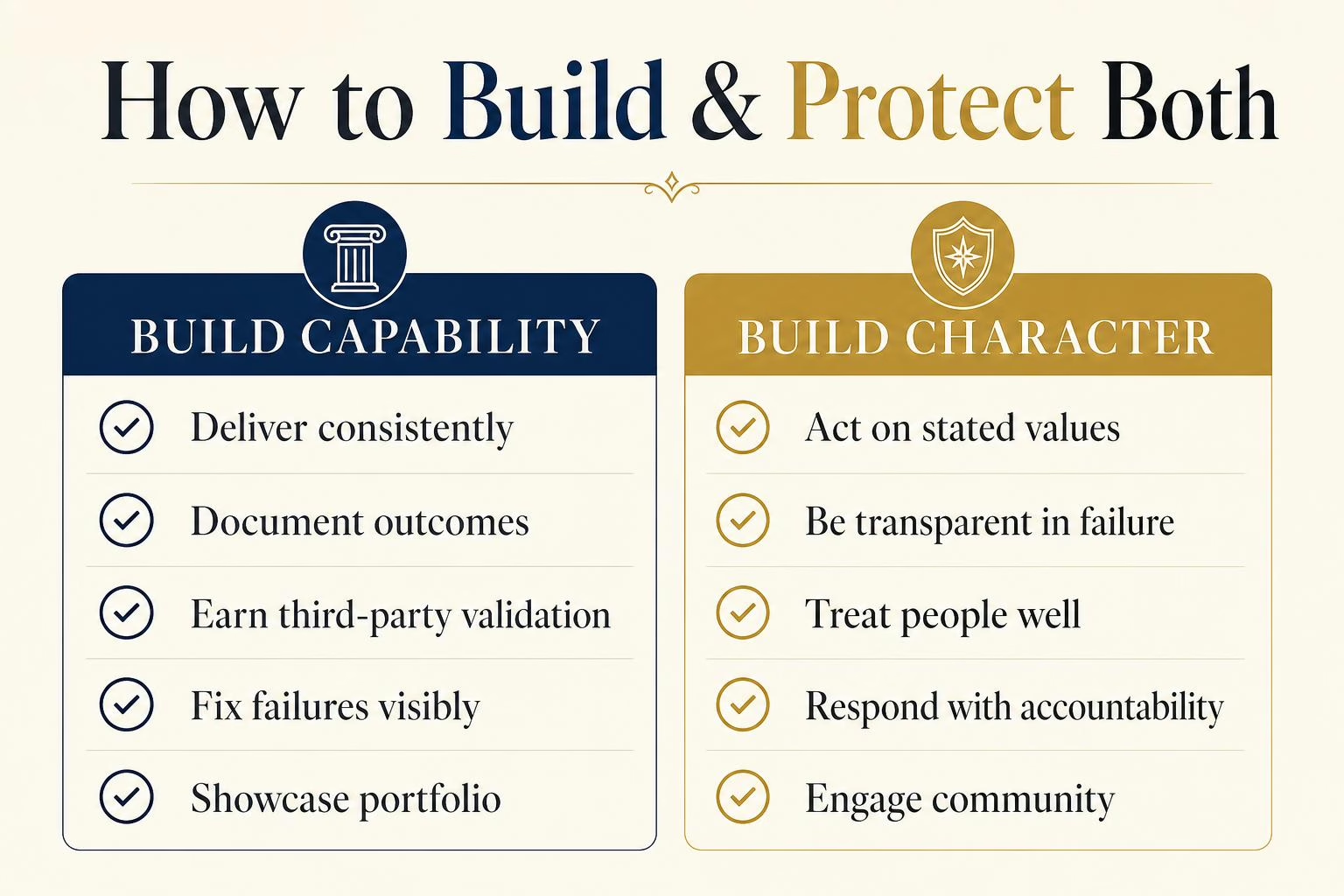
Capability reputation is earned through consistent, verifiable performance. The signals that build it are straightforward:
- Deliver what you promise, consistently and on time
- Document outcomes: case studies, testimonials, measurable results
- Earn third-party validation through reviews, certifications, and press coverage
- Respond to service failures quickly and visibly, and show improvement
- Build a portfolio of work that speaks for itself
Online, capability signals show up in review ratings focused on quality and service, in professional profiles and credentials, and in content that demonstrates expertise. Making sure these signals are visible and accurate is part of reputation-focused SEO. Weak or missing positive signals leave space for negative content to fill.
Building Character Reputation
Character reputation is built through behavior, not messaging. Marketing can support it, but it cannot substitute for it. The foundations are:
- Act consistently with your stated values, especially when it costs something
- Be transparent when things go wrong rather than deflecting or minimizing
- Treat employees, customers, and partners in ways you would be comfortable with publicly
- Respond to criticism with accountability, not defensiveness
- Engage with the communities you operate in
Monitoring reviews and comments is part of character management, not just damage control. How a business responds to negative feedback in public is one of the clearest signals of character available to anyone researching you. A calm, solution-focused response to a complaint says more about a company’s values than almost any marketing copy could.
Protecting Both Online
For most businesses, the place where both types of reputation are most visible and most vulnerable is search results. What appears on page one when someone searches your name shapes their perception of both your capability and your character before they ever contact you.
Building a strong digital presence protects both. That means a well-optimized website, active and complete profiles on relevant platforms, genuine reviews, earned media coverage, and original content that demonstrates expertise and values together. Understanding what a positive digital footprint means is a useful starting point for seeing how all these signals combine. Our full guide on online reputation management covers how to build and maintain this presence over time.
For executives and public figures, the same principles apply at the individual level. Our executive reputation management guide covers the specific considerations for people whose personal and professional reputations are closely linked.
Frequently Asked Questions
What are the two types of reputation?
The two types of reputation identified in management and sociological research are capability reputation and character reputation. Capability reputation reflects judgments about what an organization or person can do, based on performance and results. Character reputation reflects judgments about who an organization or person is, based on values, ethics, and behavioral patterns. Both influence how people perceive and interact with a business, and both need to be actively managed.
Which type of reputation matters more?
Neither one alone is sufficient. Capability without character produces performance that people do not fully trust. Character without capability produces goodwill without results. Research consistently shows that businesses holding strong reputations on both dimensions outperform those that have only one. In a crisis, character reputation is especially important: organizations with strong character reputations receive more benefit of the doubt when capability failures occur, while character failures are much harder to recover from regardless of capability.
Can you have a strong capability reputation and a weak character reputation?
Yes, and it is more common than you might expect. Many businesses are respected for what they deliver while being criticized for how they treat employees, handle complaints, or conduct themselves in controversies. This imbalance creates fragility. A business operating this way is one ethics scandal away from a reputation crisis it cannot easily absorb. The capability reputation it built offers little protection against character-based damage.
How do I know which type of reputation I am dealing with?
Look at the nature of the negative content or feedback. Complaints about quality, results, service delivery, or competence point to capability reputation damage. Complaints about dishonesty, ethics, treatment of people, or a gap between stated values and actual behavior point to character reputation damage. Often both are present at the same time, but identifying which is the primary driver helps direct the response correctly.
Does online reputation management cover both types?
It should. Effective online reputation management addresses both the quality signals people see about your work and the trust signals people see about your values and behavior. This includes review management, content strategy, search result optimization, and how a business presents and conducts itself across all digital channels. Managing only one dimension leaves significant gaps.
How long does it take to rebuild reputation after damage?
It depends on the type and severity. Capability reputation can often be rebuilt faster because improvement is observable. Rebuild the product, fix the service, demonstrate the change, and over time perceptions update. Character reputation takes longer because it is based on behavioral patterns that have to be established and consistently maintained before they are believed. Serious character damage, particularly from deception or ethical scandal, can take years to recover from and requires genuine behavioral change, not just communications work. Our guide on repairing a damaged business reputation covers realistic timelines and what the process actually involves.
Build a Reputation That Holds Up Under Pressure
NewReputation helps businesses and individuals build, protect, and repair both capability and character reputation online. From search result strategy to ongoing monitoring, we cover the full picture.
- Free reputation audit to see exactly where you stand
- Strategy across reviews, content, search results, and online presence
- Ongoing monitoring so problems are caught early