Last Updated on 4 months ago by Admin
If you’re an executive today, you’re managing more than meetings, strategy, and your team. You’re also managing your name, face, title, and trust across the internet.
A fake LinkedIn profile can use your photo. A lookalike email address can swap one letter and fool your staff. A fake “CEO” account can message a vendor and ask for new payment details.
It feels creepy because it is personal. It can also get expensive fast.
You may wonder if someone is already messaging your team or customers pretending to be you. You may also wonder if your staff would know how to spot a fake request before damage is done.
You are not being paranoid. Executive impersonation is one of the fastest-growing reputation and fraud risks facing leaders today. Business Email Compromise scams, which often involve executive impersonation, caused $2.77 billion in reported losses in 2024, according to the FBI IC3 data summarized by Abnormal Security. The FTC also reported over 330,000 business impersonation complaints in 2023, with losses above $1.1 billion.
This guide explains what executive impersonation is, why it hits so hard, and how to protect your name before someone uses it against you.
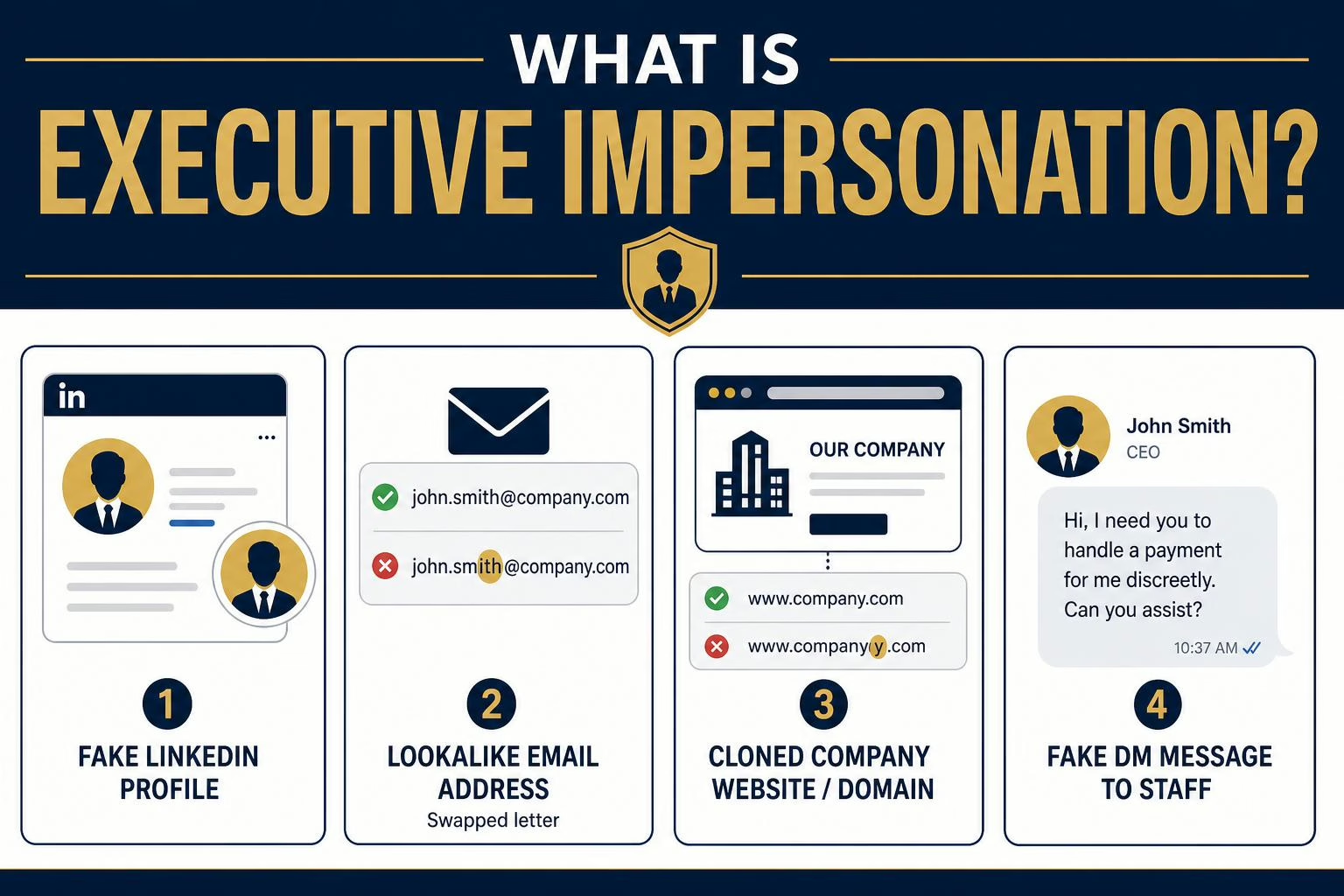
Table of Contents
What Is Executive Impersonation?
Executive impersonation is when someone pretends to be you, or another leader at your company, to get money, access, attention, or private information.
It often shows up as:
- Fake social profiles using your name, title, and photo.
- Lookalike email addresses that differ from yours by one letter or symbol.
- Fake domains that copy your company’s URL and branding.
- Direct messages to staff, customers, or vendors that sound like you.
- Fake accounts asking for payment changes, gift cards, login details, or private files.
Sometimes the goal is a fast wire transfer. Sometimes it is access to systems. Sometimes it is a scam that uses your name to build trust with someone else.
Every time it happens, it takes something from you and your company: trust.
This can also overlap with a reputation doppelganger, where another person or account causes confusion around your name. The difference is that impersonation is usually more direct and more intentional.
Why Executive Impersonation Hits So Hard
It hurts when someone fakes your brand. It feels even worse when someone fakes you.
Executives often say things like:
- “I feel exposed. I didn’t realize how easy this would be to fake.”
- “I’m worried my board or team will think I was careless.”
- “People trust me personally. I can’t afford a scam in my name.”
On the surface, this is a fraud and security issue. Underneath, it is an identity and reputation issue.
You have spent years building credibility. Seeing a stranger use your photo, title, and authority to pressure employees or trick customers is upsetting.
That is why you need more than a technical fix. You need a simple plan your whole team can understand.
If you are in a high-visibility role, this is also part of executive reputation management. Your name is not just personal anymore. It is a business asset.
The Real Problem Has Three Layers
Executive impersonation is not one problem. It has three layers.
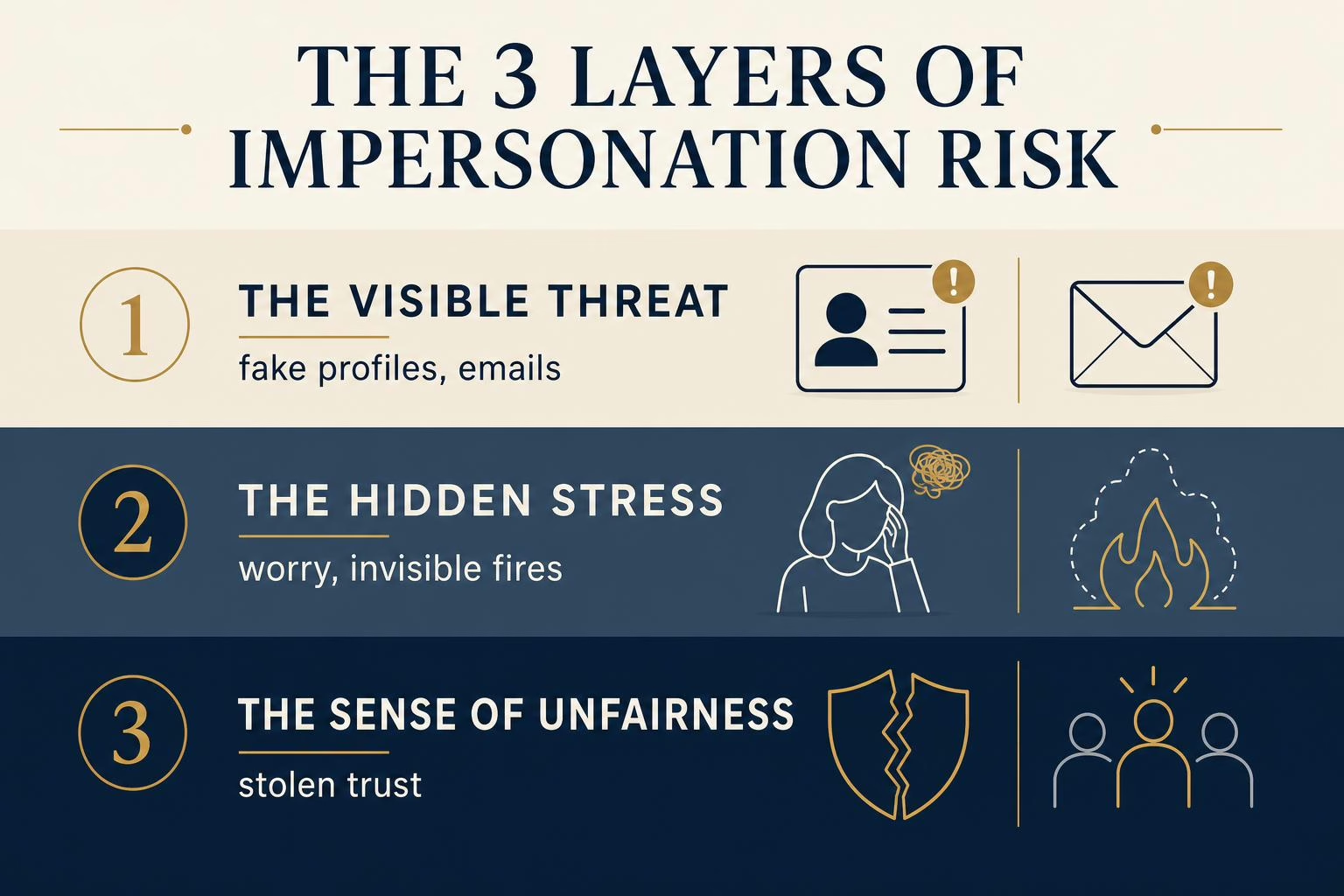
1. The visible threat
This is what everyone sees: fake profiles, suspicious emails, copied websites, and messages that sound almost like you.
2. The hidden stress
You start to wonder who else received the message, whether anyone believed it, and what is happening that you have not seen yet.
That stress can be hard to explain. You are trying to run a business while also wondering if someone is using your name behind your back.
3. The sense of unfairness
You did the work to earn trust with your team, clients, and partners. Watching someone hijack that with a stolen photo and a free account feels wrong.
You are right to see it that way. It should not be this easy.
You cannot remove all risk, but you can make it much harder for attackers to succeed and much easier for your team to respond.
We Have Seen This Before
At NewReputation, we work where reputation, trust, privacy, and search results meet.
I have worked with CEOs who had several fake LinkedIn accounts contacting employees. I have worked with founders whose names were used in urgent money requests. I have also worked with executives who only found out they were being impersonated because a customer forwarded them a strange email.
The first reaction is usually fear. Then anger. Then embarrassment.
But here is the part I always tell clients: this does not mean you failed.
No one gets promoted because they know how to spot a phishing domain. You are good at running your business. Attackers are good at exploiting trust.
The goal is not to feel ashamed. The goal is to get clear, take control, and make it easier for people to know what is real.
Do You Know What Shows Up for Your Name?
Get a free First Impression Report from NewReputation. We will show you what appears when people search your name, where confusion may exist, and what steps can help protect your reputation.
- Review your first-page Google results
- Identify fake, weak, outdated, or confusing profiles
- Get a simple action plan to strengthen your online presence
A Simple 3-Step Plan to Protect Yourself
You do not need a 50-page policy. You need a plan you and your team can remember.
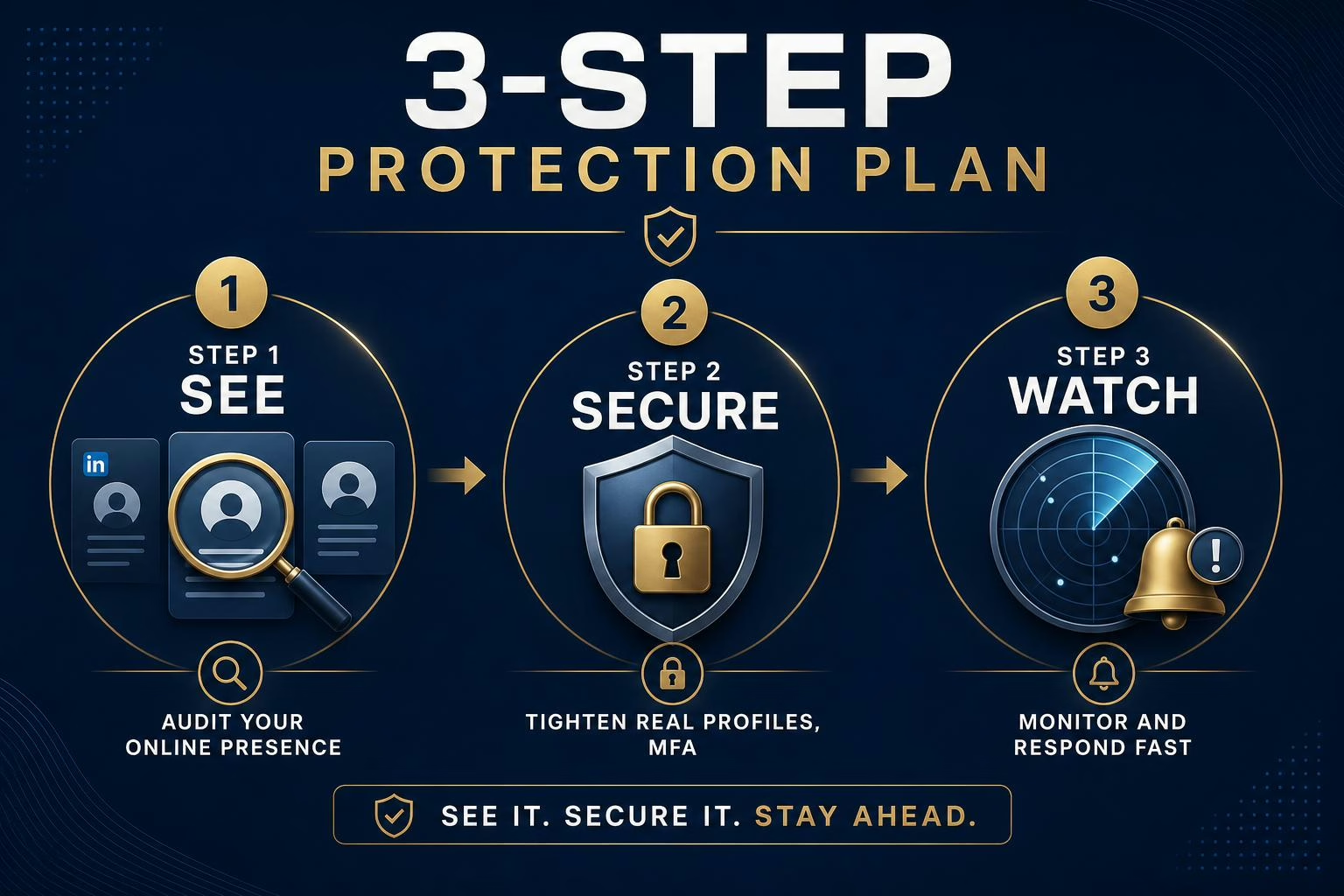
Step 1: See what is out there with your name on it
Start with a clear picture of where you already show up online.
Search for:
- Your full name and common variations.
- Your name plus your company.
- Your title plus your name.
- Your name plus words like email, LinkedIn, Instagram, Facebook, X, and CEO.
Then check:
- LinkedIn, Facebook, Instagram, X, and industry networks.
- Your company website and leadership pages.
- Review sites, directories, podcasts, interviews, and media mentions.
You are looking for three groups:
- Profiles you control.
- Profiles you created but no longer use.
- Profiles or pages that look like you, but are not you.
At NewReputation, we turn this into a simple map of “real you” and “suspicious you.” Once you see it clearly, the problem feels less vague.
Step 2: Make the real you easy to recognize
The stronger your real online presence is, the harder it becomes for fake versions to blend in.
Start with the basics:
- Use one current professional photo across your main profiles.
- Write a short, true bio that reflects your current role.
- Link from your social profiles to your company website or official bio.
- Use clear, professional usernames where possible.
- Turn on multi-factor authentication for important accounts.
Your usernames matter more than people think. A clean, consistent handle helps people know they are looking at the real account. This guide on professional usernames can help.
Also set clear communication rules with your team.
For example:
- No wire transfer request should be approved from email or chat alone.
- No banking change should be approved without a phone or video confirmation.
- No one should be punished for slowing down to verify a request.
That last point matters. Your team needs permission to question something that looks like it came from you.
Step 3: Watch carefully and respond fast
Once your real presence is clear, monitoring gets easier.
You do not need to stare at social media all day. You need simple alerts and habits.
That can include:
- Google alerts for your name and company.
- Regular checks for fake profiles on major platforms.
- A single person on your team who collects suspicious reports.
- A basic response plan for fake accounts, fake emails, and copied domains.
When you find a fake account or email, do this:
- Take screenshots before anything disappears.
- Copy profile links, email headers, URLs, and messages.
- Report the account through the platform’s impersonation tool.
- Block or filter malicious domains if needed.
- Notify staff, vendors, or customers if they may be targeted.
If the issue involves social platforms, these guides may help:
- How to get an Instagram account taken down
- How to find out who owns an Instagram account
- How to spot a fake Snapchat account
- How to recover a hacked Twitter or X account
Practical Ways to Lower Your Risk This Week
You do not need to wait for a full project. You can lower your risk this week with a few simple actions.
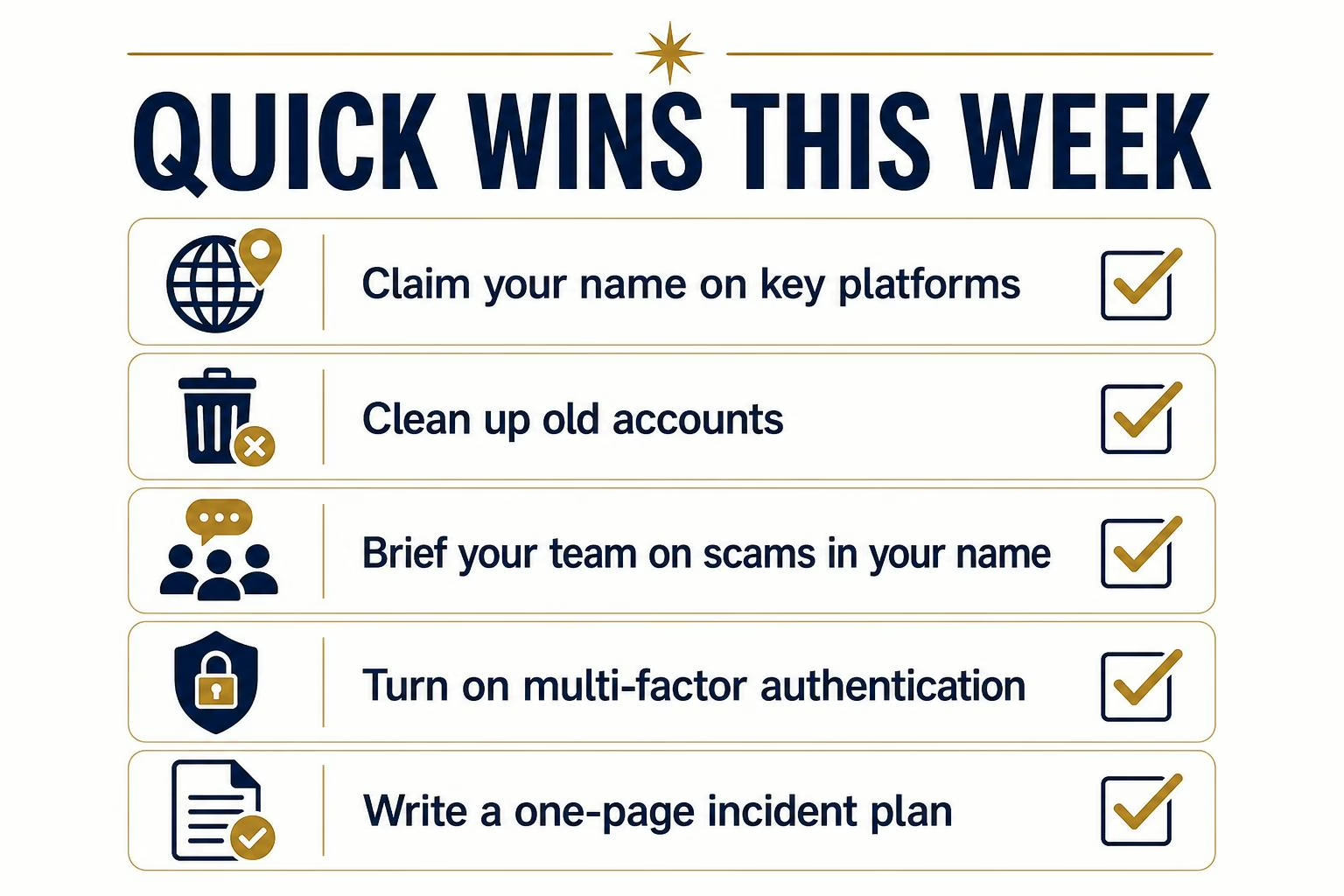
Claim your profiles
If no one has taken your name on a major platform that matters in your industry, claim it.
You do not have to become a daily content creator. Just owning your name and role closes easy doors for impersonators.
Clean up old accounts
Old, half-finished profiles create confusion.
Either update them so they clearly match your current role and company, or close them. Less noise makes it easier for people to spot what is real.
Talk to your team about scams in your name
A five-minute conversation can prevent a painful mistake.
You can say:
“If you ever get a message from me asking you to send money, buy gift cards, change banking details, or share private data, assume it is fake until we talk in person or on video. I will never be upset with you for double-checking.”
That sentence gives people permission to slow down.
Turn on extra protection for key accounts
Start with:
- Your main email address.
- Your LinkedIn account.
- Your public-facing social accounts.
- Any account tied to money, vendors, or sensitive data.
Multi-factor authentication is not perfect, but it stops many basic attacks.
Watch for hacked or copied accounts
Sometimes impersonation starts after an account gets hacked. If your Facebook account is compromised, this guide on what to do when Facebook is hacked can help.
You should also train your team on common scams. This guide on Facebook scams is a good place to start.
Write a one-page response plan
If someone flags a fake “you,” your team should not have to improvise.
Write down:
- Who they tell first.
- Who reports the fake account.
- Who checks whether money or data was affected.
- Who decides if customers or partners should be informed.
- Who signs any outside message.
We often help executives build this in one working session. Once it exists, everyone breathes easier.
What If the Damage Is Already Done?
Maybe someone pretending to be you convinced a person to send money. Maybe a client received a strange message and now feels unsure. Maybe screenshots are already spreading.
That is stressful, but there is still a path forward.
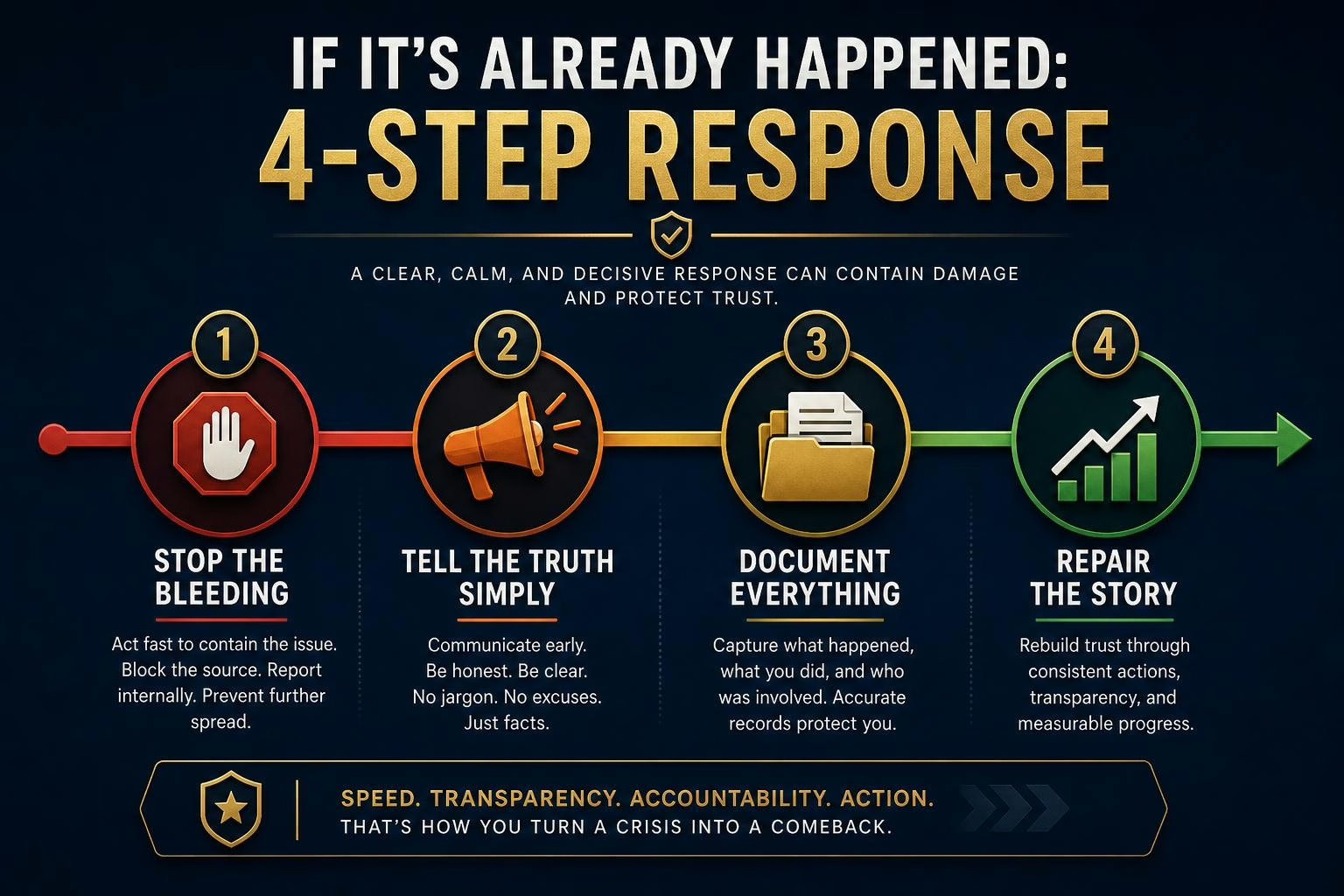
1. Stop the bleeding
Block, report, and lock down any account or system used by the scammer.
If a fake account exists, report it right away. If a real account was hacked, change passwords, remove unknown devices, and turn on multi-factor authentication.
2. Save everything
Save messages, screenshots, URLs, email headers, payment requests, and platform responses.
This documentation can help with law enforcement, insurance, platform reports, and internal reviews.
3. Tell the truth simply
If staff, vendors, or customers need to know, tell them clearly.
A short message is usually better than a long defensive one.
You might say:
“We are aware of an impersonation attempt using my name. Please do not act on payment, banking, gift card, or data requests unless confirmed by phone or video. We are reporting the account and will share updates if needed.”
4. Watch search results and reputation fallout
Sometimes an impersonation issue creates confusion online. A customer may post about it. A vendor may talk about it. A fake account may appear in search.
This is where reputation monitoring matters. If the incident creates search confusion, the goal is to make sure accurate, positive information about you and your company appears where people look first.
5. Be aware of deepfake risk
Fake accounts are not the only concern. Fake audio, video, and images are getting more believable.
If you are worried about this, read our guide on whether deepfakes are illegal.
If the impersonation includes private information, threats, or exposure of personal details, it may also become a doxing issue. Learn more here: what is doxing?
What Life Looks Like With a Real Protection Plan
When you take executive impersonation seriously, your day-to-day life gets calmer.
You know which profiles are real. Your team knows when to question a suspicious request. Someone is watching for new profiles and mentions. You have a playbook if something slips through.
You move from “I hope nothing bad happens” to “If something happens, we know what to do.”
That shift matters.
If you do nothing, the risk does not stand still. Your visibility grows. More of your work moves online. Attackers get more creative. The cost of one bad incident goes up.
You do not have to obsess over this every day. You do need a thoughtful response.
How NewReputation Can Help
You have put years into your business, your career, and your identity. Your name is now a valuable asset.
NewReputation helps executives:
- Identify and secure their online presence.
- Find fake, weak, outdated, or confusing profiles.
- Respond to impersonation issues.
- Improve search results after a damaging incident.
- Build a stronger online identity that is harder to fake.
If you are comparing providers, this guide to the best reputation management companies can help you know what to look for.
Protect Your Name Before Someone Else Uses It
Get a free First Impression Report from NewReputation. We will review what appears for your name, where impersonation risk may exist, and what you can do next.
- See what people find when they search you
- Find weak spots in your executive online presence
- Get a clear plan to protect trust and visibility
FAQs
What is executive impersonation?
Executive impersonation is when someone pretends to be a company leader to trick employees, customers, vendors, or partners into sending money, sharing data, or trusting a fake request.
Why do scammers impersonate executives?
Executives have authority. If a message looks like it came from a CEO, founder, or senior leader, people may act faster and ask fewer questions.
What are signs of an executive impersonation attempt?
Common signs include urgent money requests, new banking instructions, odd email addresses, fake social profiles, requests for gift cards, and messages asking people to keep something secret.
What should I do first if someone is impersonating me?
Take screenshots, copy links or email headers, report the fake account, notify your team, and lock down any accounts that may be exposed.
Can executive impersonation hurt my reputation?
Yes. Even if you did nothing wrong, people may feel confused, embarrassed, or less trusting after a scam uses your name. Clear communication and strong search results help reduce that damage.
How often should executives check for impersonation?
At minimum, check your name and main platforms monthly. High-profile executives should monitor more often, especially during funding rounds, hiring pushes, public events, or media coverage.
Final Thoughts
Executive impersonation is not just an IT issue. It is a trust issue.
Your name carries weight. That is exactly why scammers want to use it.
The good news is that you can lower your risk. Search your name. Clean up old profiles. Strengthen your real accounts. Give your team permission to verify strange requests. Create a simple response plan before you need it.
You do not need to live in fear. You just need to make the real you easier to recognize and the fake version harder to believe.