Last Updated on 1 month ago by Admin
Mugshots are public records in most states, which means they are legally accessible and regularly published by third-party websites that scrape booking photos from law enforcement databases. Whether you are trying to find someone’s mugshot for a legitimate reason, or you have found your own photo online and want it removed, this guide covers both sides of that question honestly and practically.
If you are here because your mugshot is showing up in Google results and you want it gone, skip directly to the removal section. If you are trying to find publicly available arrest information, the section below explains where it lives and what you are actually looking at when you find it.
Table of Contents
- What is a mugshot and why do they appear online?
- How to find publicly available mugshot records
- Why a mugshot online is a serious reputation problem
- How to remove a mugshot from the internet
- Removal steps for the major mugshot sites
- Removing your mugshot from Google Search
- When removal is not possible: suppression
- State laws that protect you
- Frequently asked questions
What Is a Mugshot and Why Do They Appear Online?
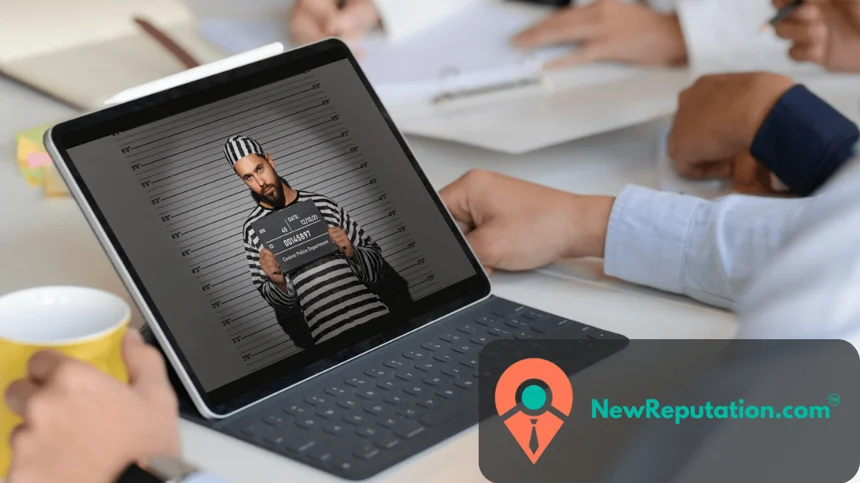
A mugshot is a photograph taken by law enforcement at the time of an arrest. In most US states, mugshots are classified as public records, which means they can be obtained and republished by anyone, including third-party commercial websites.
These websites, sometimes called mugshot sites or arrest record databases, scrape booking photos directly from county jail websites, sheriff’s department portals, and state law enforcement databases. They then index that information alongside your name, date of arrest, and the listed charges, creating a searchable profile that Google indexes and ranks for your name.
The troubling reality is that mugshot sites do not verify whether charges were dropped, dismissed, or resulted in a not-guilty verdict. The photo goes online the same day you are booked, and in many cases it stays there indefinitely unless you take active steps to remove it. The average person’s mugshot appears on five to ten different websites, each with its own removal process.
Mugshot sites have also historically charged fees for removal, a practice now banned by law in at least 18 states. If a site demands payment to remove your photo, check your state’s current laws before paying anything. You may be legally entitled to free removal.
How to Find Publicly Available Mugshot Records
If you are looking for publicly available arrest records, there are several legitimate channels. This information is covered here for transparency. If you are researching your own record or doing legitimate due diligence, the following sources are where public booking information typically lives.
County jail and sheriff websites
Most county sheriff departments and local jails maintain publicly accessible inmate search portals on their official websites. These show current bookings and, in many cases, recent releases with booking photos. Search for your specific county’s sheriff or jail website and look for an “inmate search” or “booking records” section. This is the primary source that all third-party sites scrape from.
State department of corrections
State-level corrections departments maintain records of individuals who have been convicted and sentenced to state facilities. These databases typically include photos. Search for your state’s Department of Corrections website and their offender search tool.
Third-party aggregator sites
Sites like Mugshots.com, Arrests.org, and similar platforms aggregate booking information from across multiple counties and states. They are searchable by name and are also indexed by Google, which is why they often appear near the top of search results when someone searches a person’s name.
It is worth noting that these sites have faced significant legal and ethical criticism. They do not verify case outcomes. They frequently show arrest records for charges that were never prosecuted. And they have historically profited from people paying to have their own information removed. Treat information found on these sites as a starting point for verification, not as a reliable source of truth about someone’s character or history.
Why a Mugshot Online Is a Serious Reputation Problem
A mugshot in Google search results can cost you a job before you get an interview, a housing application before you hear back, and professional relationships before they begin. Employers, landlords, clients, and personal contacts increasingly run basic name searches. A booking photo near the top of those results creates an immediate negative impression that is very difficult to overcome in the conversation that follows, if there is one.
The damage is compounded by a fundamental injustice in how these photos persist. The mugshot represents the moment of arrest, not the outcome of the case. If charges were dropped the next day, the photo stays online. If you were found not guilty at trial, the photo stays online. If you completed a diversion program and your record was sealed, the photo may still be online. The arrest record and the legal outcome live in entirely different systems, and mugshot sites only scrape one of them.
The search result also shapes what AI systems say about you. Google AI Overviews, ChatGPT, and Perplexity all draw from publicly indexed content. A mugshot site appearing in your top search results can become source material for an AI summary that describes you in the context of an arrest, even one that was resolved in your favor years ago. Our guide on how AI Overviews affect your reputation explains how this works and what to do about it.
How to Remove a Mugshot from the Internet
Removal requires working through multiple channels simultaneously. There is no single button that clears a mugshot from the internet. Here is the process, in the order that works best.
Step 1: Get your record expunged or sealed if eligible
An expungement order is the strongest legal tool available for mugshot removal. It gives you documentation that courts have officially cleared your record, which almost every mugshot site accepts as grounds for free removal. Even sites that are otherwise reluctant to take down photos will remove content when presented with a valid court order.
Eligibility depends on your state and the nature of your charges. Dismissed charges, acquittals, and certain misdemeanors are frequently eligible. Our detailed guide on how long expungement takes covers the full timeline and process by state. If you are unsure whether you qualify, consult a criminal defense attorney in your state. Many offer free initial consultations specifically for expungement inquiries.
Step 2: Find every site showing your photo
Open a private browser window and search your full name. Add variations: your name plus “arrest,” your name plus your city, and your name plus the relevant year. Make a list of every URL where your photo or arrest record appears. You will need this list for the removal requests that follow.
Step 3: Submit removal requests to each site
Each mugshot site has its own removal process. Most require you to locate your specific record, note the record ID number, and send an email to their removal address with supporting documentation. Use a disposable email address for these requests. Data brokers and mugshot sites are known to add your contact information to marketing lists when you reach out, even to opt out.
Step 4: Submit removal requests to data broker sites
People-search sites including Spokeo, Whitepages, and similar platforms sometimes display arrest records alongside personal information. Submit opt-out requests to each of these as well. Our guide on digital footprint removal covers the major data broker opt-out processes in one place.
Removal Steps for the Major Mugshot Sites
| Site | Free removal available? | Documentation required | Process |
|---|---|---|---|
| Mugshots.com | Yes, with court documentation | Court order signed and sealed by a judge | Find record, note ID number, email to removal address with documents |
| Arrests.org | Yes, with documentation | Expungement or sealing order | Use their opt-out form, select reason (expunged, charges dropped), attach documents |
| MugshotLook.com | Yes | Name and state required | Use “Do Not Sell My Information” link, search your name, complete CAPTCHA, confirm via email |
| Mugshots.zone | Yes, for expunged charges | Expungement or sealing documentation | Contact site owner with documentation; processes within 24 to 48 hours when eligible |
| Local sheriff/jail sites | Sometimes | Depends on agency | Contact department directly, especially for expunged records or cases of mistaken identity |
Removal timelines vary significantly across sites. Some process requests within a few days. Others take weeks. Keep records of every request you submit, including the date, the site, and the email or form reference number. If a site does not respond within 14 days, follow up in writing.
Never pay a site to remove your own mugshot. In many states this is illegal, and even where it is not, the removal rarely sticks permanently without addressing the underlying public record.
Removing Your Mugshot from Google Search
Even after a mugshot site removes your photo, the result may still appear in Google because Google caches pages and does not immediately reflect changes on external sites. There are two tools for addressing this.
If the original page has been removed or updated, use Google’s Outdated Content Removal Tool to request that Google refresh its cached version. This removes the stale result from search without requiring Google to take any editorial action.
If your mugshot page is still live but contains personal information (your address, phone number, or other contact details) alongside the photo, you can request removal through Google’s Results About You tool. Google has expanded this tool to cover several categories of personal information. Our guide on how the Results About You tool works explains what it covers and how to submit a request.
For mugshot images specifically, Google will also consider removal requests for content on sites that primarily exist to extort individuals through pay-for-removal schemes. If the site you are dealing with follows that model, document the evidence and include it in a legal removal request to Google at support.google.com.
When Removal Is Not Possible: Suppression
Some mugshot sites are hosted offshore or have policies that make direct removal difficult. In these cases, suppression is the most realistic alternative. Suppression means building enough positive, authoritative content under your name that the mugshot result gets pushed off the first page of Google results entirely.
Most users never go past the first page of results. Getting a damaging result to page two or three dramatically reduces the number of people who see it. The process involves building and optimizing your LinkedIn profile, creating a personal website, claiming profiles on major platforms, and publishing content under your name consistently over time. Our guides on personal SEO and getting your name to the top of Google cover the full suppression strategy in detail.
Our guide on how to ungoogle yourself walks through the combined removal and suppression process as a single integrated strategy.
State Laws That Protect You
Several states have enacted laws specifically protecting individuals from mugshot exploitation. If you are in one of these states, cite the relevant statute in your removal requests for added legal weight.
- Texas (SB 509): Makes mugshots confidential by default. Only releasable if the subject is convicted, a fugitive, or a public safety threat. Violators face $1,000 or more per violation plus attorney’s fees.
- Florida: Requires mugshot sites to remove photos within 10 days of a request, regardless of case outcome. Charging for removal is prohibited. Non-compliance carries a $1,000 per day civil penalty.
- California (SB 1027): Makes it illegal to accept payment for mugshot removal.
- Georgia: Requires free removal within 30 days of a written request.
- Utah: Requires removal within 7 days if charges were dropped.
- Oregon: Prohibits charging for removal.
If you are dealing with a persistent mugshot that is connected to your personal information like your home address or phone number, see our guides on protecting your personal information and what doxing is for the broader privacy context and your legal protections.
Frequently Asked Questions
Is a mugshot always a public record?
In most US states, yes. Mugshots are taken at the time of arrest and are typically classified as public records accessible to anyone. However, state laws vary, and several states have restricted the publication or commercial exploitation of mugshots. If your charges were expunged or sealed, the legal picture changes, and you often have grounds for free removal from third-party sites.
Can I get my mugshot removed even if I was convicted?
It depends on the site and your state. Some sites remove photos for anyone who requests it, regardless of conviction status. Others require an expungement order or other documentation. In states with specific mugshot removal laws, your rights may extend beyond the expungement question. Contacting the site directly and clearly stating your circumstances is always the first step.
How long does it take to remove a mugshot from Google?
After the source site removes the photo, Google typically updates its index within days to a few weeks, depending on how frequently it crawls that domain. Using Google’s Outdated Content Removal Tool after the source has been updated can accelerate the process. For complete first-page suppression, where no results referencing the arrest appear, expect three to six months of consistent content building effort.
Do I need a lawyer to get my mugshot removed?
Not always. Most mugshot sites have free removal processes that you can navigate yourself, especially with expungement documentation. A lawyer becomes valuable when you need help with the expungement itself, when a site refuses to comply with a legal removal request, or when your state’s laws give you grounds for a formal legal complaint. An attorney experienced in online privacy or defamation law can accelerate the process in difficult cases.
What if my mugshot shows up in AI search results?
AI systems like Google AI Overviews and Perplexity draw from indexed web content, including mugshot sites. The most effective approach is to remove the source content first, then use Google’s tools to de-index any remaining cached results. Simultaneously build positive content under your name to improve the overall impression AI systems generate. Our guide on AI Overviews and reputation covers how to audit and correct AI summaries specifically.
Can my employer find my mugshot online?
Yes. Mugshot sites rank well in Google search results for personal names. Any employer running a basic name search during the hiring process can find these results. This is one of the primary reasons mugshot removal is important for people seeking employment after an arrest, particularly one where charges were dismissed or resolved favorably. For broader guidance on protecting your digital footprint during a job search, see our guide on what your digital footprint includes.
Need Help Getting Your Mugshot Removed?
NewReputation handles mugshot removal requests, data broker opt-outs, and suppression strategies so you can move forward without a past arrest defining your search results.
- Removal requests submitted to mugshot and arrest record sites
- Google de-indexing requests for cached results
- Content strategy to suppress any results that cannot be removed