Last Updated on 4 months ago by Admin
A sudden wave of one-star reviews can hurt fast. It can scare away customers, lower trust, and make a good business look unreliable overnight. This is called review bombing.
Review bombing happens when a large group of people leaves negative reviews in a short period of time. Sometimes they are real customers with real opinions. Other times, they are not customers at all. That difference matters.
So, is review bombing illegal? The honest answer is: it depends. A real opinion is usually protected. Fake reviews, false claims, threats, harassment, and competitor attacks can cross a legal line.
In this guide, we will break down what review bombing is, when it may be legal, when it may be illegal, and what businesses can do if it happens.
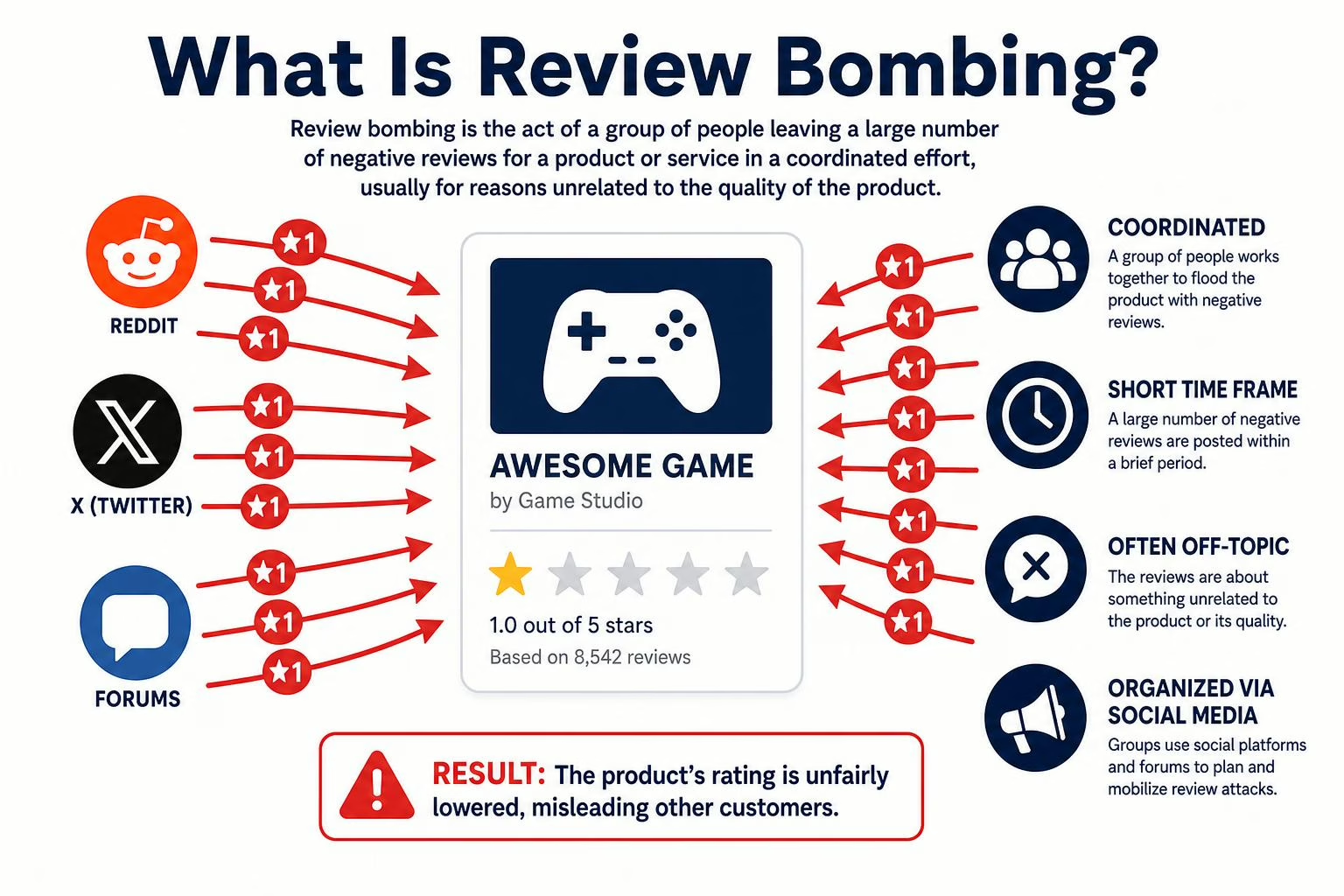
Table of Contents
What Is Review Bombing?
Review bombing is when many people leave negative reviews at the same time to lower a product, service, movie, game, book, app, or business rating.
It often happens after people become upset about something. That issue may have nothing to do with the actual quality of the product or service.
For example, people may review bomb because of:
- A company decision they dislike
- A political or cultural debate
- A price change
- A canceled feature
- A viral social media post
- A former employee dispute
- A competitor attack
Not every negative review is a review bomb. A real customer has the right to share a bad experience. The problem starts when reviews become coordinated, fake, off-topic, or meant to damage a business instead of inform other customers.
Why Review Bombing Happens
People review bomb because online reviews have power.
A low star rating can change what people buy, where they eat, who they hire, and which companies they trust. Reviews also affect visibility on platforms like Google. If you want to understand this better, read our guide on how Google reviews impact SEO ranking.
In my experience, review bombing usually starts with emotion. Someone feels ignored, angry, or wronged. Then the issue spreads online. A few comments turn into a post. The post turns into a group action. Before long, a business may receive dozens or hundreds of poor reviews.
Sometimes this is consumer protest. Sometimes it is harassment. Sometimes it is fake review abuse.
That is why context matters.
Is Review Bombing Illegal?
Review bombing is not always illegal.
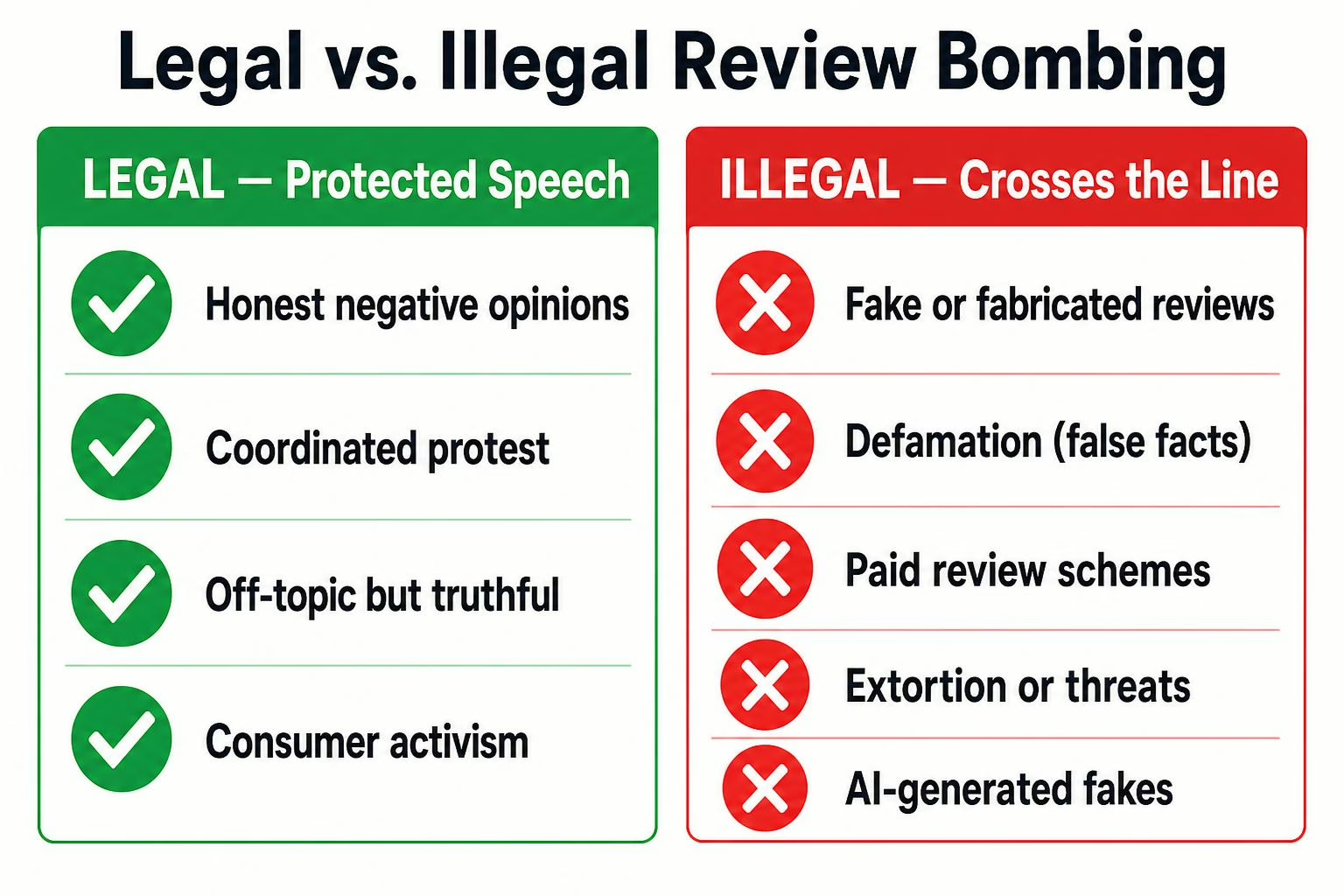
If people leave honest opinions based on real experiences, their reviews are usually protected speech. Even if the reviews are harsh. Even if many people post them at the same time.
However, review bombing can become illegal when it includes:
- Fake reviews from people who never used the business
- False statements presented as facts
- Reviews posted by competitors to damage a business
- Threats, harassment, or doxing
- Extortion, such as “pay us or we keep posting”
- Paid review attacks
This is the key point. The law usually does not punish someone for having a negative opinion. It can punish deception, fraud, defamation, and harassment.
Legal vs. Illegal Review Bombing
The easiest way to understand review bombing is to separate opinion from false claims.
Usually legal
- “I hated this movie.”
- “I do not support this company’s decision.”
- “The service was slow when I visited.”
- “I had a bad experience and would not go back.”
These are opinions or personal experiences. They may be negative, but they are usually protected.
Potentially illegal or removable
- “This business stole my money” when that never happened.
- “The owner commits crimes” with no proof.
- A competitor posting fake one-star reviews.
- A former employee creating fake customer accounts.
- A group posting reviews for a business they never visited.
These can create legal risk because they may involve false facts, fake reviews, or intentional harm.
Fake Reviews and FTC Rules
The Federal Trade Commission has made fake reviews a major enforcement issue.
In 2024, the FTC announced a final rule banning fake reviews and testimonials. The rule targets fake consumer reviews, paid review schemes, AI-generated fake reviews, review suppression, and reviews that misrepresent a person’s real experience.
You can read the FTC’s announcement here: FTC final rule banning fake reviews and testimonials.
The FTC also explains that businesses cannot use contract terms to stop honest reviews. That protection comes from the Consumer Review Fairness Act. You can learn more from the FTC’s guide: Consumer Review Fairness Act: What Businesses Need to Know.
For business owners, this creates two important lessons.
- You should not buy fake positive reviews.
- You should not organize fake negative reviews against a competitor.
Both can create serious problems. If you are unsure what counts as risky behavior, read our guide on why you should not buy Google reviews.
Can Review Bombing Be Defamation?
Yes, but only in certain cases.
A bad review is not defamation just because it is negative. To support a defamation claim, the review usually needs to include a false statement of fact that harms someone’s reputation.
For example, “the food was terrible” is an opinion. But “the owner uses stolen credit cards” is a factual claim. If that claim is false, it may be defamatory.
One useful case to understand is Houseman v. Harrison, a Canadian case involving fabricated negative reviews by former employees. The court treated the conduct as serious harm to reputation.
If you are wondering whether legal action is possible, read our guide: Can you sue for a bad review?
From what I have seen, lawsuits should not be the first move in most review cases. They can be expensive, slow, and stressful. But when reviews are clearly fake, coordinated, and damaging, legal advice may be worth getting.
Famous Review Bombing Examples
Review bombing is common in entertainment and gaming because fans are vocal and platforms show public scores.
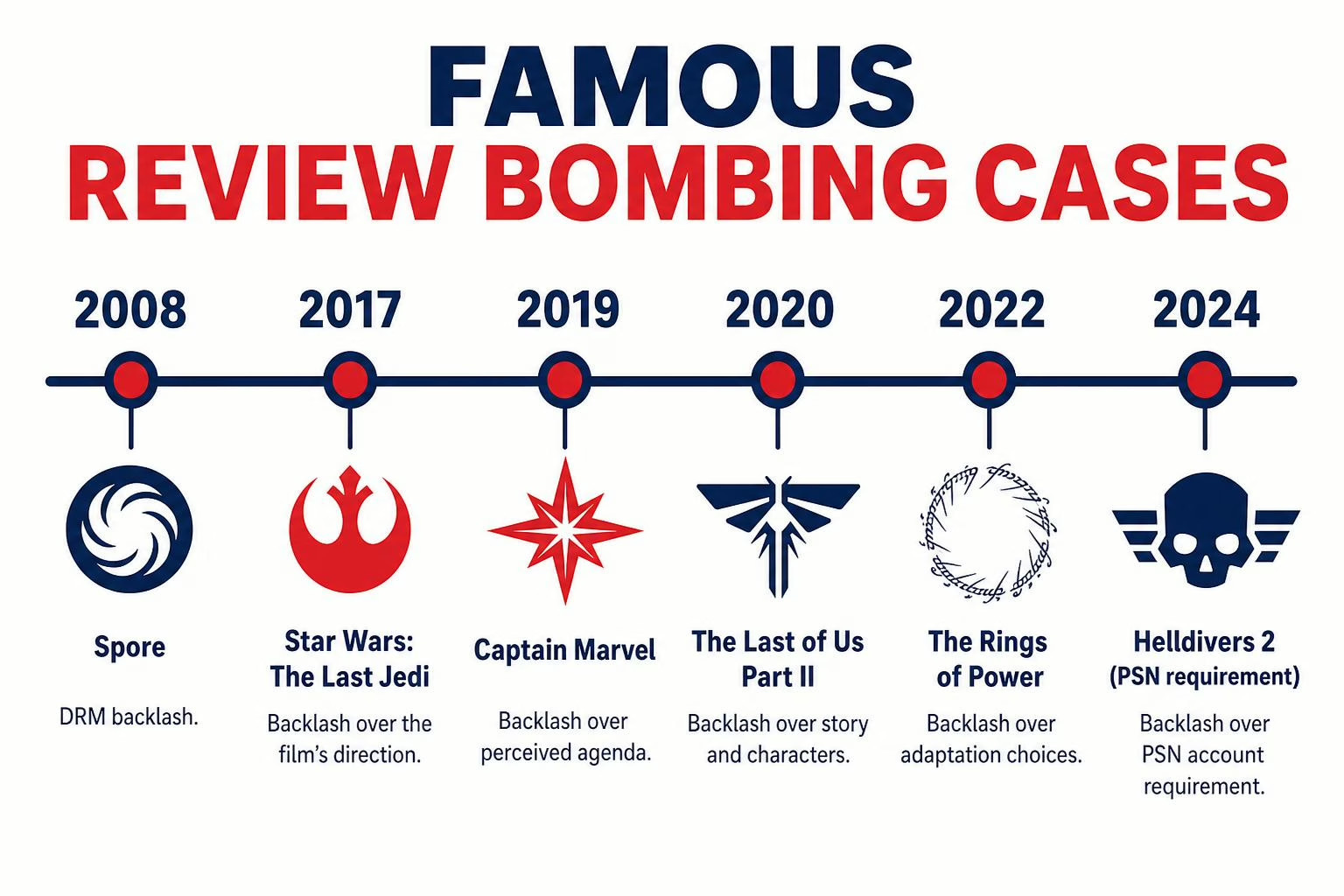
One well-known gaming example involves Steam’s handling of off-topic review activity. Steam has taken steps to identify and separate unusual review patterns when reviews are not tied to the actual game experience. Variety covered Steam’s response to off-topic review bombing here: Steam off-topic review bombing report.
Other major review bombing targets have included games, movies, streaming shows, books, and local businesses. In many cases, the reviews are less about the actual product and more about anger over a company decision, casting choice, policy change, or online controversy.
That is what makes review bombing messy. Sometimes it is customer feedback. Sometimes it is activism. Sometimes it is abuse.
How Platforms Handle Review Bombing
Each platform handles review bombing differently.
Google Reviews
Google allows businesses to report reviews that violate its policies. This may include fake reviews, spam, conflicts of interest, harassment, or off-topic content.
If you are dealing with fake Google reviews, start here: how to remove fake Google reviews.
You can also search reviews more carefully using this guide on how to search Google reviews by name.
Yelp
Yelp allows business owners to report reviews that break its rules. However, Yelp does not remove a review just because the business disagrees with it.
For help, read our guide on how to remove bad Yelp reviews.
Facebook reviews and recommendations can also become a target during public disputes. You can report content that breaks platform rules.
Use this guide to learn how to delete and remove reviews on Facebook.
Glassdoor
Glassdoor reviews can be harder because they often involve employee speech. Still, fake, abusive, or policy-breaking reviews may be challenged.
If this applies to you, read our guide on how to remove Glassdoor reviews.
What Businesses Should Do After a Review Bomb
If your business gets hit, do not panic. Move quickly, but stay calm.
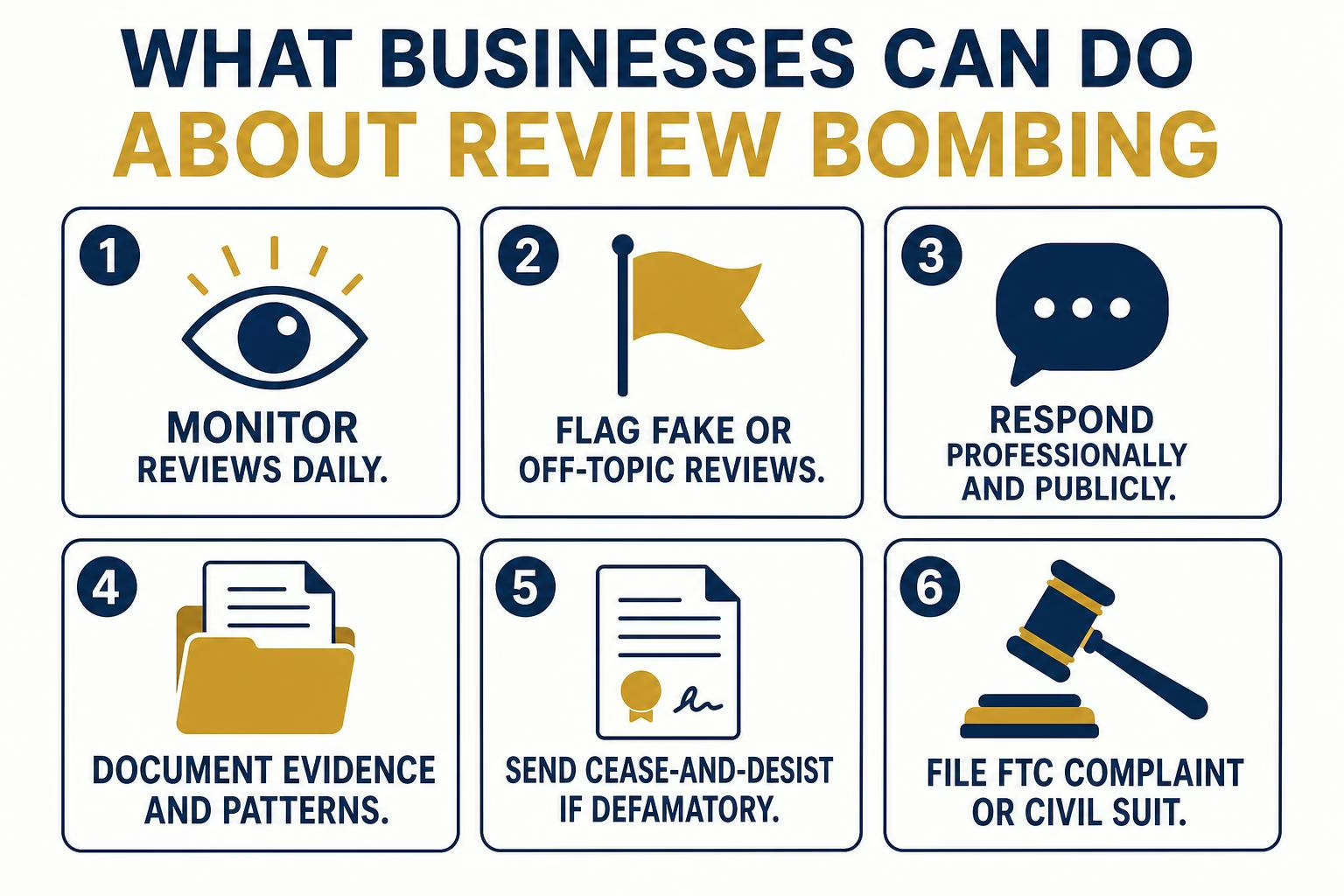
Step 1: Save the evidence
Take screenshots. Save URLs. Note dates, times, usernames, and review text.
This matters because reviews can change or disappear. You need a record before you report them.
Step 2: Look for patterns
Ask these questions:
- Did the reviews arrive at the same time?
- Do the accounts look new?
- Are the reviews using similar language?
- Do they mention an issue unrelated to your service?
- Do they come from people who were never customers?
Patterns make your report stronger.
Step 3: Report policy violations
Do not report every negative review as fake. Focus on reviews that clearly break platform rules.
If a former employee is involved, read this guide: what to do when a former employee is leaving bad reviews.
Step 4: Respond carefully
Do not argue. Do not accuse the reviewer in public unless you are sure. Keep your response short and professional.
A good response might say:
We take reviews seriously, but we cannot match this account to a real customer experience. We have reported this review for investigation and welcome direct contact so we can better understand the concern.
If you need help writing a reply, use our free review response generator or read our guide on how to respond to a negative review.
Step 5: Ask real customers for honest reviews
Do not review gate. Do not only ask happy customers while blocking unhappy ones. That can create risk.
Instead, build a steady, honest review process. Learn more about review gating risks and alternatives.
Step 6: Track whether reviews appear or disappear
Sometimes real reviews do not show up because of filters, moderation, or account issues. If that happens, read: why are my Google reviews not showing up?
What Consumers Should Know Before Joining a Review Bomb
If you are angry at a company, you have the right to speak honestly. But be careful.
Before posting, ask yourself:
- Did I actually use the product or service?
- Am I sharing my real experience?
- Am I stating an opinion, or am I making a claim of fact?
- Can I prove what I am saying?
- Am I posting to warn others, or just to punish someone?
Honesty is the safest path. If you did not use the business, leaving a customer review can create problems.
If you want privacy, also remember that reviews may not be as anonymous as you think. Read our guide on how to leave an anonymous Google review.
How to Protect Your Reputation Before a Review Bomb Happens
The best time to prepare is before there is a crisis.
Here is what I recommend from working with business owners:
- Monitor your Google, Yelp, Facebook, and industry review sites weekly.
- Keep a simple log of suspicious reviews.
- Respond to reviews before emotions build up.
- Train staff to spot review threats or unusual patterns.
- Build a steady review request process from real customers.
- Do not buy reviews or use fake accounts.
The businesses that recover fastest usually have one thing in common. They already had a strong review base before the attack happened.
For more numbers and context, review these online reputation stats.
Can You Delete Review Bomb Content From the Internet?
Sometimes, yes.
If the content is fake, abusive, defamatory, or violates platform rules, you may be able to remove it. If it is honest opinion, removal is much harder.
For a broader guide, read how to delete content from the internet.
In many cases, the best strategy is a mix of removal, strong responses, new real reviews, and reputation repair.
FAQs
Is review bombing illegal?
Not always. Honest opinions are usually protected. Fake reviews, false claims, harassment, extortion, or competitor attacks can become illegal or removable.
Can a business sue over review bombing?
Sometimes. A business may have a claim if the reviews include false statements of fact and cause real harm. Legal advice is important before taking that step.
Can Google remove review bombing?
Google may remove reviews that break its policies, such as fake reviews, spam, conflicts of interest, or harassment. It usually will not remove a review just because it is negative.
What is the difference between a bad review and review bombing?
A bad review is usually one person sharing one experience. Review bombing is a coordinated wave of negative reviews, often tied to a larger dispute or campaign.
Are fake reviews illegal?
Fake reviews can violate FTC rules and platform policies. Businesses should not buy, sell, or post fake reviews.
What should I do first after a review bomb?
Save evidence first. Then look for patterns, report clear violations, respond calmly, and start rebuilding trust with real customer reviews.
Final Thoughts
Review bombing is not automatically illegal. People can share honest opinions, even harsh ones.
But fake reviews, false claims, harassment, and commercial sabotage are different. Those can break platform rules, trigger FTC concerns, or lead to legal claims.
If your business is hit by a review bomb, stay calm and document everything. Report what clearly breaks the rules. Respond with care. Then rebuild with real reviews and honest customer engagement.
In my experience, the businesses that handle review attacks best do not react with anger. They respond with proof, patience, and a plan.