
Last Updated on 4 months ago by Admin
AI-generated fakes are not just a celebrity problem anymore. Executives, business owners, and regular people are finding fabricated videos, images, and audio clips of themselves online. Content they never created and never approved.
The damage can happen fast. A realistic deepfake of you saying the wrong thing, appearing in the wrong video, or promoting a scam can reach thousands of people before you even know it exists. According to our online reputation stats roundup, a single piece of damaging content can influence how people see you for months or years.
This guide covers how to find AI-generated content about you, how to get it removed from Google and other platforms, your legal options right now, and how to protect yourself before an attack ever happens.
Table of Contents
What Is a Deepfake and Why Should You Care?
A deepfake is AI-generated media that uses your face, voice, or likeness without your permission. The technology has improved dramatically. What once required expensive software and a film crew now takes minutes with a free app.
The scale of the problem is real. According to the European Parliamentary Research Service, roughly 8 million deepfakes were projected to circulate online in 2025, up from just 500,000 in 2023.
And it is not limited to explicit content. Deepfakes are used to:
- Impersonate executives and authorize fake wire transfers
- Spread false statements in someone else’s voice or face
- Damage personal and professional reputations
- Run scams using a trusted person’s likeness
In one widely reported 2024 case, a Hong Kong company lost $25 million after an employee attended a video call where every participant, including the CFO, was a deepfake. The employee had no idea.
If you are a business owner, executive, or anyone with an online presence, this is a risk worth taking seriously.
How to Find AI-Generated Content About You
You cannot remove what you cannot find. Here is where to start.
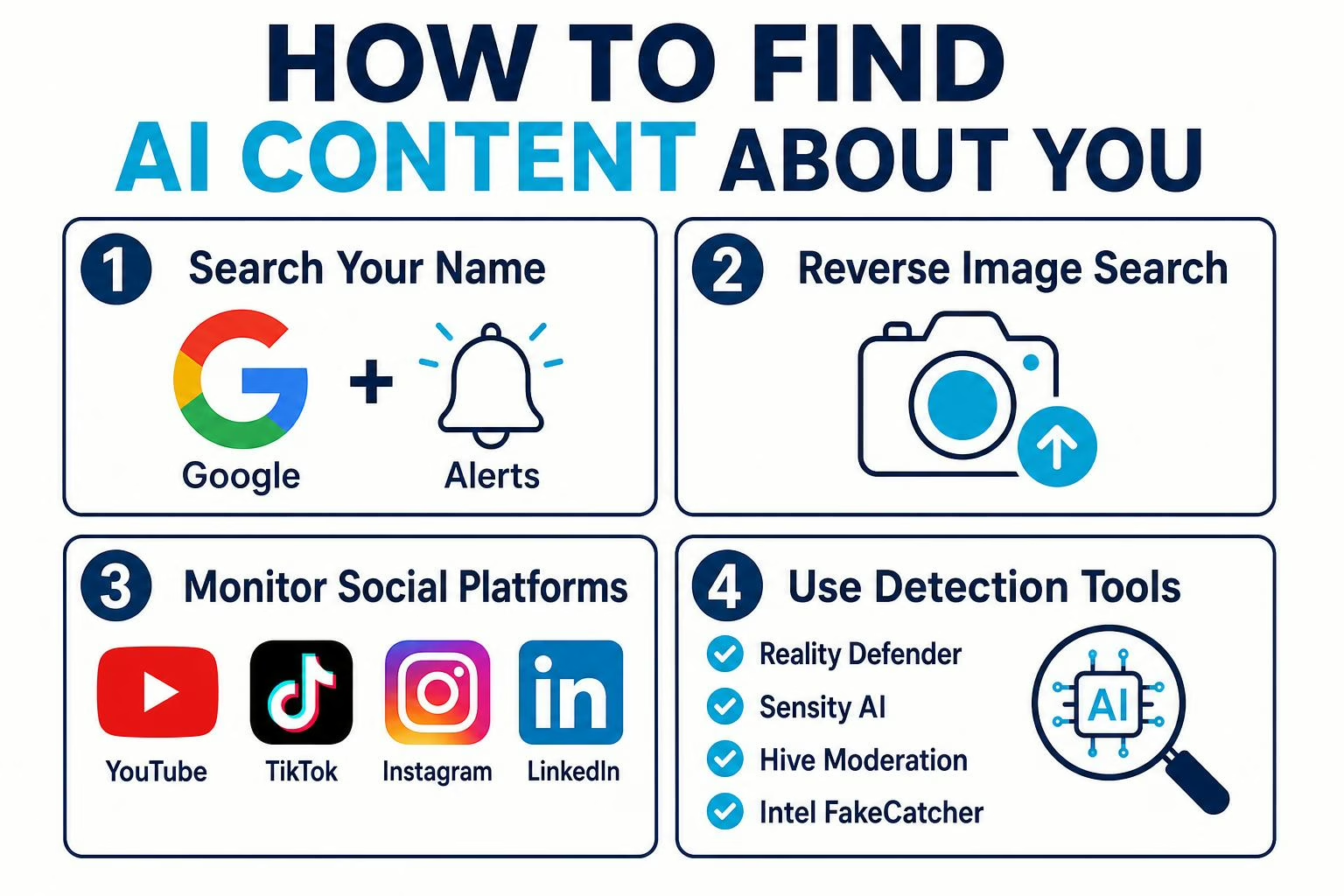
Search Your Name Regularly
Run Google searches using your name combined with words like “deepfake,” “AI video,” “fake video,” and “impersonation.” Check image results and Google Videos separately while you are at it.
Set up a Google Alert for your name. You will get an email whenever new results appear, which makes it easy to catch something early.
Use Reverse Image and Video Search
Upload a photo of yourself to find where your image appears across the web. This catches headshots, profile photos, or screenshots used out of context. We have a full walkthrough on how to do a reverse image search on Google and a separate guide on TinEye reverse image search if you want step-by-step help with either tool.
For video content, our reverse video search guide explains how to track down clips that may be using your likeness.
Monitor Social Platforms
Search your name and any usernames you use on YouTube, TikTok, Instagram, Facebook, and LinkedIn. Look for accounts impersonating you or videos using your face or voice.
If you find a video on TikTok that needs to come down, our guide on how to delete a TikTok video covers the reporting process. For YouTube, see how to get a video removed from YouTube.
Use Dedicated Detection Tools
Several platforms now specialize in spotting AI-generated media:
- Reality Defender analyzes video, audio, and images in real time. It is built for larger organizations but works well for public figures and their teams.
- Sensity AI provides detailed detection reports and monitors the web for unauthorized use of executive faces.
- Hive Moderation covers images and video and works well for brands dealing with a high volume of content.
- Intel’s FakeCatcher detects deepfakes in real time by reading subtle biological signals, like blood flow patterns in skin, that AI-generated faces cannot replicate.
For executives and brand protection teams, platforms like CloudSEK’s XVigil go further. They monitor social profiles, domains, and dark web sources for synthetic media and impersonation campaigns together in one place.
See What People Find When They Search Your Name
NewReputation’s free First Impression Report shows exactly what appears for your name in search results, which personal data is publicly exposed, and where you stand right now.
- See your name as others see it in Google Search
- Find out which data broker sites list your address and phone number
- Get a clear starting point to take back control
How to Remove a Deepfake from Google
Removing content from Google Search is different from removing it from the site hosting it. You will likely need to do both.
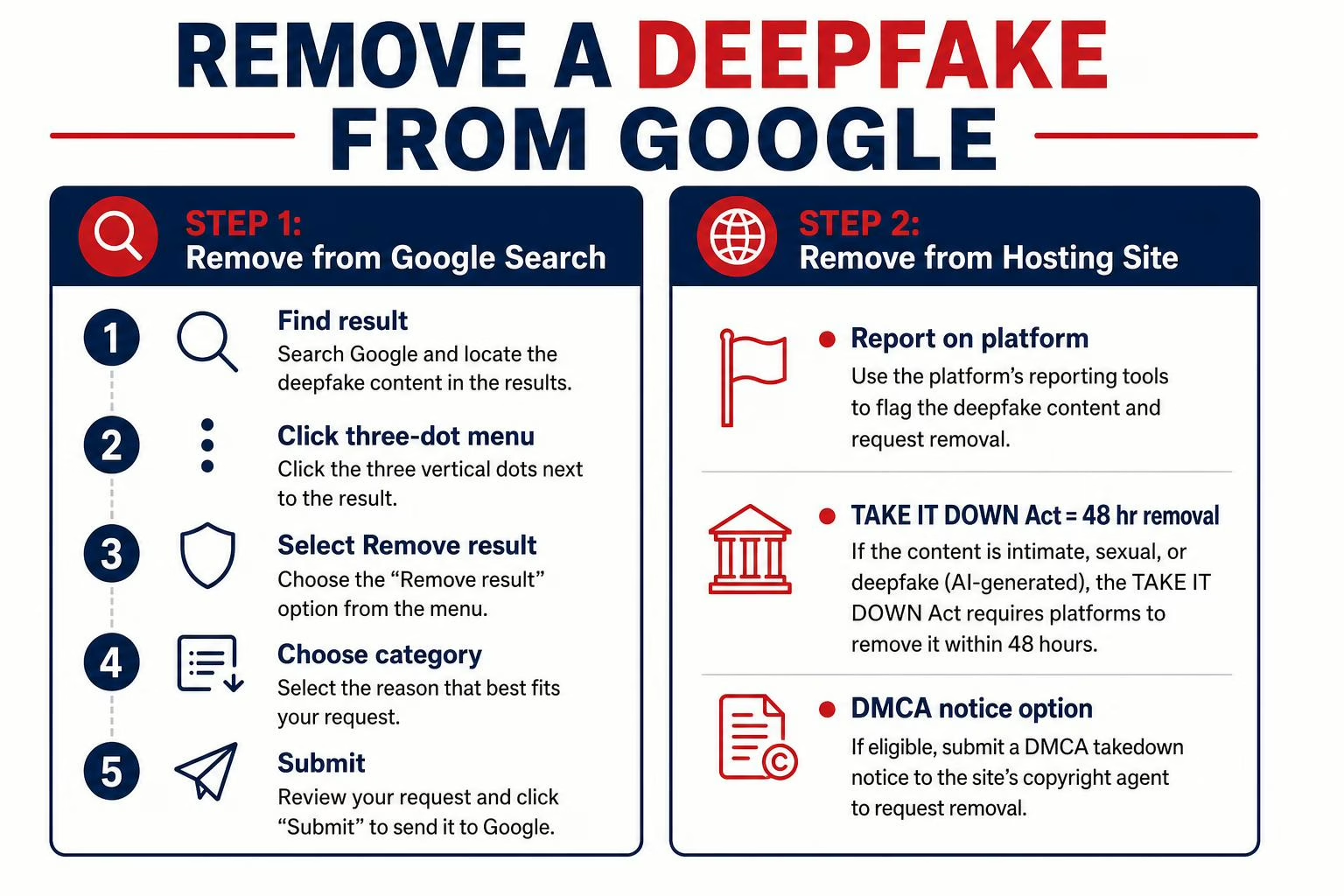
Step 1: Remove It from Google Search
Google updated its removal process in early 2026 to make it faster and simpler. Here is how it works:
- Find the image or result in Google Search
- Click the three-dot menu next to the result
- Select “Remove result”
- Choose “It shows a sexual image of me” for explicit deepfakes, or use the personal information path for impersonation content
- Specify whether it is a deepfake or a real image
- Submit multiple images at once in a single request
Once a removal is approved, Google will also scan for duplicates and filter similar results going forward. You can track all your requests in Google’s “Results About You” hub, found by tapping your profile icon in the Google app.
For non-sexual impersonation or defamatory AI content, use Google’s legal removal request form and note defamation, impersonation, or false information as your grounds.
Step 2: Remove It from the Hosting Site
Removing a result from Google Search does not delete the content from the internet. The page it lives on is still there.
Contact the platform directly. YouTube, Facebook, TikTok, and Instagram all have reporting tools for impersonation and fake media. Look for the “Report” option on the content itself, or go to the platform’s help section.
Under the TAKE IT DOWN Act, signed into federal law in May 2025, covered platforms must remove reported deepfakes within 48 hours of receiving a valid notice. Platforms that fail to comply face enforcement from the FTC. This applies to deepfakes intended to cause harm, not satire or clearly labeled parody.
For smaller or foreign-based sites, a DMCA takedown notice can be effective if the content misuses something you originally filmed or recorded. Our guide on filing a DMCA complaint walks you through that process.
Your Legal Options Right Now
The law has moved fast. You have more options today than you did two years ago.

The TAKE IT DOWN Act
President Trump signed this into federal law in May 2025. It is the first federal U.S. law that directly targets harmful AI deepfakes. The law prohibits publishing non-consensual deepfakes intended to cause harm, requires platforms to remove flagged content within 48 hours, and covers both explicit content and deepfakes used to threaten or harass someone.
For a full breakdown of what is and is not illegal under current law, see our guide on are deepfakes illegal.
State Laws
Over 45 states have passed some form of deepfake legislation as of mid-2025. A few examples worth knowing:
- California and New York allow civil lawsuits for non-consensual deepfakes, including financial damages
- Tennessee’s ELVIS Act treats your voice and likeness as personal property you have the right to protect
- Virginia, Texas, and Minnesota have criminal penalties for non-consensual intimate deepfakes
Civil Defamation Claims
If a deepfake shows you making false statements that damage your reputation, you may have a defamation claim. Courts are increasingly treating AI-generated content the same way they treat written or spoken defamation. Talk to an attorney who handles digital media or privacy law.
FTC and Fraud
The FTC Act prohibits deceptive business practices. If a deepfake is being used to impersonate you for financial fraud, scam your customers, or manipulate your company’s stock price, the FTC and the FBI’s Internet Crime Complaint Center are both relevant. File a report at ic3.gov if you believe a deepfake is part of an active fraud scheme.
Found Fake Content About Yourself?
NewReputation helps individuals and organizations detect, remove, and recover from AI-generated reputation attacks. We handle the process so you do not have to figure it out alone.
- Google Search removal support for deepfakes and impersonation content
- Platform takedown requests across YouTube, TikTok, Instagram, and more
- Ongoing monitoring so you know when something new surfaces
What Executives and Brands Need to Know
For businesses and public figures, deepfake reputation damage is not just a personal issue. It is a real financial and operational risk.
Here is what attackers typically do with someone’s likeness:
- Create fake product endorsements that damage brand credibility
- Use deepfake audio or video of a CEO to authorize fake wire transfers
- Place fabricated statements in news-style videos to create a PR crisis or affect stock prices
- Build fake social profiles impersonating executives to deceive customers or partners
A single viral deepfake can cause real financial damage and take weeks of communications work to address. Our executive reputation management guide covers how leaders can get ahead of these threats, and our executive impersonation protection guide goes deeper on the specific risks executives face.
Here is what organizations should put in place now:
- Run quarterly monitoring of your name and likeness using the detection tools covered above
- Build an incident response plan that specifically covers fake media attacks
- Train leadership and finance teams to verify identity a second way for any unusual request, even if the person looks and sounds familiar on a call
- Register your domain variations and social handles before someone else does
- Align your PR, legal, and communications teams so they can move fast if something surfaces
How to Prevent This Before It Happens
Detection and removal are both reactive. These steps reduce your exposure before an attack.
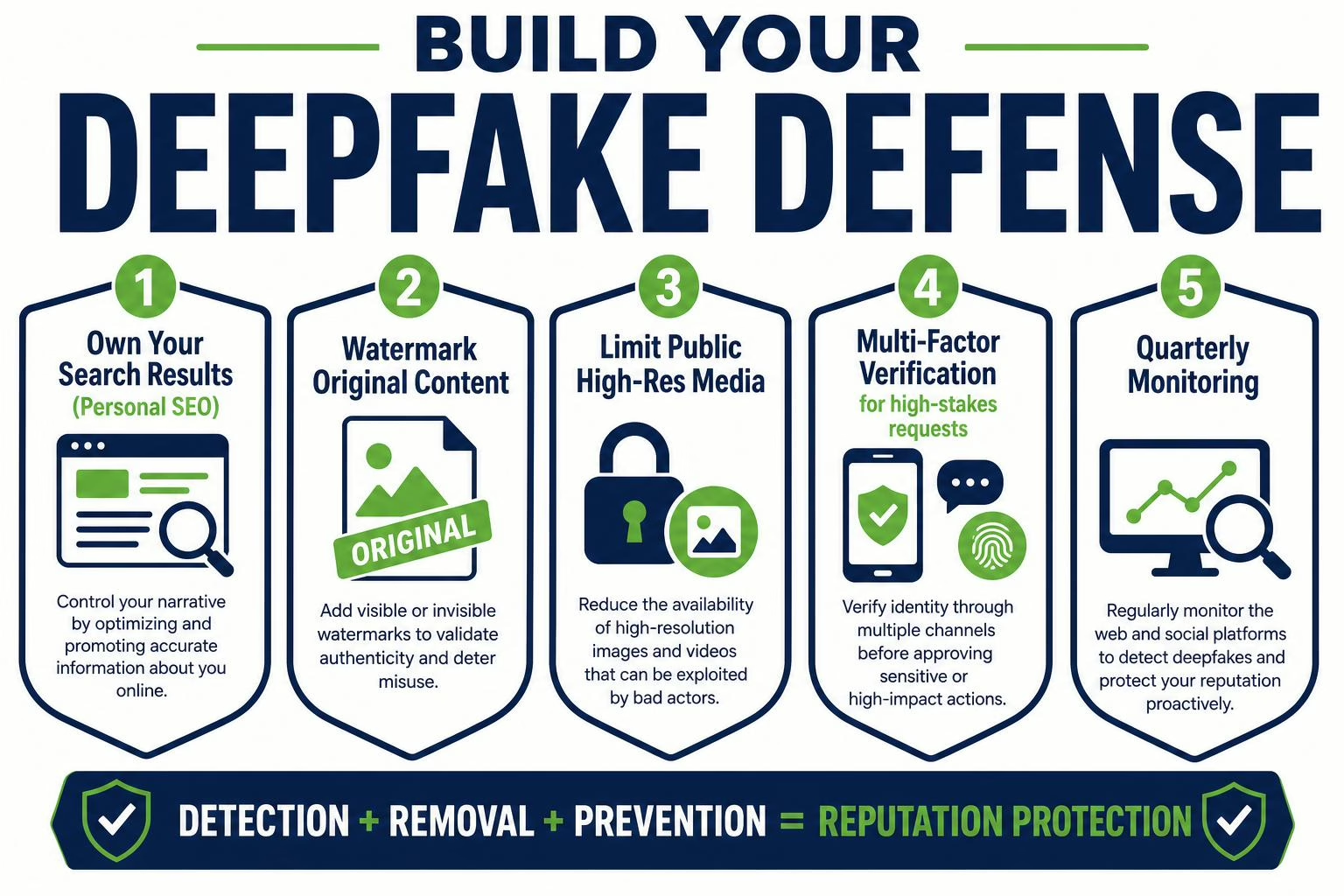
Own Your Search Results
The strongest defense against deepfake reputation damage is a solid, accurate digital presence. When your name returns pages of verified, trustworthy content, fabricated material has less room to rank or be believed.
Publish regularly on LinkedIn. Keep a professional website current. Get coverage in credible publications. The goal is to build an online presence where impersonation feels out of place. This is sometimes called personal SEO, and it is one of the most durable reputation protection strategies available.
Watermark Your Original Content
If you publish video or audio, consider tools like Amber Authenticate, which sign media at the point of capture. This creates a clear record showing whether your content has been altered after you created it.
Be Selective About Public Media
Deepfakes need raw material to work from. The more high-resolution images and video of you that are publicly available, the easier you are to clone. You do not need to disappear from the internet, but it is worth being thoughtful about what you put out and where.
Add Verification Steps for High-Stakes Requests
Tell your team to require a second form of confirmation for any request involving money, access credentials, or major decisions. This applies even when the request appears to come from a trusted person on a video or voice call.
Frequently Asked Questions
Can I sue someone for making a deepfake of me?
Yes, in many cases. Depending on your state and the type of content, you may have claims under defamation law, right of publicity statutes, or specific deepfake legislation. The TAKE IT DOWN Act also opens up federal options. Talk to a digital media or privacy attorney to understand what applies to your situation.
Will Google remove a deepfake from search results?
Google will remove explicit deepfake imagery through its reporting tool. For defamatory or impersonation content, a legal removal request is usually the path. Keep in mind that Google removing a result does not take down the content from the site hosting it. You need to address both.
How do I know if a video of me is AI-generated?
Watch for unnatural blinking, inconsistent lighting on the face, blurred edges around the hairline or ears, audio that does not quite match lip movements, and skin that looks too smooth or too uniform. For a reliable answer, run the video through a tool like Reality Defender or Sensity AI. They are built for exactly this.
What if the deepfake is on a foreign website?
International enforcement is harder, but not hopeless. Google can still de-index the content from U.S. search results. Some countries have their own removal laws. An attorney with international experience can advise on what options exist depending on where the site is hosted.
How fast do platforms have to remove deepfakes?
Under the TAKE IT DOWN Act, covered platforms must act within 48 hours of a valid notice. Google’s own review process typically takes a few days to a few weeks depending on what type of request you file.
What accounts might be connected to someone impersonating me online?
If you suspect someone has built a fake identity using your information, it helps to understand how accounts can be linked. Our guide on how to find all accounts linked to an email address covers how to investigate that.
What to Do Next
AI-generated content about real people is no longer rare. It affects executives, brand leaders, and private individuals, and the problem is getting bigger, not smaller.
The good news is that you have real tools available. Detection has improved. Google has made removal easier. Federal law now requires platforms to act quickly. And building a strong presence online remains one of the most practical protections you can put in place.
If you have found fake content about yourself or your brand and are not sure where to start, contact the NewReputation team for a free consultation. We help people and organizations detect, remove, and recover from AI-generated reputation attacks.
Take Control of What People Find When They Search Your Name
NewReputation’s free First Impression Report shows you exactly what appears for your name, where your personal information is exposed, and what to do next.
- See your current search results the way others see them
- Identify data broker and people-search listings with your address or phone number
- Get a clear, actionable plan to clean up your online presence