
Last Updated on 2 months ago by Admin
Have you ever scrolled through the news and felt hit by a wall of negative headlines? “Local Man Accused…” “Business Owner Indicted…” “Big Bust in Local Sting Operation…” If you are the person in one of those articles, it can feel like the whole world suddenly has an opinion about you.
Employers, clients, neighbors. Suddenly everyone seems to know. And the article just sits there at the top of Google, month after month.
Here’s the thing: that article is not your whole story, and it does not have to define your future online. This guide walks through seven practical strategies to remove or reduce negative news articles from Google search results, and what to do when complete removal is not possible.
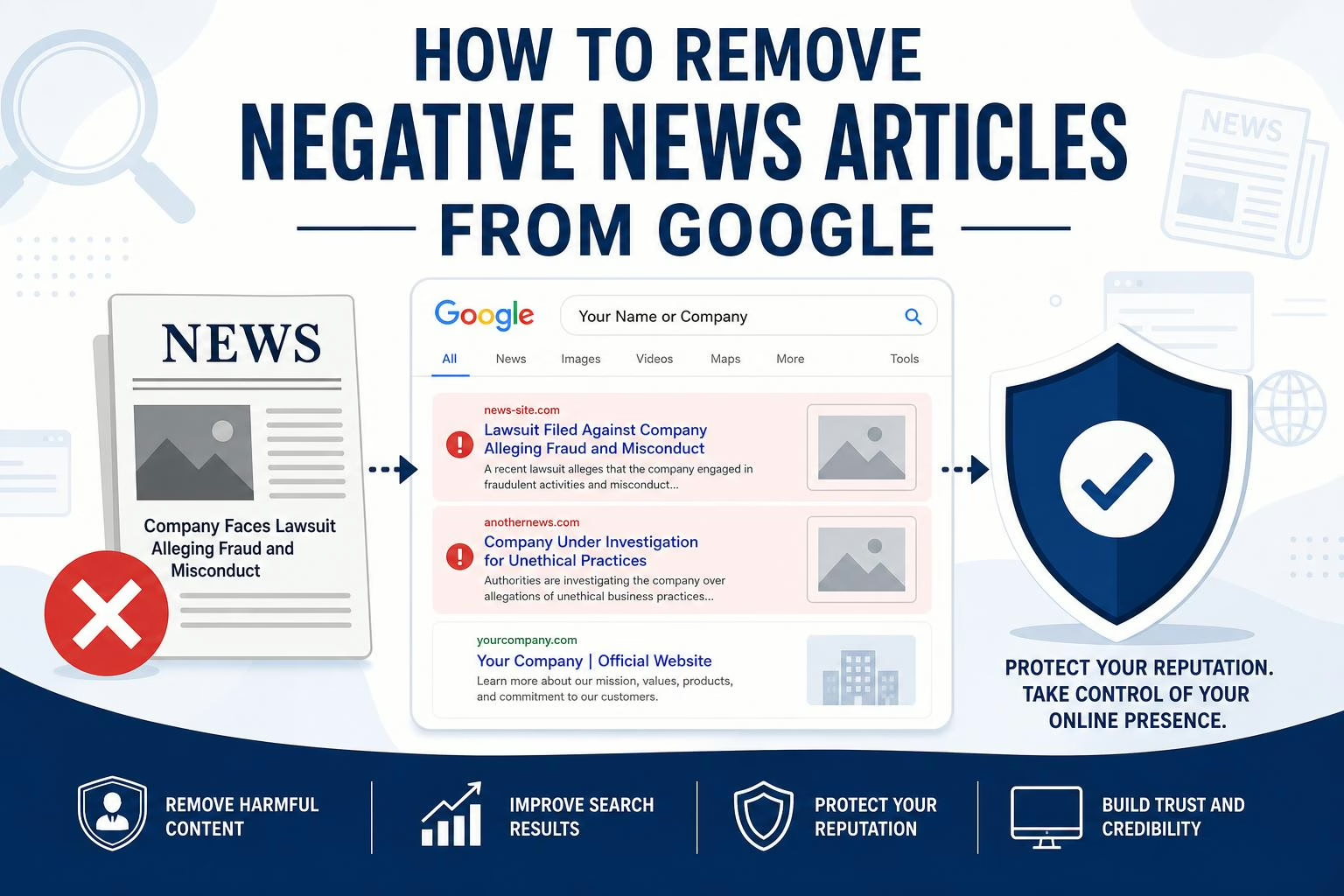
Table of Contents
- Why negative news articles rank so high on Google
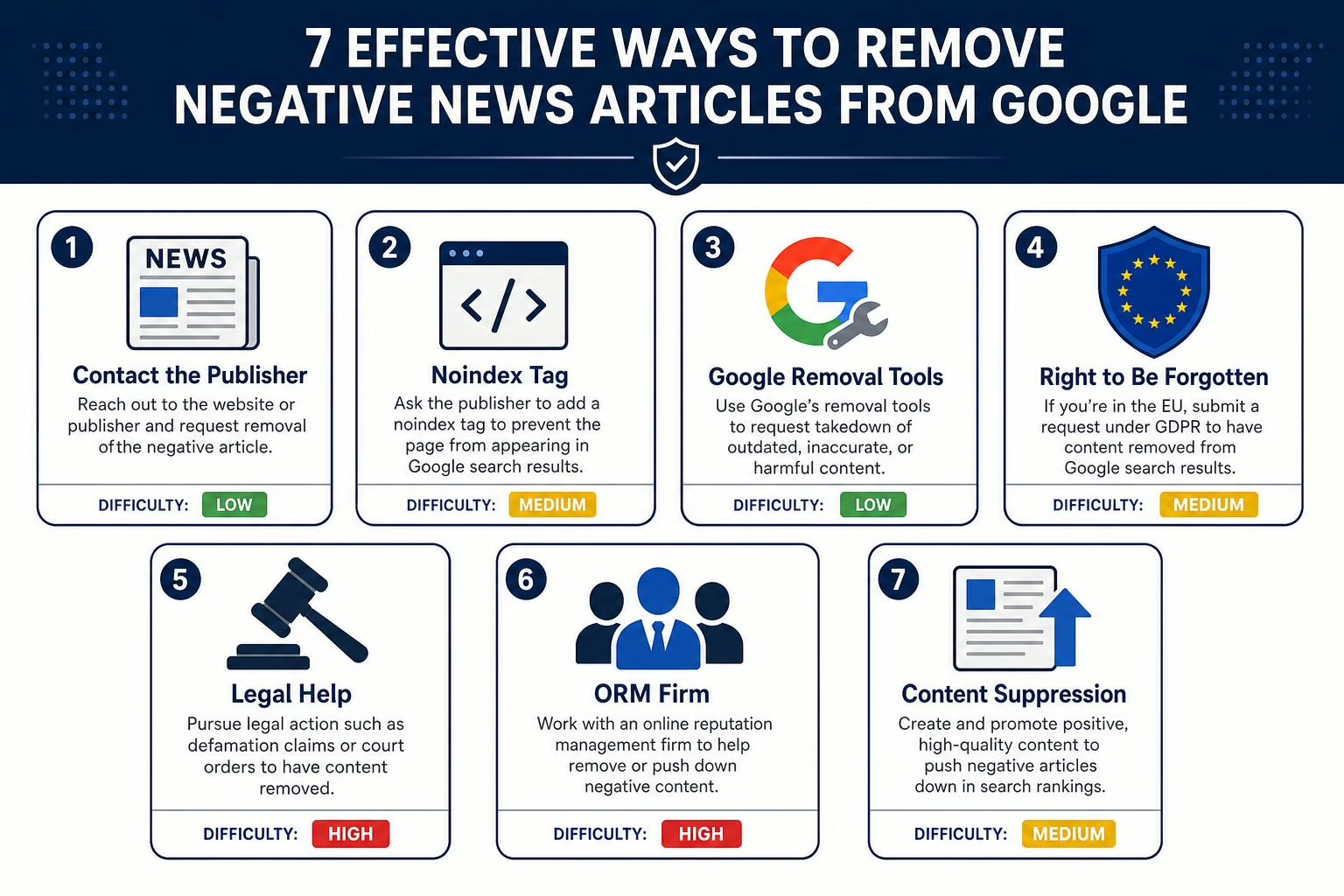
- Your 7 options at a glance
- Option 1: Contact the publisher directly
- Option 2: Ask for a noindex tag
- Option 3: Use Google’s removal tools
- Option 4: Use the Right to Be Forgotten
- Option 5: Get legal help
- Option 6: Work with an ORM firm
- Option 7: Suppress with positive content
- Understanding different types of news content
- What if you were found not guilty?
- Ongoing monitoring and reputation management
- Frequently asked questions
- Taking back control of your reputation
Why Negative News Articles Rank So High on Google
Before you try to remove anything, it helps to understand why that article keeps showing up at the top of your results.
News sites tend to outrank most personal content because Google trusts them. They have strong domain authority, they publish frequently, and fresh content sends strong ranking signals. Even a minor story about you can easily outrank your LinkedIn profile, personal website, or business page.
How long a story stays visible depends on the publisher. Some keep articles online indefinitely. Others archive content after a few years. In some cases, if an article is outdated, inaccurate, or violates a policy, you can ask the publisher to remove or update it. But most will not act unless there is a clear legal, ethical, or editorial reason to do so.
In our work with clients across hundreds of cases, the articles that cause the most lasting damage are rarely from major national outlets. They tend to come from local news sites, county court reporters, and small regional blogs that publish once and never update. These sites have just enough domain authority to rank well, but rarely have editorial resources to process removal requests quickly. Knowing this upfront shapes the strategy. For a broader look at how Google reputation management works, that context matters from the start.
Your 7 Options at a Glance
There is no single fix that works for every situation. The right approach depends on where the article is published, whether the information is accurate or false, where you live, and how serious the impact has been on your life or business. Use this as a step-by-step playbook rather than trying everything at once.
| Option | Best For | Difficulty |
|---|---|---|
| Contact the publisher | Inaccurate, outdated, or misleading articles | Low to medium |
| Request a noindex tag | Publishers willing to hide but not delete | Low to medium |
| Google removal tools | Private info, copyright, outdated cached content | Medium |
| Right to Be Forgotten | EU and other eligible regions | Medium |
| Legal action | Defamation, false statements, high stakes | High |
| ORM firm | Ongoing or complex situations | Medium (managed for you) |
| Content suppression | When removal is not possible | Medium, ongoing |
Option 1: Contact the Publisher Directly
Your first move is to go to the source. Contact the publisher and make your case for removal or correction. This is often faster than any other route, and it costs nothing.
This approach works best when the article is outdated, factually inaccurate, misleading, or violates the site’s own content or privacy policies. What you’re making is called an unpublishing request or removal request.
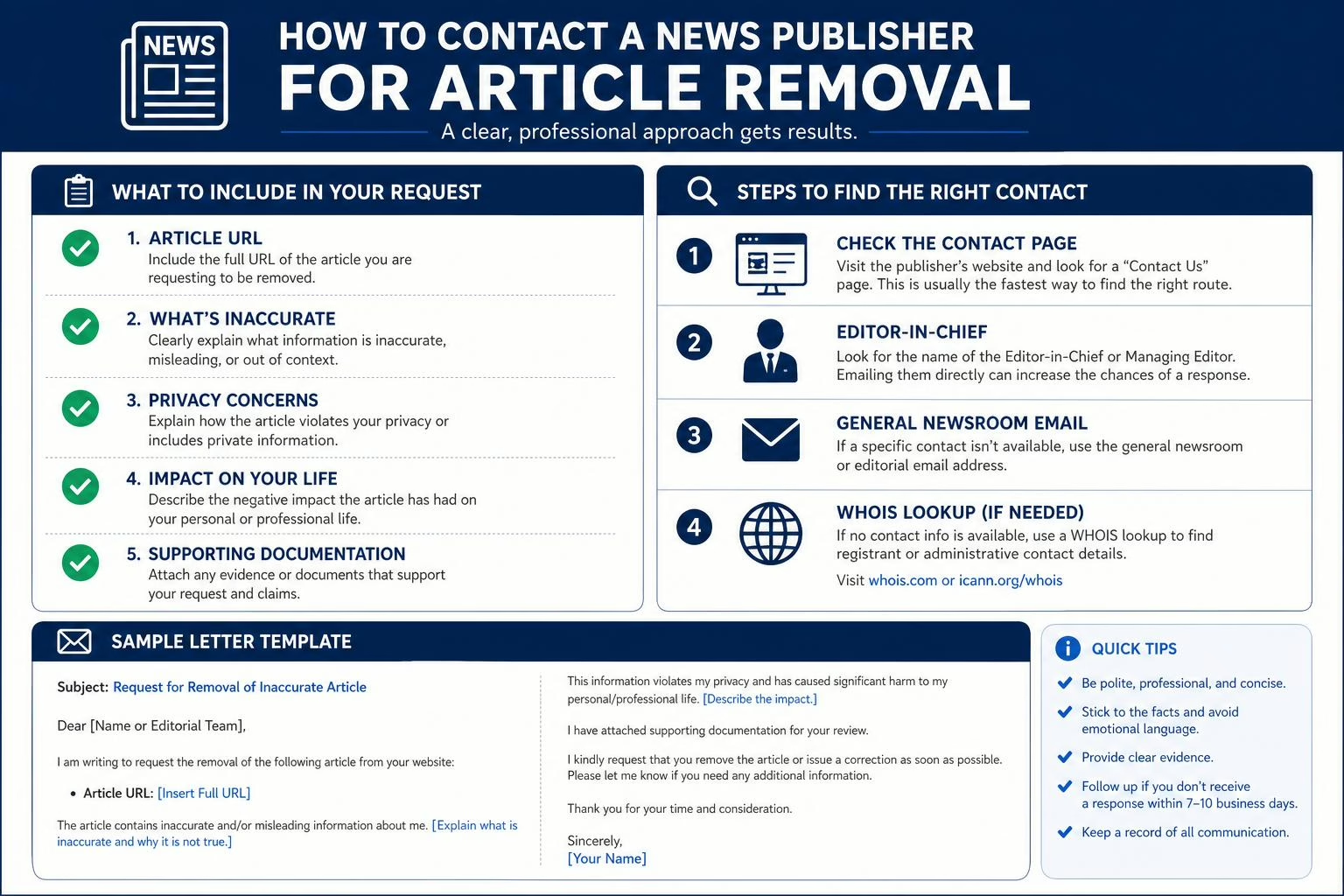
How to find the right contact
Go to the site’s Contact, About, or Masthead page. Look for the editor-in-chief, managing editor, web editor, or digital editor. If no specific person is listed, use the general newsroom or tips email. You can also use tools like Whois to find web admin contact information for the domain.
What to include in your request
Before you write anything, take time to prepare. Your request should clearly cover:
- The exact article URL, title, and publication date
- Specifically what is inaccurate, outdated, or harmful in the article
- Any privacy concern, especially if personally identifiable information is included
- How the article has affected your life: lost work, lost clients, harassment, or mental health impact
Write the letter calmly and professionally. You can request full removal, a correction, an update to reflect a changed outcome, or an editor’s note confirming that charges were dropped or the matter was resolved.
Include any supporting documentation you have: court orders, dismissal paperwork, expungement records, employer letters, or screenshots showing harassment or other damage caused by the article.
One thing to keep in mind: if you request a correction and the publisher updates the article, Google may treat the revised page as fresh content and temporarily boost its visibility. For that reason, it is often better to request a correction and deletion at the same time rather than as separate steps.
A calm, well-documented request almost always outperforms an emotional or accusatory one. Publishers receive complaints regularly. The requests that get results are the ones that make the editor’s job easy: clear information about what is wrong, documentation that supports your position, and a specific, reasonable ask. If you are dealing with a larger regional outlet, go directly to the digital editor or web editor rather than the reporter. Reporters rarely have authority over published content. Editors do.
Not Sure How to Make Your Case? We Can Help.
NewReputation has handled thousands of publisher outreach requests. We know what works, what to include, and how to frame the ask professionally.
- Publisher and editor contact research handled for you
- Professional removal and correction requests drafted on your behalf
- Follow-up and escalation managed when needed
Option 2: Ask for a Noindex Tag
If a publisher won’t delete an article, they may be willing to hide it from search results. That’s where a noindex tag comes in.
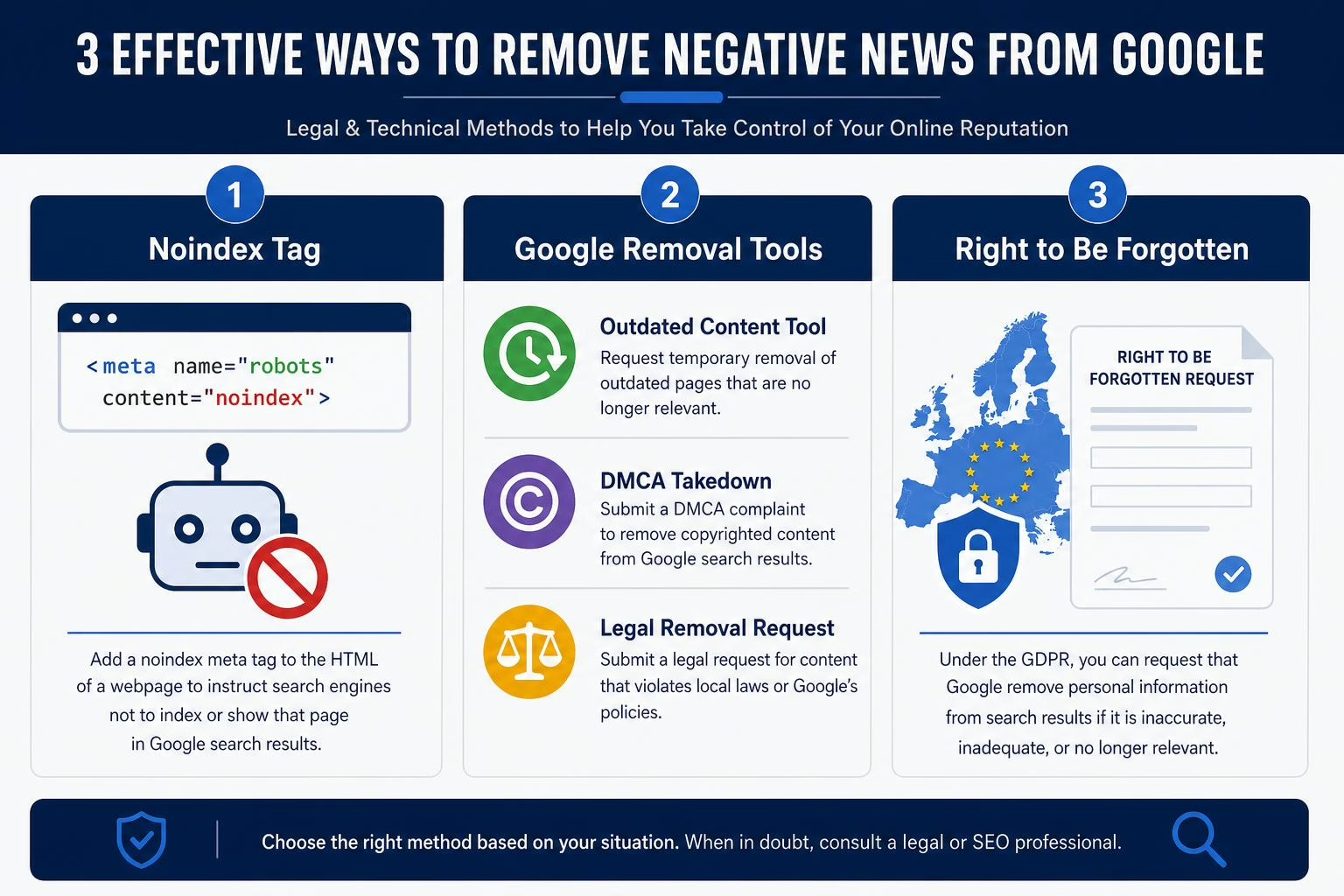
A noindex tag is a small piece of code added to the page’s header that tells search engines: “Crawl this page, but don’t show it in search results.” The article stays on the site, but it disappears from Google over time as crawlers revisit the page.
The code looks like this:
<meta name="robots" content="noindex">
When making this request, acknowledge that you understand the publisher may not want to delete the article. Explain that you are simply asking them to prevent it from appearing in search results for your name. Emphasize that people searching for you are seeing outdated, misleading, or incomplete information as a result.
For many publishers, a noindex tag is a reasonable compromise. They keep the content, and you reduce the reputational damage.
Option 3: Use Google’s Removal Tools
If the publisher refuses to help, your next step is to go directly to Google. You generally cannot ask Google to remove a truthful news article just because it reflects badly on you. But there are specific circumstances where Google will act.
Outdated content removal
If a site has already removed or updated content, but the old version still appears in Google Search, you can use Google’s Outdated Content Removal Tool to remove stale cached versions. This only works for content that has already been changed or deleted on the original site. It will not remove an active, unchanged news article.
DMCA copyright removal
If a website published your copyrighted content, your own writing, photos, or videos, without permission, you can submit a DMCA takedown notice to Google. This applies to copyright ownership, not to defamation or negative coverage generally.
Legal removal request
Google will consider removing content from Search results if it contains libelous material, your private personal information, sensitive details that violate their policies, or material that breaks local law. You will need to provide the exact URLs, a clear explanation of your reason for removal, and any supporting documentation from prior attempts to contact the publisher. See our full guide on how to remove your personal information from Google for a step-by-step walkthrough.
Filing a complaint with Google is free, but results are not guaranteed. Responses can take time, and Google is more likely to act when sensitive personal information is involved, there is a legally binding court order, or the content violates one of their specific policies.
Google’s tools are more useful than most people expect for personal information removal, and less useful than most people hope for general negative coverage. The distinction matters. If the article exposes your home address, phone number, or other contact details, the Results About You tool gives you a real pathway to removal. If the article is simply negative and accurate, Google’s tools are not the right lever. Our guide on how to delete content from the internet covers the full range of platforms and what each one requires.
Option 4: Use the Right to Be Forgotten
If you live in the European Union, Argentina, or another region with strong data privacy laws, you may have access to the Right to Be Forgotten. This allows you to ask search engines to remove results that are outdated, irrelevant, or no longer in the public interest, even if the content still exists on the original site.
You may qualify if the content is old and no longer relevant, the story is misleading or incomplete, the information is disproportionate to any genuine public interest, or the legal situation has changed since publication. For example, charges were dropped or a record was expunged.
To submit a request, confirm that your region recognizes this right. Then gather evidence showing why the content should be removed: its age, inaccuracies, changed circumstances, and the specific harm it has caused you. Each search engine has its own form. Google’s is available at support.google.com/legal.
Keep in mind that this right does not apply in the United States, where free speech protections generally take precedence. And even in eligible regions, search engines weigh your privacy rights against the public’s right to information. Articles considered historically significant or genuine public-interest journalism may stay.
Option 5: Get Legal Help
If an article contains false statements that have seriously damaged your reputation, you may have grounds for a defamation claim. Defamation covers libel (false written statements) and slander (false spoken statements). For written content online, libel is the relevant category.
To succeed in a defamation case, you generally need to show that the information is false, that it damaged your reputation, and that it was published recklessly or with intent to harm (the exact standard varies by jurisdiction and whether you are considered a public or private figure).
An attorney experienced in defamation or internet law can help you understand your options. A formal cease and desist letter from a lawyer often gets more attention than a direct request from you. If necessary, legal action can result in court orders to correct or remove content.
A few things to weigh before going this route:
- Cost. Attorney fees add up fast, and litigation can run into the tens of thousands of dollars.
- Time. Legal cases move slowly. The emotional toll is real too.
- No guarantees. Even winning a case does not always guarantee the article is removed from search results immediately. Publisher compliance and search engine indexing timelines both factor in.
Legal action makes the most sense when the article contains clearly false information, you have exhausted all other options, and the impact on your career, business, or safety is serious enough to justify the cost. Our guide on what doxing is covers related legal protections if your personal information was published without consent.
Option 6: Work With an Online Reputation Management Firm
Sometimes the problem is not just one article. It is a pattern of negative coverage across multiple sites, combined with old forum threads and blog posts that keep resurfacing. That is where an online reputation management firm comes in.
A professional ORM firm combines direct removal requests, search result cleanup, content strategy, and long-term reputation repair. They often work alongside attorneys on cases that require legal escalation. And because negative content has a way of reappearing after you address one source, ongoing monitoring matters as much as the initial removal work.
Here is what a good ORM firm handles:
- Publisher and web admin outreach for removal and corrections
- Deindexing and noindex requests where possible
- Content creation and personal SEO to build stronger positive results
- Link building to boost your positive pages in search rankings
- Ongoing monitoring so you catch new mentions early
Think about it this way: removing one article only to have another appear on a different site is a losing cycle. A good ORM partner helps you break it.
The clients who see the fastest results are not always the ones with the easiest situations. They are the ones who come in with a clear picture of what they want their search results to look like and commit to the content strategy required to get there. ORM is not a one-time fix. It is an ongoing process of building, monitoring, and adjusting. For a comprehensive overview of what that process involves, our online reputation management guide covers it in full.
Option 7: Use Content Suppression When Removal Is Not Possible
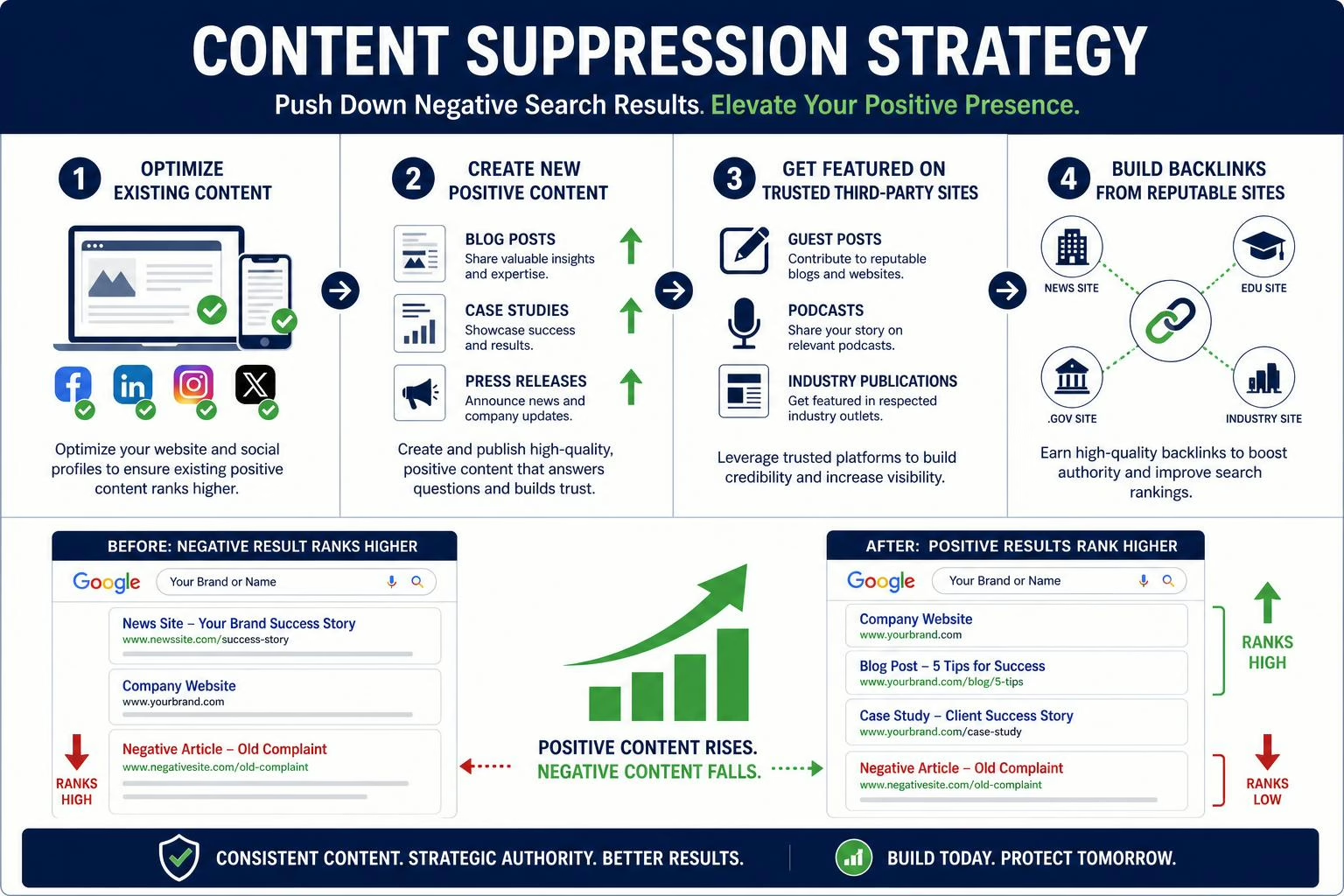
Sometimes you simply cannot get an article taken down or deindexed. That is a frustrating reality, but it does not mean you are out of options. Suppression pushes the negative result down by outranking it with better, more relevant content.
Removal means the content disappears from search results entirely. Suppression means it still exists but gets buried under stronger results. Honest ORM firms will tell you upfront that removal is never guaranteed. Suppression is often the more realistic long-term strategy, and it works.
1. Optimize what you already have
Start by reviewing your existing website, blog, and social media profiles. Make sure everything is up to date, includes your name and relevant keywords, and has proper meta titles and descriptions. Search engines prioritize fresh, well-structured content, and improving what you already have costs nothing.
2. Create new content under your name
New content can outrank old negative stories over time. Publish blog posts that showcase your expertise, case studies, success stories, and press releases about positive milestones. Target the same or similar keywords the negative article ranks for. If the article ranks for “John Smith fraud,” create content optimized for “John Smith reviews” or “John Smith services” that highlights your actual work.
Publish consistently. Regular posting keeps your positive content visible and signals to search engines that your pages are active. For a full strategy, our personal SEO guide covers exactly how to build this kind of presence.
3. Get featured on trusted third-party sites
Google trusts authoritative domains. Guest posts on industry blogs, podcast interviews, expert commentary in publications, and bylines on recognized platforms all rank well and help push negative results down. These third-party mentions carry weight precisely because you do not control them.
4. Build backlinks to your positive content
Backlinks from other reputable sites signal to Google that your content is trustworthy. Ask business partners to link to your site. List your business on reputable directories. Encourage satisfied customers to share reviews or testimonials. The more quality backlinks your positive content earns, the more likely it is to outrank the negative coverage.
Suppression takes time. You will not see overnight changes. But a consistent strategy reshapes what people see when they search your name, and that is a result you can build toward. Our guide on how to ungoogle yourself covers the full suppression and cleanup process in detail.
The most effective suppression campaigns we have run share one characteristic: they treat the first page of Google as real estate to be claimed, not just a problem to be managed. That means building LinkedIn, a personal website, a Google Business profile, relevant directory listings, and published bylines all at once, not one at a time. Each piece adds another positive result. Together they leave very little room for the negative article. Our guide on how to get your name to the top of Google explains exactly how this works. For clients with a strong professional profile, a Wikipedia presence can also be one of the highest-ranking assets available.
See What People Find When They Google You Right Now
NewReputation’s free First Impression Report shows you exactly what appears for your name in search results and which negative results are causing the most damage.
- See your current search results as others see them
- Identify which negative articles are ranking and why
- Get a clear plan to remove, deindex, or suppress harmful content
Understanding Different Types of News Content
Not all news stories are treated the same. Your chances of removal or correction depend heavily on what kind of content you are dealing with.
| Content Type | Removal Difficulty | Notes |
|---|---|---|
| Factual news | Medium | Outlets usually prefer to update rather than delete. Corrections are more realistic than removals. |
| Opinion or commentary | High | Protected by free speech unless it crosses into defamation or targeted harassment. |
| Personal stories or interviews | Medium | Harder if you participated willingly. Stronger case if private information or safety is at stake. |
| Investigative reports | Very high | Considered part of the public record. Removal is rarely possible without legal action. |
| Public records-based articles | Varies | Easier if records were expunged or sealed. Harder if information was accurate at time of publication. |
For more on what can realistically be removed from Google, see our guide on removing personal information from Google and our overview of the Google Results About You tool.
What If You Were Found Not Guilty?
In many cases, the article will not disappear on its own. Most newsrooms will not automatically update or remove stories if charges are dropped or someone is acquitted, unless they are notified and choose to act.
Better publishers will update the article to reflect the new outcome, add a correction or editor’s note, or occasionally remove the original story entirely. A significant factual error may lead to a full retraction. A smaller issue typically results in a correction or addendum appended to the original piece.
But almost none of this happens automatically. You have to ask. And when you do, come prepared with documentation showing the outcome: court dismissal paperwork, expungement orders, or legal filings that confirm the charges were resolved in your favor.
It is also worth knowing that the news cycle does not work in your favor here. Online articles do not disappear when the next news cycle begins. Unlike a newspaper that ends up recycled, a web article can stay indexed and ranking for years without a single update. Old content keeps affecting your reputation until you actively address it.
Ongoing Monitoring and Reputation Management
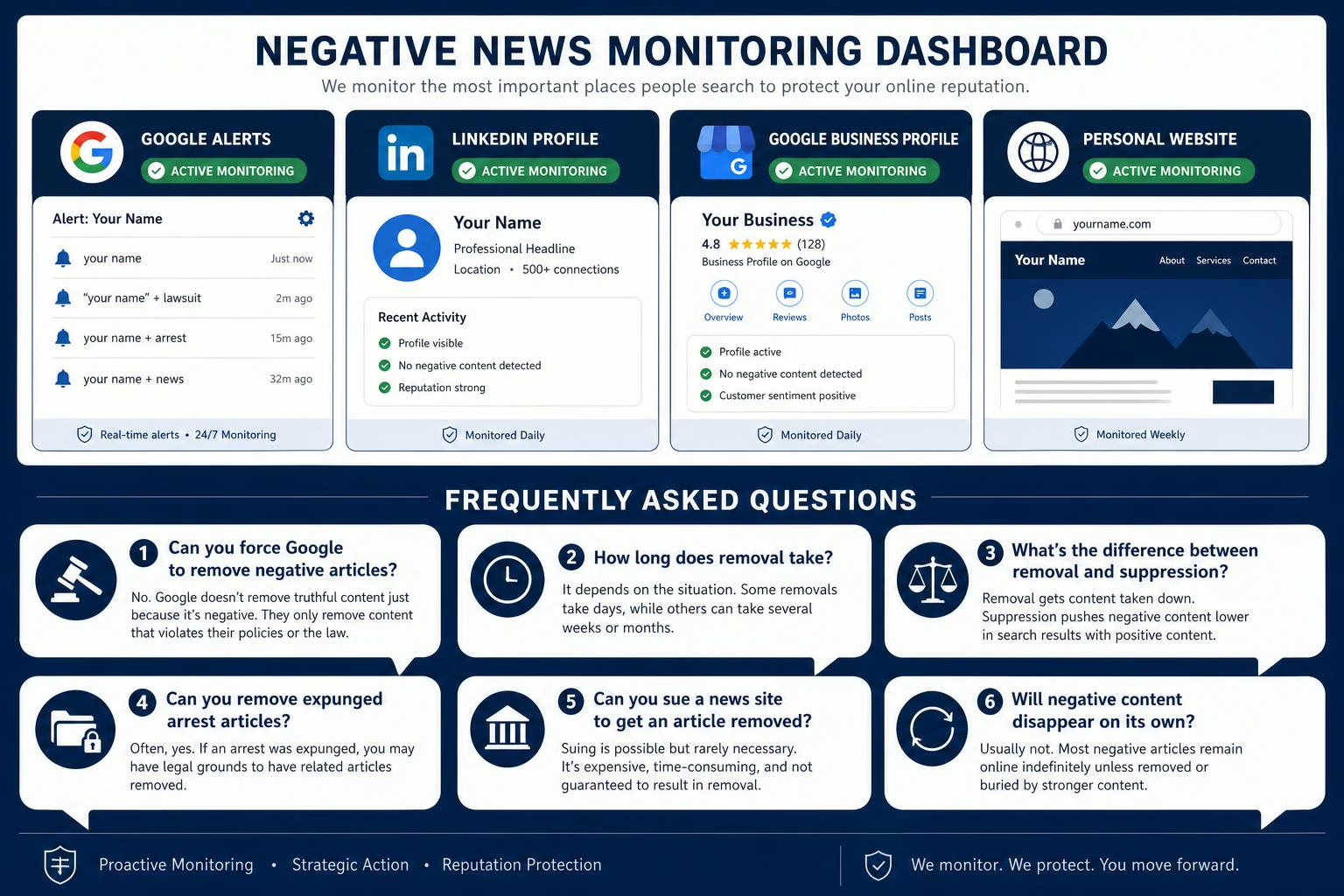
Removing or suppressing one article is only part of the solution. To stay ahead of the problem, you need an ongoing strategy.
Set up monitoring for your name
Use Google Alerts to get notified whenever your name, business name, or common misspellings appear in newly indexed content. Set it up at google.com/alerts and use quotes around your name so you get exact-match results. Our guide on setting up Google Alerts with multiple keywords walks through how to do this properly.
Build strong profiles on major platforms
Profiles on LinkedIn, Google Business Profile, and major industry directories tend to rank well for your name. Keeping them current and complete gives you more real estate on the first page of results, which leaves less room for negative content. A personal website or portfolio adds another controlled result you own entirely. Our personal SEO guide explains how to build this kind of presence step by step.
For a deeper look at protecting the information connected to your name and identity, our guides on protecting your personal information, what your digital footprint includes, and how to reduce it are all useful companions to the steps in this guide.
Keep publishing positive content
Publish new success stories, case studies, community involvement, and milestones on a regular basis. Consistent content keeps your positive pages visible and relevant in search, and over time it gives the negative article less and less room at the top.
Frequently Asked Questions
Can you force Google to remove a news article?
Not for truthful content you simply dislike. Google will remove content under specific circumstances: it contains your private personal information, it violates their policies, there is a valid court order, or a DMCA copyright claim applies. See Google’s legal removal request form for what qualifies.
How long does it take for a removed article to disappear from Google?
Once a page is removed from the original site or a noindex tag is applied, Google typically de-lists it within days to a few weeks, depending on how frequently their crawlers visit that domain. The Google Outdated Content Removal Tool can speed up the process for content that has already been taken down.
What is the difference between removal and suppression?
Removal means the article is deleted or deindexed and disappears from search results. Suppression means the article still exists but gets pushed down by stronger, more positive content ranking above it. Removal is more powerful but often harder to achieve. Suppression is frequently the more realistic long-term strategy.
What if the article is about an arrest that was expunged?
Expungement seals your legal record but does not automatically remove news articles about the original arrest. You can use an expungement order as supporting documentation when requesting removal from the publisher or making a legal removal request to Google. Success depends on the publisher’s policies and the jurisdiction involved.
Can I sue a news site for publishing something negative about me?
If the content is false and has harmed your reputation, you may have a defamation claim. The standard is strict: the statement must be provably false, not just unflattering. Opinions and commentary are generally protected. An attorney with experience in internet or media law can assess whether your situation meets the threshold for a viable case.
Will the article eventually disappear on its own?
Unlikely. Unlike print, online articles do not expire. They stay indexed and ranking until the publisher removes them, applies a noindex tag, or stronger content pushes them down. Waiting out the news cycle is not a strategy.
Should I contact the journalist or the editor?
Start with the editor, not the journalist who wrote the piece. Editors have decision-making authority over corrections, updates, and removals. The journalist may be sympathetic, but they rarely have final say over what happens to a published article.
Taking Back Control of Your Reputation
Removing a news article from Google is rarely simple. Publishers are protective of their content. Google’s tools have real limits. Legal routes are slow and expensive. None of that means you are stuck.
In most cases, the right path combines two or three of the approaches in this guide. Start with the publisher. Use Google’s tools where they apply. Build positive content in parallel. Keep monitoring so new problems do not catch you off guard.
The clients who come to NewReputation after trying to handle this alone often say the same thing: they spent months on one tactic when the situation called for several working together. That is where professional help makes the biggest difference. Not because the individual steps are complicated, but because doing them in the right order, with the right documentation, and at the right pace is what actually moves results.
If you are dealing with a negative article right now and not sure where to start, the first step is understanding exactly what is out there and what it will take to address it. That is what our free consultation is for.
Ready to Address That Article? Let’s Talk.
NewReputation offers a free consultation to review your situation, assess what can realistically be removed or suppressed, and build a strategy tailored to your case. No generic playbooks. No empty promises.
- We review exactly what is ranking and why
- We identify your best removal, deindex, and suppression options
- You get a clear, honest plan with realistic timelines